
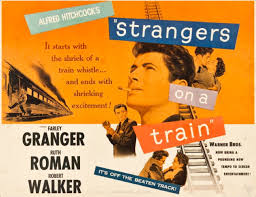
Today we review a psychological thriller, produced and directed by the “Master of Suspense,” Alfred Hitchcock: “Strangers on a Train.” The movie is based on a book by Patricia Highsmith, who wrote many books, including the Ripley series. I have previously reviewed ‘Purple Noon,’ a French film based on her novel, “The Talented Mr. Ripley.” Like many of her novels, the plot of “Strangers on a Train” tells the tale of two central male characters, where one, who is usually narcissistic, tries to exploit another for personal gain.
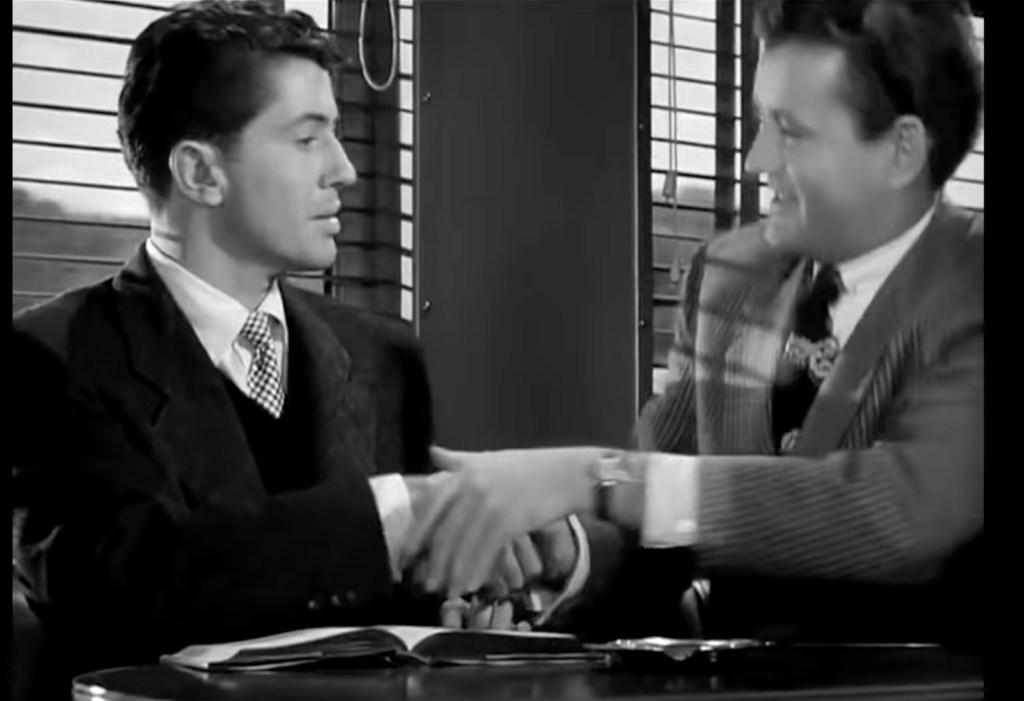
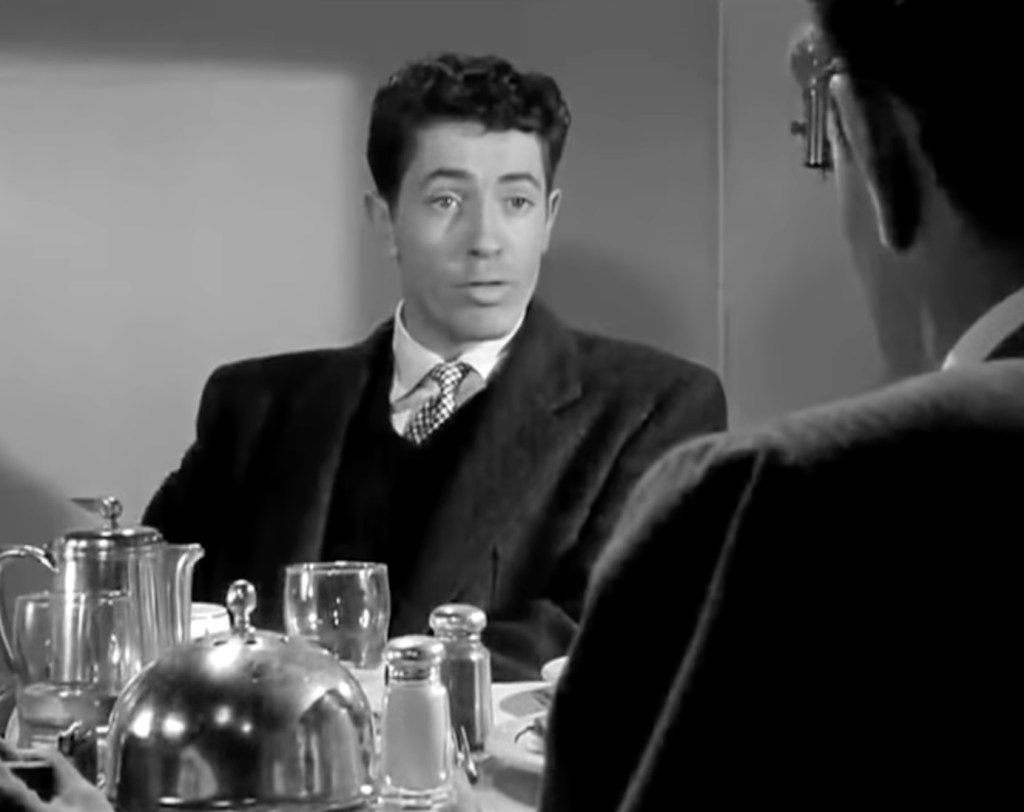
It seems like a chance encounter when tennis player Guy Haines (Farley Granger) meets Bruno Antony (Robert Walker), the no-good scion of wealthy parents. However, Bruno knows a lot about Guy. He knows that Guy wants a divorce from his wife, Miriam (Patricia Hitchcock), so that he can marry Ann (Ruth Roman), the daughter of a senator. Bruno has a twisted proposition for Guy.
As Guy and Bruno have no known association from before, Bruno would murder Miriam, and Guy would return the favor by killing Bruno’s father, whom the latter despises. As he puts it, the two of them will ‘exchange’ murders. Dismissing the whole conversation as a joke, Guy disembarks the train at a stop in a small town before the train’s ultimate destination to meet with his ex-wife. However, he has forgotten that he lent Bruno his lighter, a detail that will cause him great grief later on.
Guy’s meeting with Miriam becomes confrontational when Miriam reveals to Guy that she has no intention of going through with the divorce. It is also revealed that the rift between the two of them was caused because Miriam had a child who was not Guy’s.
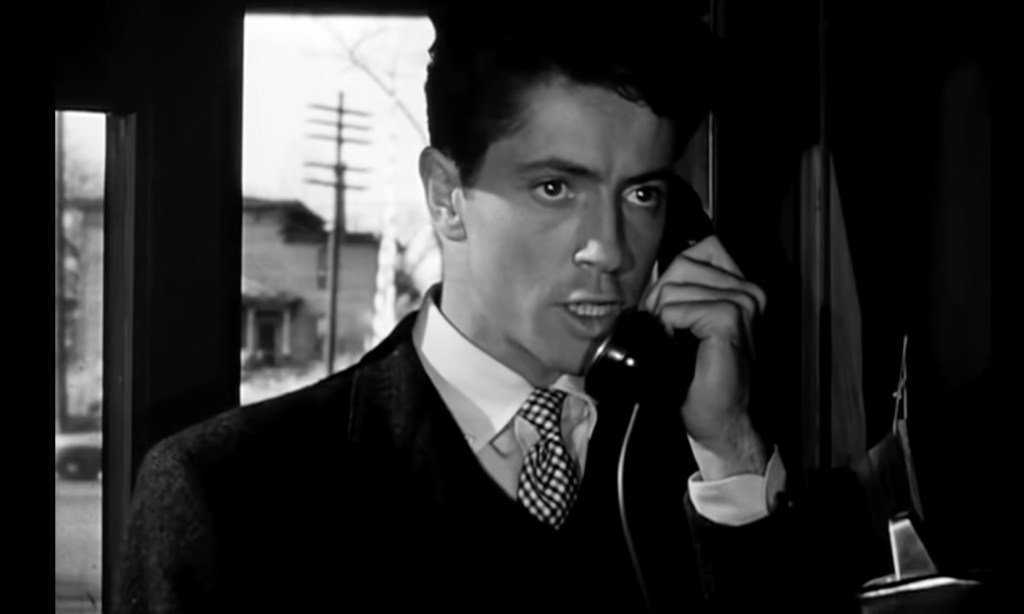
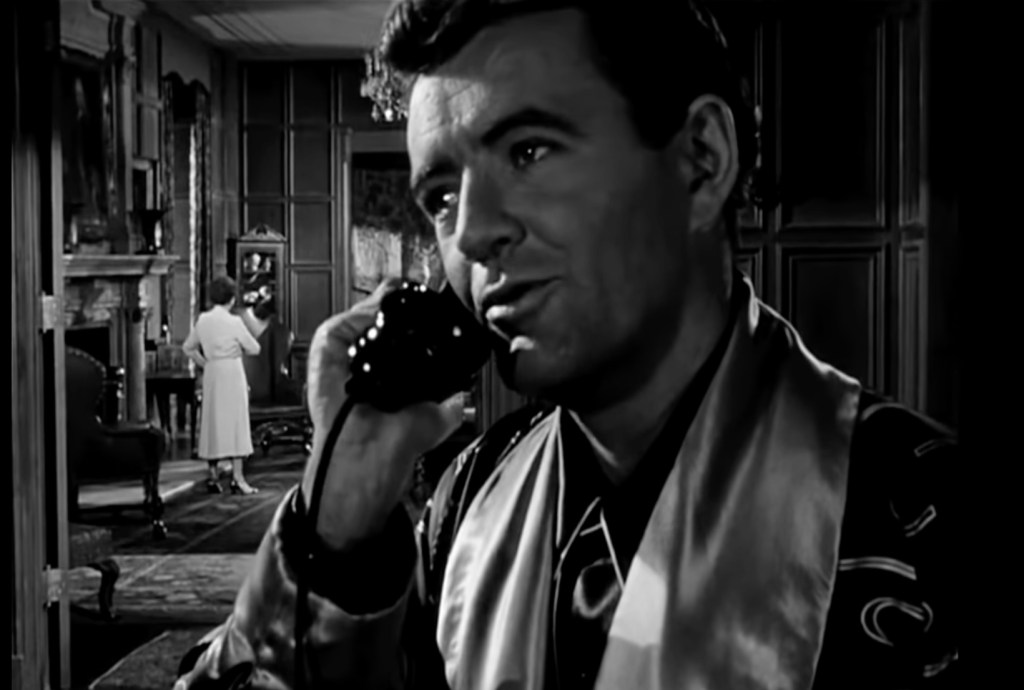
In a subsequent call with his fiancée, Ann, Guy tells her that he wishes to kill Miriam, a statement that would come back to haunt him. Bruno, perhaps deluding himself that he has struck a deal with Guy about the murders, decides to go through with his part.
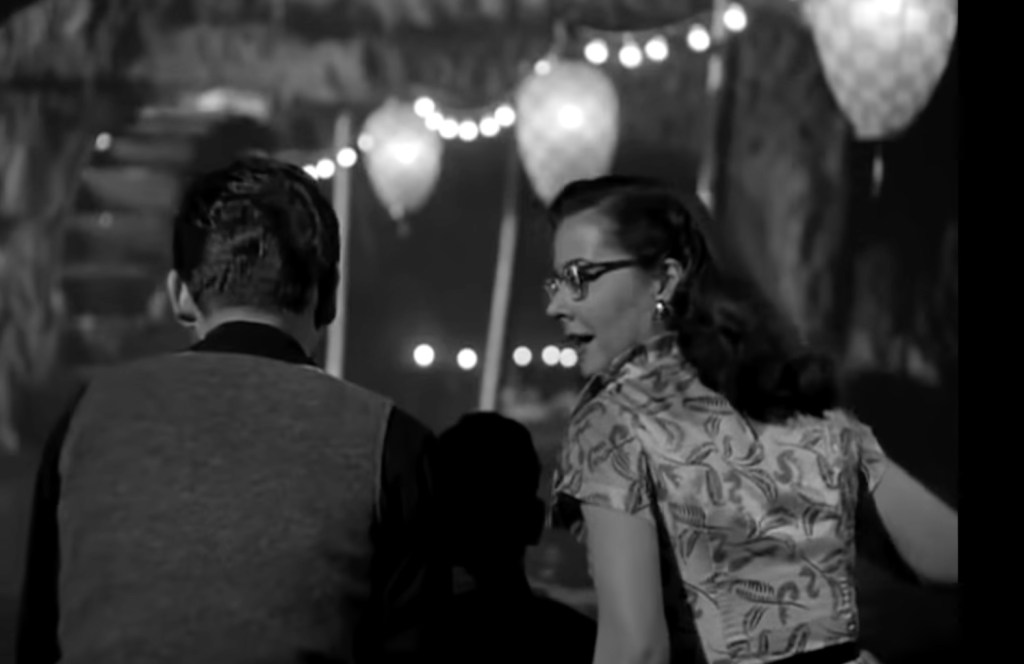
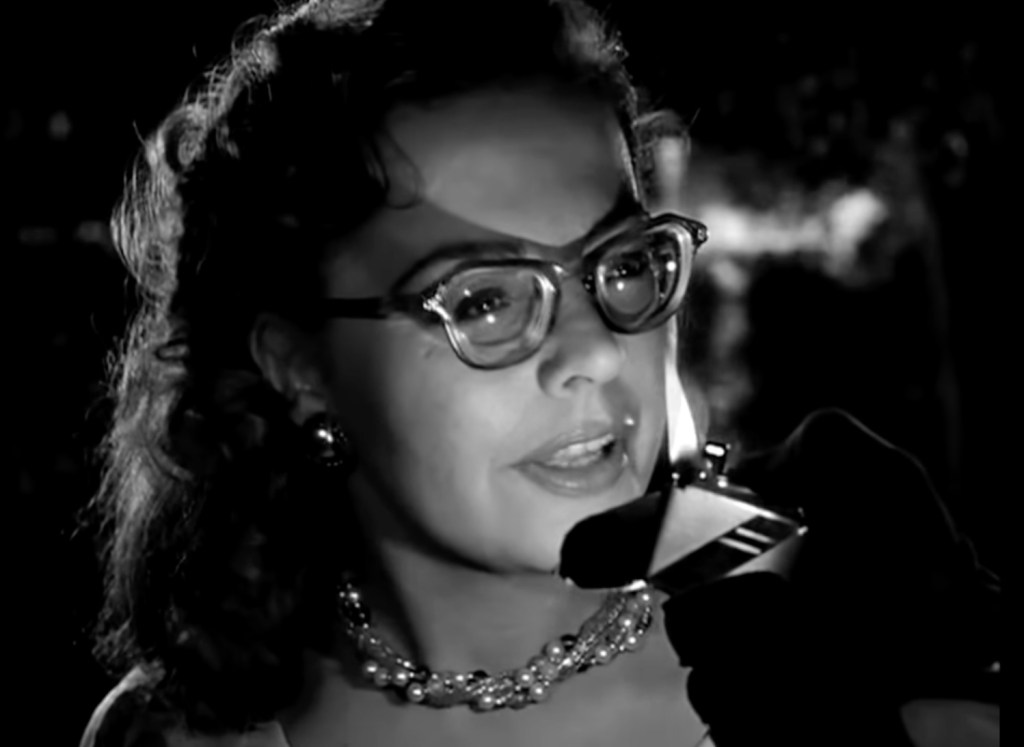
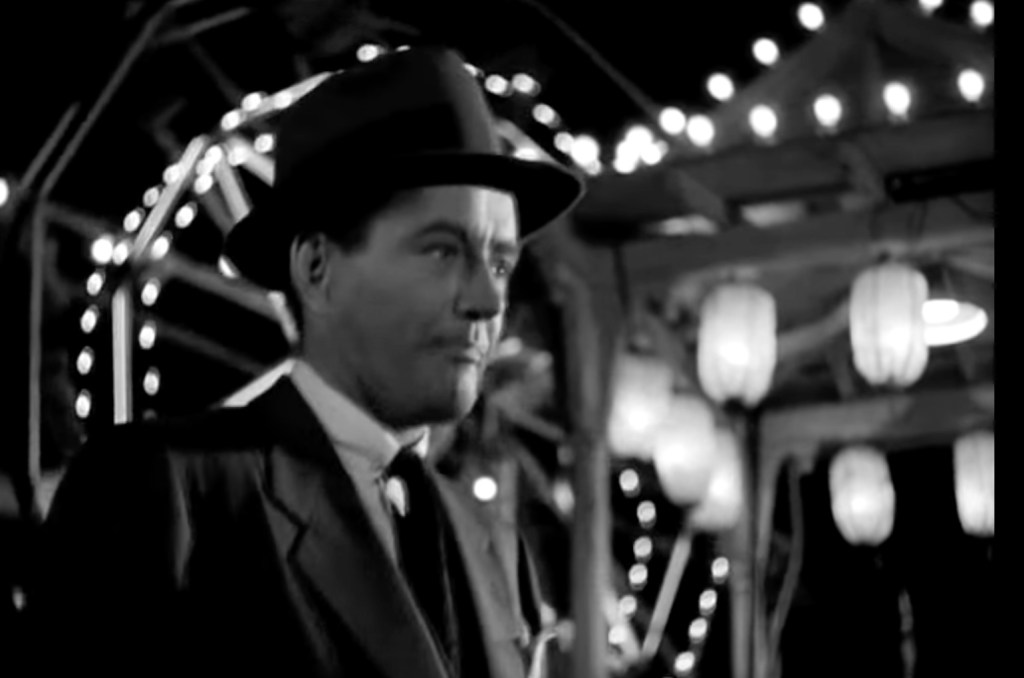
Taking the train to the town where Miriam lives, he locates Miriam’s residence. Just as he is casing her home, he sees her take a bus with two young men and pursues the trio. Miriam and her friends go to an amusement park, and Bruno continues to stalk them. Miriam notices Bruno but does not mind, possibly loving the attention she is getting from the mysterious stranger.
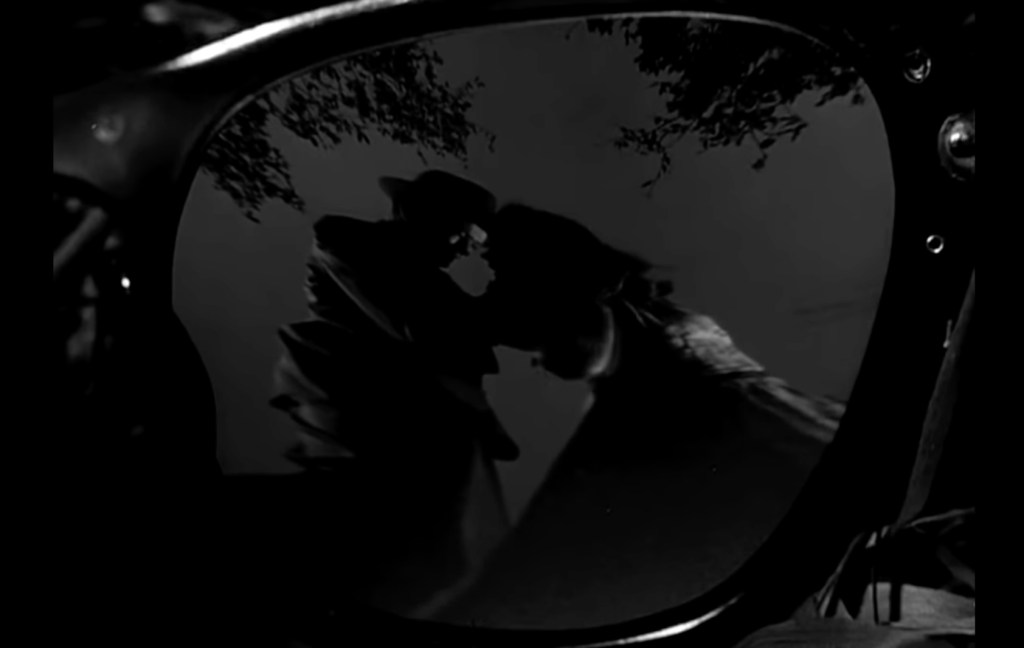
At an opportune moment, Bruno has his moment alone with Miriam, where he strangles her. Bruno approaches Guy and insists that he, Guy, should keep his end of the deal. When Guy calls him a maniac, Bruno is furious and, in his twisted mind, feels betrayed. Guy cannot finger Bruno to the law, as the latter threatens to tell them that he was acting on Guy’s orders.
He then continues to harass Guy by stalking him and suddenly appearing when Guy is with Ann and then showing up at the residence of Guy’s in-laws. Unfortunately for Guy, his troubled history with Miriam also makes him the main suspect in the eyes of the police, who are investigating Miriam’s murder. An officer tails Guy everywhere he goes.
Guy’s alibi for the night of the murder, a professor who was traveling with him on a train, is too drunk to remember him. Furthermore, Bruno increases pressure on Guy and wants his father eliminated immediately. He even has a devious plan to implicate Guy and place him at the crime scene.
What can Guy do to save himself from his predicament? Is there a way for Guy to prove his innocence? The rest of the movie answers these questions.
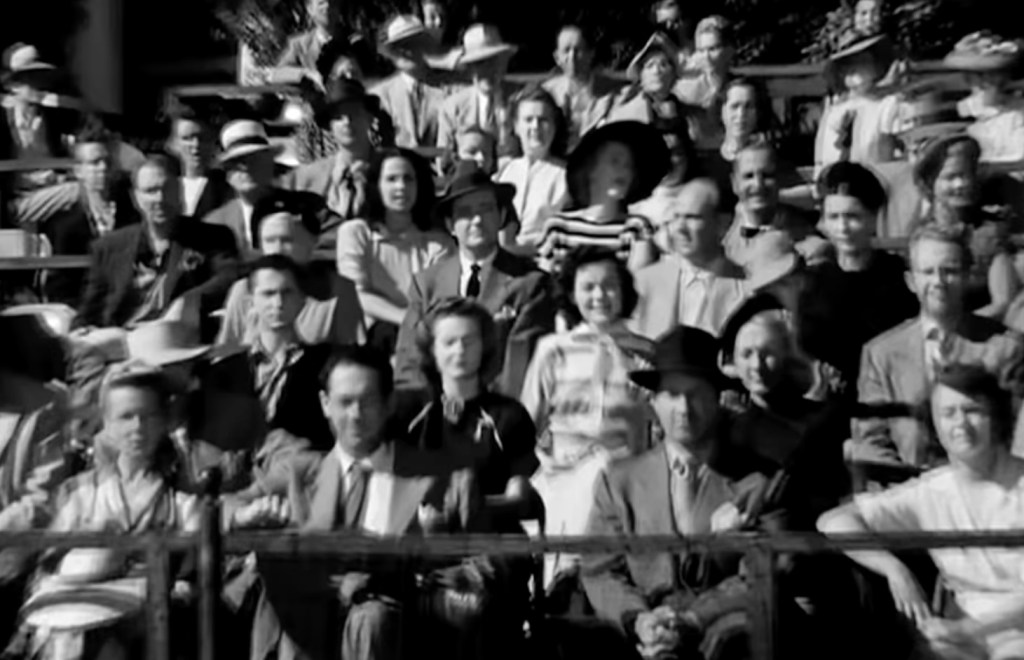
In typical Hitchcockian style, “Strangers on a Train” includes numerous suspenseful scenes. Bruno’s stalking and murdering Miriam is one of them. The climax has a thrilling tennis match, which, in my opinion, was unnecessary. I did not see the need for Guy to fight to win a match when his life is on the line. I understand that he needed to participate in it so that he did not arouse Bruno’s suspicions, but he might as well have lost 6-0, 6-0, 6-0 and then left the place sooner. Another classic Hitchcock moment is a scene where Bruno drops the lighter in a drain and struggles to retrieve it.
While the movie has some light and dark scenes like classic noirs, it cannot be classified as film-noir as it did not have a central Femme Fatale character. Miriam, the evil ex-wife, dies off too early. One can argue, however, that Guy was the patsy in Bruno’s fiendish scheme.
The movie deviates from Highsmith’s book in numerous areas. In the book, Guy is an architect, while he is a tennis player in the movie. Alfred Hitchcock also made significant changes to the plot and the ending to make it easier to get past the highly restrictive censorship code at that time.
Regardless, “Strangers on a Train” is an absorbing thriller worth watching. While the entire cast has put in decent performances, Robert Walker’s performance as the psychotic Bruno is particularly noteworthy.









 Bay Area Bloke