

Today, we will look at director Roman Polanski’s adaptation of Shakespeare’s Macbeth to the big screen. This overlooked gem is his first movie after the gruesome murder of his wife, Sharon Tate. The movie preserves most of Shakespeare’s storyline but includes a few small deviations. The original dialogue from the play is also retained almost in its entirety.
Shakespeare’s Macbeth is an intense tale of greed, ambition run amok, murder, betrayal, and ultimately redemption, with a few supernatural elements thrown in. This may well be the ‘drama-noir’ of its time, as it packs crime, an antihero, and the ultimate femme-fatale.
Macbeth’s end with retribution, compatible with the ending expected from noir stories. Set in a universe where skies are perpetually bleak, this adaptation of the play is a gothic rendition of the iconic tragedy. It includes a few scenes of violence and some nudity.
In the movie, some iconic soliloquies in Shakespeare’s Macbeth are presented simply as thoughts in the voices of the respective characters in the background as they go about their business. In a few cases, however, he stays faithful to the original script and has his characters perform the soliloquy. We will see examples of both cases later in the article.
Personally, I felt that this was an ingenious combination of strategies by Polanski. While a well-performed soliloquy can deliver a great impact on the audience, too many of them could make the film seem like a play performed by actors and less like a movie with characters.
For the same reason, I also liked that the exaggerated theatrical expressiveness from the thespians, that one sees in older movie adaptations of Shakespearean plays, has been toned down and adds more credibility to the movie for a contemporary audience.
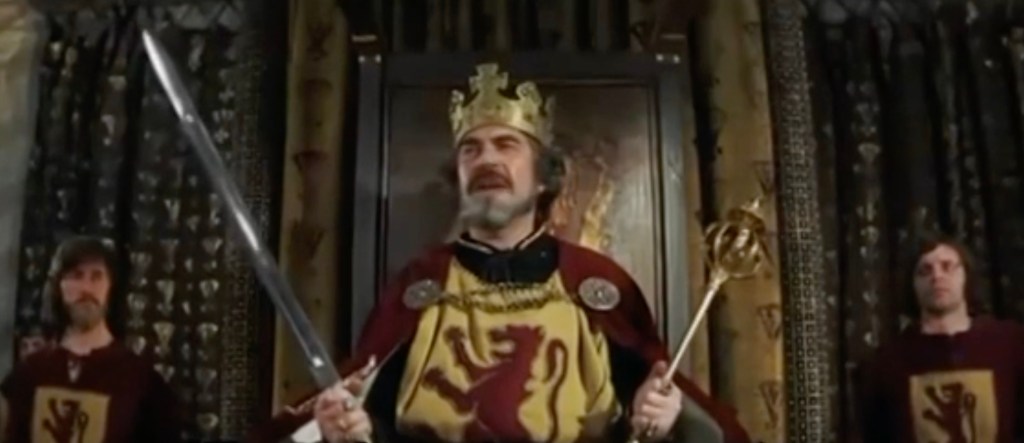
The plot begins when a wounded soldier reports to Scottish King Duncan (Nicholas Selby) about great acts of valor from his top commanders, Macbeth and Banquo, in leading his army to victory. The Scottish army has been involved in a war against the allied forces of Ireland and Norway, who had been aided by the traitorous Scottish Thane of Cawdor. Duncan, pleased with his commander, decides to bestow the title of Thane of Cawdor on Macbeth.
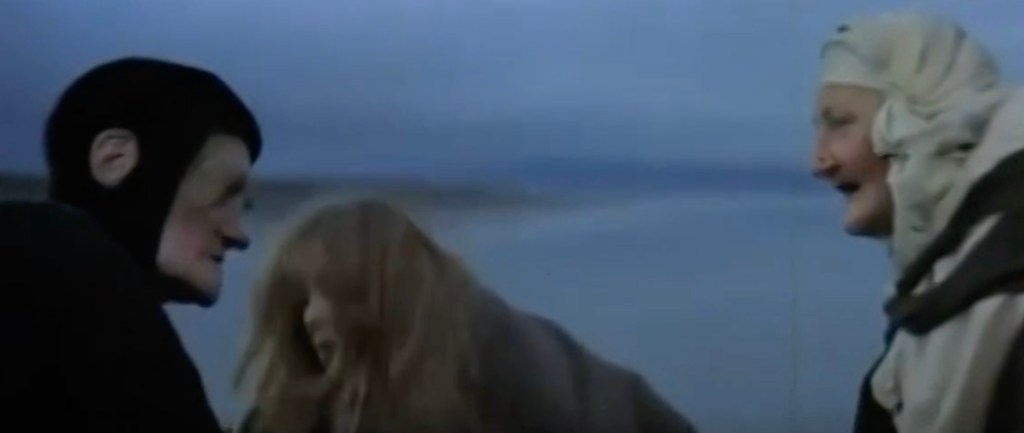
Meanwhile, three witches are making plans to meet Macbeth and give him good news.
When shall we three meet again? In thunder, lightning, or in rain?
When the hurly-burly’s done, When the battle’s lost and won.
That will be ere the set of sun. Where the place? Upon the heath.
There to meet with Macbeth.
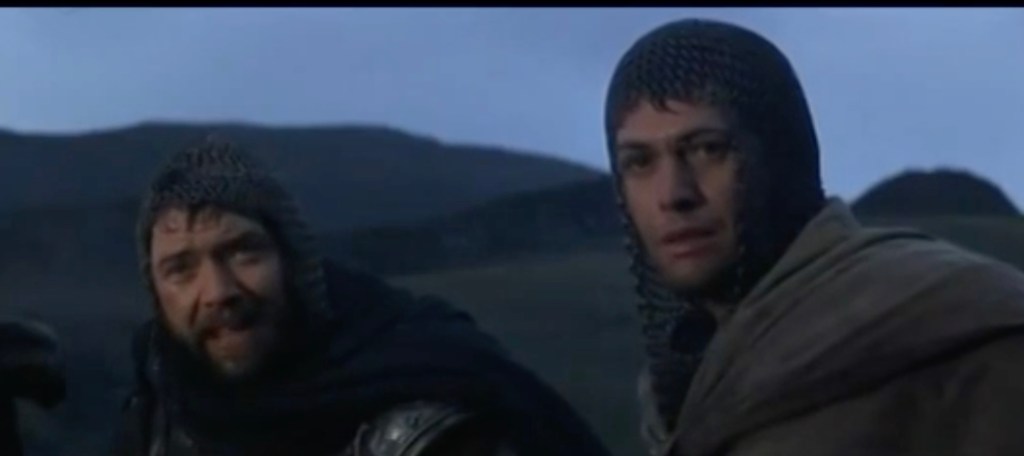
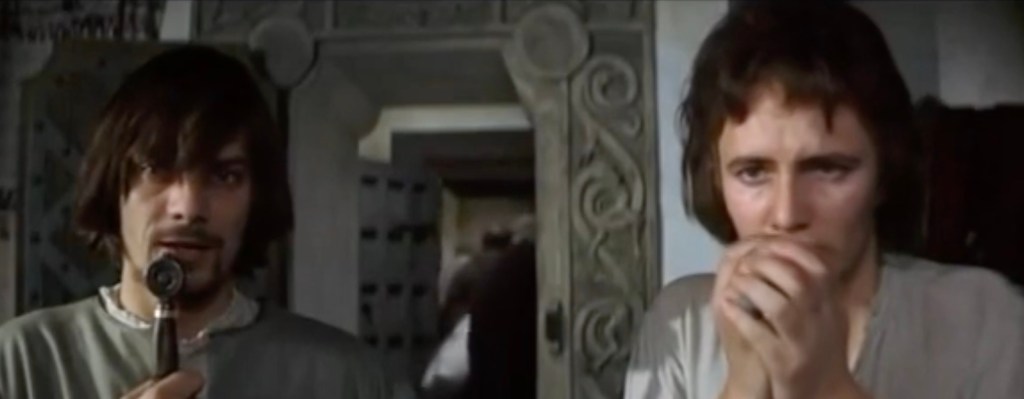
As Macbeth (Jon Finch) and Banquo (Martin Shaw) are returning home after battle, the witches appear before them. They inform Macbeth that he will be bestowed the title of Thane of Cawdor and will become the King of Scotland.
All hail, Macbeth! Hail to thee, Thane of Glamis!
All hail, Macbeth! Hail to thee, Thane of Cawdor!
All hail, Macbeth, that shalt be king hereafter!
To Banquo, they make ambiguous prophecies, one of which is that he will be “lesser but greater” than Macbeth.
Lesser than Macbeth and greater.
Not so happy, yet much happier.
Thou shalt get kings, though thou be none. So all hail, Macbeth and Banquo!
While Macbeth takes their prophetic words with mixed feelings of joyful excitement and fear, Banquo pays no heed to them.
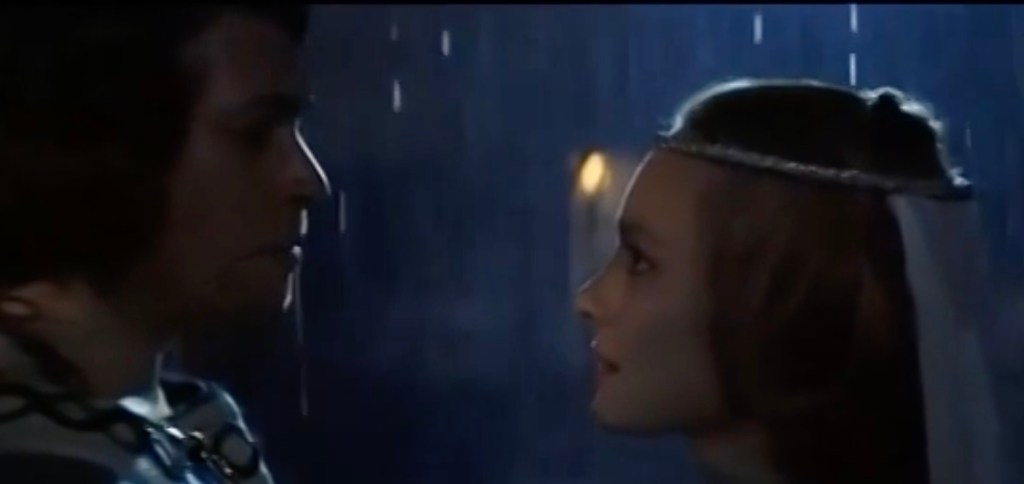
Upon receiving a letter from Macbeth about his encounter with the witches, his wicked wife, Lady Macbeth (Francesca Annis), conceives a fiendish plan for Macbeth to usurp the throne. She is, however, unsure if Macbeth is evil enough to work her plan.
In Shakespeare’s original script for the play, Lady Macbeth voices these thoughts in a soliloquy. In this movie, we hear Lady Macbeth’s voice in the background as she is preparing for her husband’s arrival.
The raven himself is hoarse That croaks the fatal entrance of Duncan Under my battlements. Come, you spirits That tend on mortal thoughts, unsex me here, And fill me from the crown to the toe top-full Of direst cruelty. Make thick my blood, Stop up th’ access and passage to remorse, That no compunctious visitings of nature Shake my fell purpose, nor keep peace between Th’ effect and it. Come to my woman’s breasts, And take my milk for gall, you murd’ring ministers, Whatever in your sightless substances You wait on nature’s mischief. Come, thick night, And pall thee in the dunnest smoke of hell, That my keen knife see not the wound it makes, Nor heaven peep through the blanket of the dark, To cry, ‘Hold, hold!’
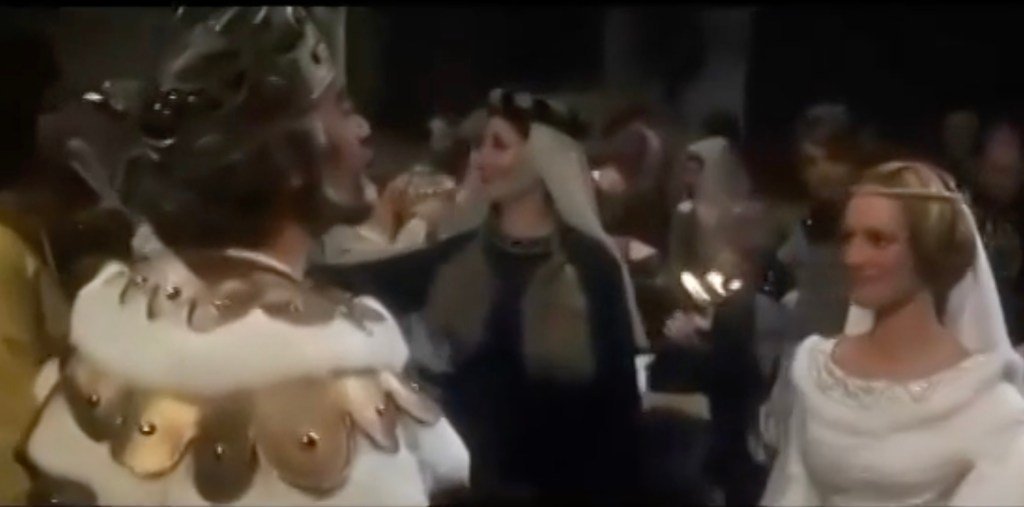
Upon his return, Macbeth is shocked when King Duncan bestows the now vacant title of Thane of Cawdor on him, validating the prophecy of the witches. However, he is resentful about the nepotism when Duncan makes his own son, Malcolm, the Prince of Cumberland. Duncan announces that he is going to spend the night at Macbeth’s Castle in Inverness.
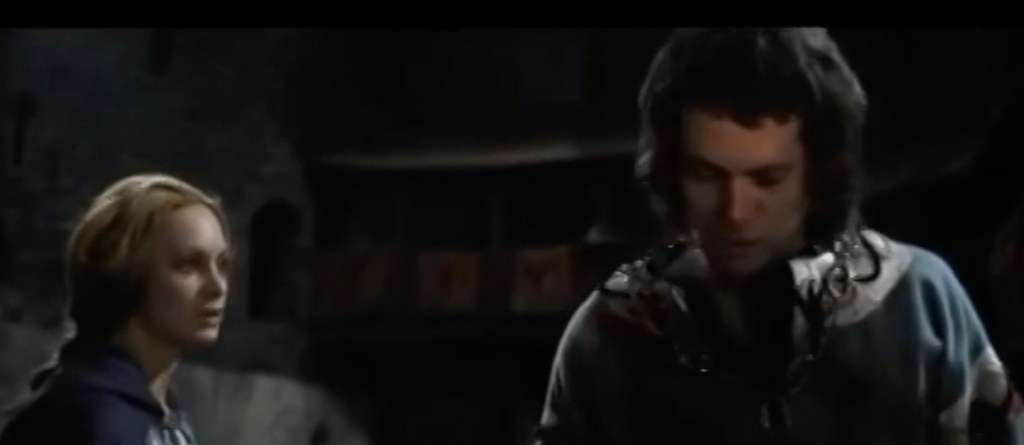
While preparing to host the king, Lady Macbeth persuades her skeptical husband to seize this opportunity and assassinate Duncan. When he first brushes aside her idea, she retorts:
What beast was’t then, That made you break this enterprise to me?
She then assures him:
But screw your courage to the sticking-place, And we’ll not fail. When Duncan is asleep – Whereto the rather shall his day’s hard journey Soundly invite him – his two chamberlains Will I with wine and wassail so convince That memory, the warder of the brain, Shall be a fume, and the receipt of reason A limbeck only: when in swinish sleep Their drenchèd natures lied as in a death, What cannot you and I perform upon The unguarded Duncan? What not put upon His spongy officers, who shall bear the guilt Of our great quell?
Macbeth goes along despite being tormented by his own guilt. His guilt then manifests as delusion.
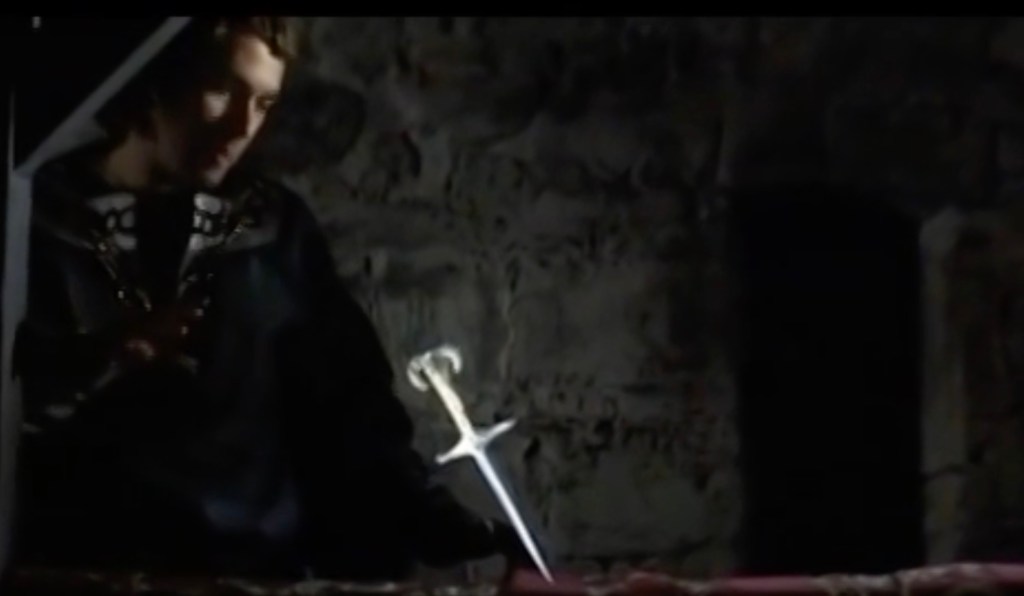
Macbeth sees an illusory dagger appear before him and questions his own sanity. In this case, Polanski stays faithful to the original script. Jon Finch, as Macbeth, performs the soliloquy.
Is this a dagger which I see before me,
The handle toward my hand? Come, let me clutch thee.
I have thee not, and yet I see thee still.
Art thou not, fatal vision, sensible
To feeling as to sight? or art thou but
A dagger of the mind, a false creation,
Proceeding from the heat-oppressed brain?
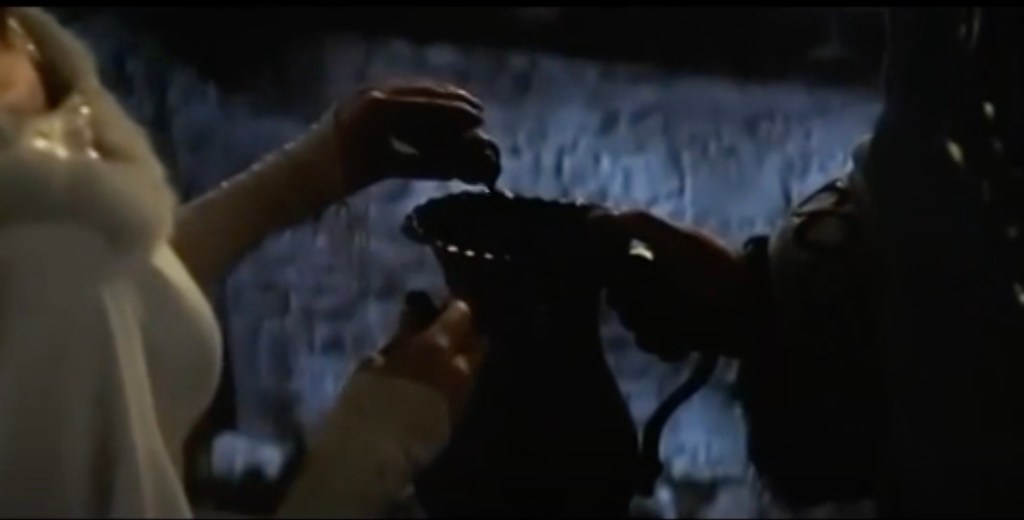
That night Macbeth commits the treasonous act of murdering Duncan after poisoning the latter’s guards. He then proceeds to kill the guards to implicate them in the crime. His conscience continues to torment him.
Methought I heard a voice cry “Sleep no more! Macbeth does murder sleep,” the innocent sleep, Sleep that knits up the ravelled sleave of care, The death of each day’s life, sore labour’s bath, Balm of hurt minds, great nature’s second course, Chief nourisher in life’s feast.
The following morning, when Duncan’s lifeless corpse is discovered, Macbeth claims to have murdered the guards in a fit of rage for killing the king. Duncan’s sons Malcolm and Donalbain flee to England, fearing that a conspiracy is underway and they could be its next victims.
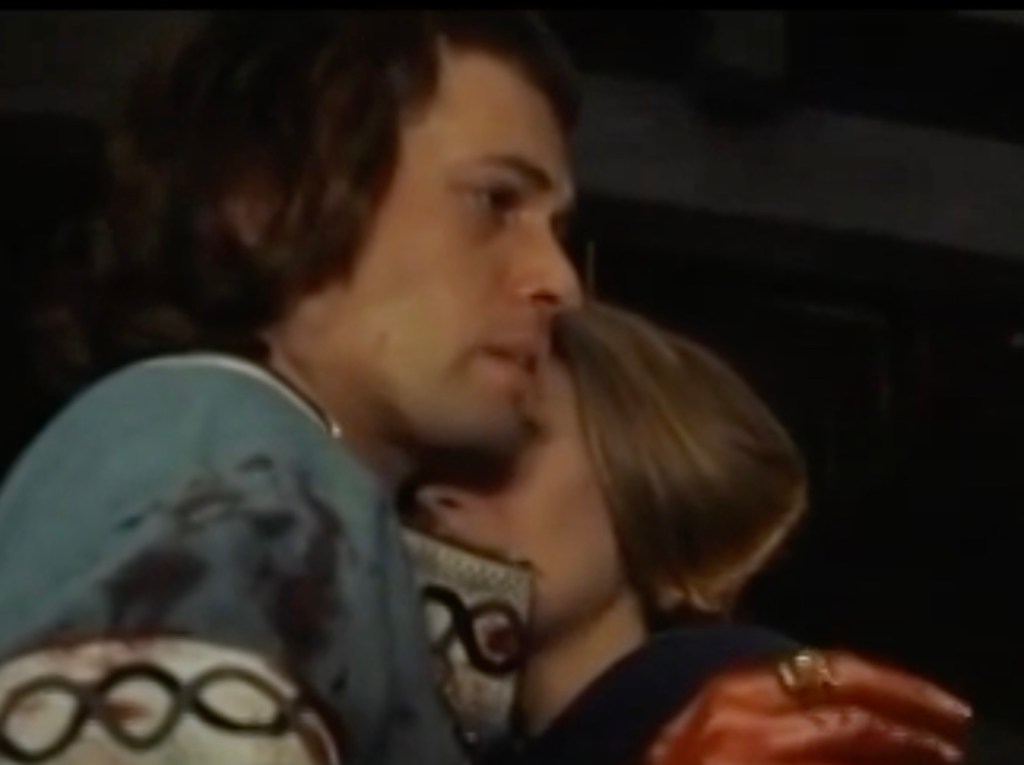
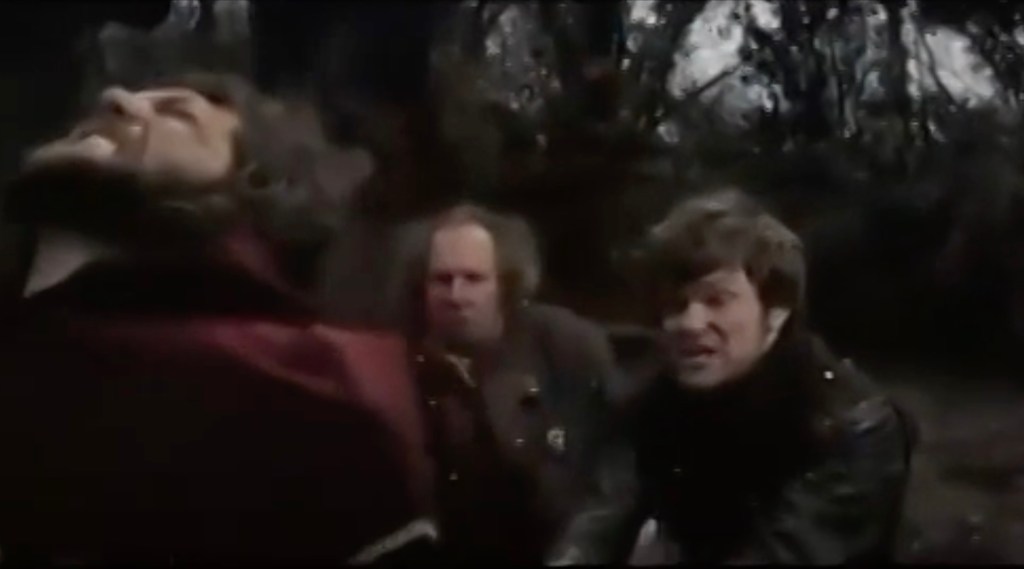
Fearing a backlash from his friend, Banquo, Macbeth dispatches two assassins to eliminate Banquo and his son. While Banquo’s son escapes from the murderous attempt, the assassins kill Banquo.
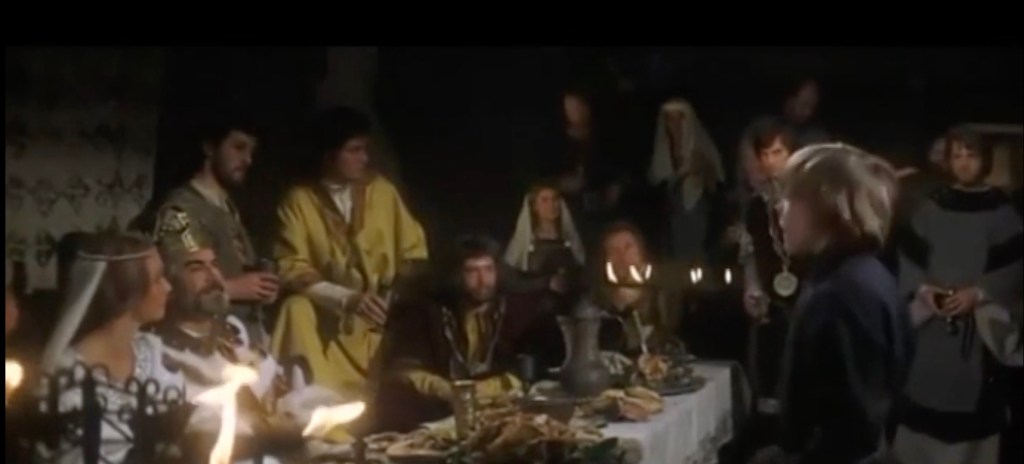
Macbeth’s guilt continues to manifest as paranoid delusions. At a banquet he hosts in his own castle, he sees Banquo’s blood-dripping apparition seated at the table. Macbeth is terrorized by this experience.
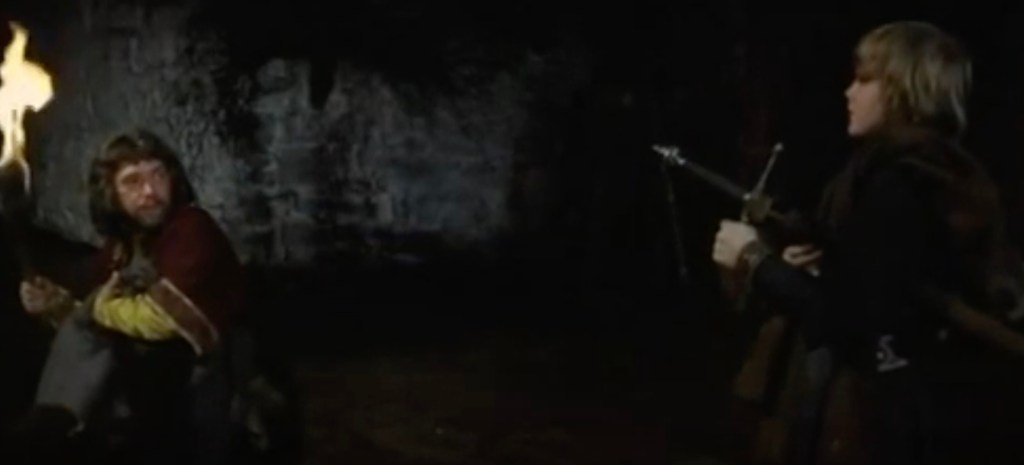
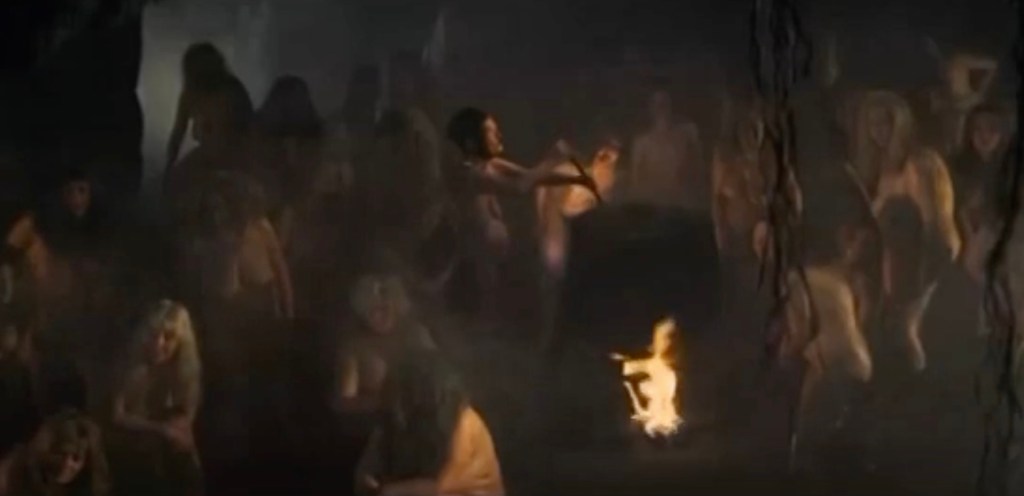
In desperation, Macbeth returns to the place he met the witches and summons them again. They reappear and take him to their lair, where they are performing an eerie ritual.
Double, double toil and trouble; Fire burn, and caldron bubble.
Fillet of a fenny snake, In the caldron boil and bake; Eye of newt, and toe of frog, Wool of bat, and tongue of dog, Adder’s fork, and blind-worm’s sting, Lizard’s leg, and owlet’s wing,— For a charm of powerful trouble, Like a hell-broth boil and bubble.
Scale of dragon; tooth of wolf; Witches’ mummy; maw and gulf Of the ravin’d salt-sea shark; Root of hemlock digg’d i’ the dark;
Gall of goat, and slips of yew Sliver’d in the moon’s eclipse;
Finger of birth-strangled babe Ditch-deliver’d by a drab,— Make the gruel thick and slab: Add thereto a tiger’s chaudron, For the ingredients of our caldron.
Through revelations and visions, the witches reassure Macbeth that he can only die when the woods of Birnam come to the city of Dunsinane and that only a man not born of a woman can kill him, Macbeth. This is one of the most spooky and scary scenes in the movie.
A few other prophecies the witches reveal, however, cause Macbeth extreme trepidation. One of them is that a line of kings will have Banquo’s image. They also tell him to fear Macduff, one of Macbeth’s detractors.
Macbeth, now convinced of his own immortality, returns to the castle. In an effort to quash any chance of a rebellion, he instills fear among his people with his dictatorial, autocratic rule. Macduff, fearing for his life, flees to England.
Helped by the unscrupulous Thane of Ross, Macbeth’s men decimate Macduff’s family, slaughtering the latter’s wife, servants, young son, and even two of his infants. This part of the movie has some disturbing visuals. On the positive side, they spared the audience much of the details. It must also be mentioned that the part about the Thane of Ross aiding Macbeth’s devilish scheme is not part of the original play.
Macduff is devastated and vows revenge on Macbeth when he hears about the murder of his entire family. Forging an alliance with England, Macduff and Malcolm return to Scotland with a huge army to take on Macbeth.
In the meanwhile, Lady Macbeth dies, succumbing to her own unbearable guilty conscience.
Out! out! damned spot ..All the perfumes of Arabia will not sweeten this little hand.
Macbeth too is fighting his own inner demons.
Tomorrow, and tomorrow, and tomorrow, Creeps in this petty pace from day to day, To the last syllable of recorded time; And all our yesterdays have lighted fools The way to dusty death. Out, out, brief candle! Life’s but a walking shadow, a poor player, That struts and frets his hour upon the stage, And then is heard no more. It is a tale Told by an idiot, full of sound and fury, Signifying nothing.
Macduff’s army arrives at Dunsinane to overthrow Macbeth. Macbeth soon finds out that the witches tricked him with metaphors and symbolic language when they spoke of woods moving into the city and his immunity to death at the hands of a man born to a woman. (I never understood the second one fully, even when my high school English teachers did their best to explain it to me. I still cannot understand it. Maybe someone can clearly explain what it means in the comments.)
This adaptation of Macbeth is nowhere close to a magnum opus. With its limited budget, Polanski perhaps had to make a few compromises. The ensuing war between Macduff’s forces against Macbeth’s army is limited to a few scenes of Trebuchets throwing rock projectiles at the castle. Macduff and his men easily storm the castle with hardly any opposition and find a lone Macbeth.
However, the final confrontation between Macduff and Macbeth is perhaps the best part of the film. In this adaptation, unlike in the original version, Macbeth seems to overpower Macduff throughout the duel. The duel is quite impressive, beginning as a sword fight, then morphing into hand-to-hand combat until Macduff, with a stroke of luck, manages to get his hands on a sword.
Polanski’s Macbeth ends with an epilogue that is absent from the original script. While I am usually against messing with classics, I think this improvisation is a stroke of genius. Polanski, who was mourning his wife’s unfortunate death at the hands of Charles Manson’s death cult when he made the movie, proclaims through this epilogue that evil will continue to live on for eternity in the hearts of men.
As a director, Polanski has often proved that he is unafraid to push the envelope or take chances in his movies. He does the same here. By casting relatively younger thespians, Jon Finch and Francesca Annis, to play the lead characters in a Shakespearean play, he took a risk few other directors would attempt. I felt this was a great move.
While many critics may disagree with me, I think both actors brought more credibility and youthful energy to the characters. Personally, I could more easily envision an ambitious person go through emotions of guilt and paranoia after pushing himself to commit selfish, unscrupulous deeds.
Polanski’s use of some scenes of violence and a few scenes of nudity (almost negligible in comparison to movies of our time) is in tune with the expectations of contemporary audiences. As a big lover of literature and as a big fan of the play, I was pleased that he retained the lines of original dialogue.
Scenes where many soliloquies from the original are transformed into thoughts of the characters, voiced by a narration, also gave a contemporary feel to the movie. While I did enjoy the soliloquies from Olivier’s theatrical rendition of Hamlet, I applaud Polanski’s efforts to adapt the play for a modern movie audience.
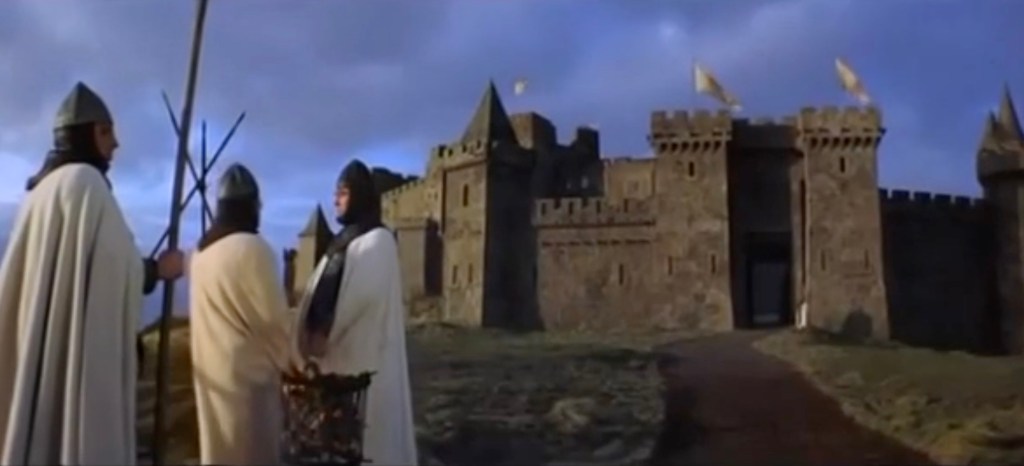
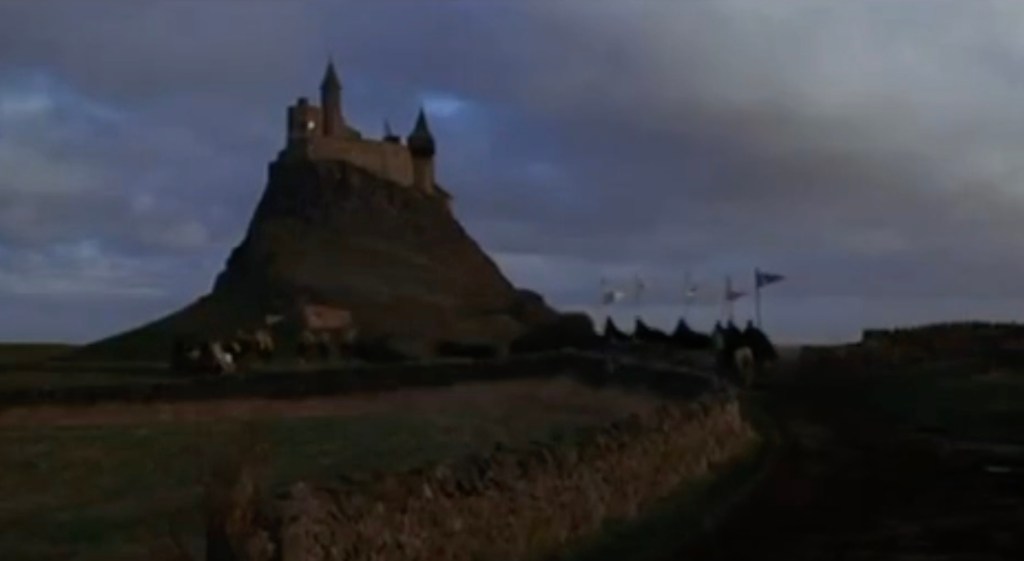
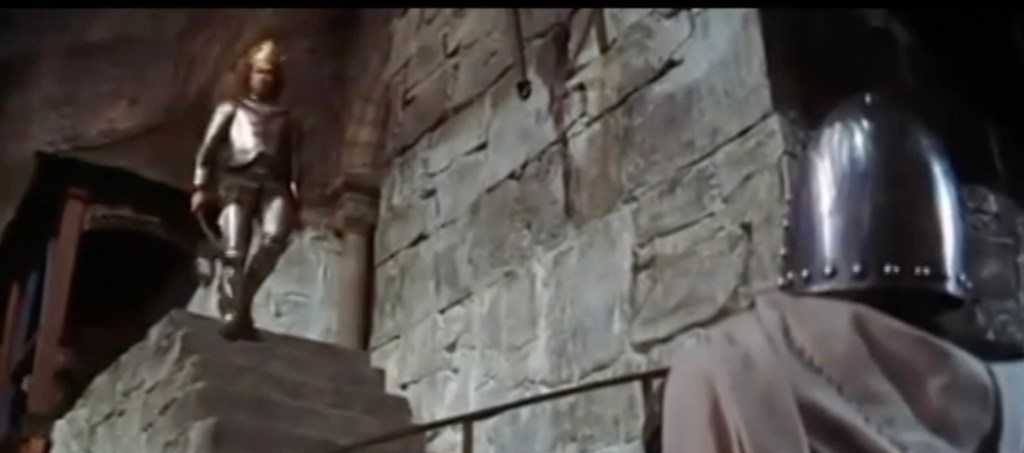
In tune with the dark nature of the tale, Polanski’s Macbeth is steeped in darkness. All outdoor scenes show dark, cloudy, dusky, and overcast skies. There is no glitz and ostentation, even inside the castles of nobility. The castles in the movie are dark and dingy, spartan stone constructions that set the tone for the dark and devilish storyline. There are no beautiful gardens around these structures. Only dogs, bears, and livestock are plentiful in their grounds. Polanski has also thrown in a brief scene of bear-baiting, an ancient practice where spectators witnessed bears battle dogs.
Interestingly, MGM, Paramount, and Universal refused to fund Polanski’s movie. It was Hugh Heffner’s Playboy Productions who agreed to finance the film. Unfortunately, the movie was a box-office bomb.
Many viewers like me may find an allure in the raw intensity of the movie that is in sharp contrast to the poetic beauty of Shakespearean prose. This movie, which has gone under the radar of most critics, deserves much more recognition. While it may not suit everyone’s taste, I would encourage my adventurous readers to seek it out and give it a viewing.














 Bay Area Bloke