
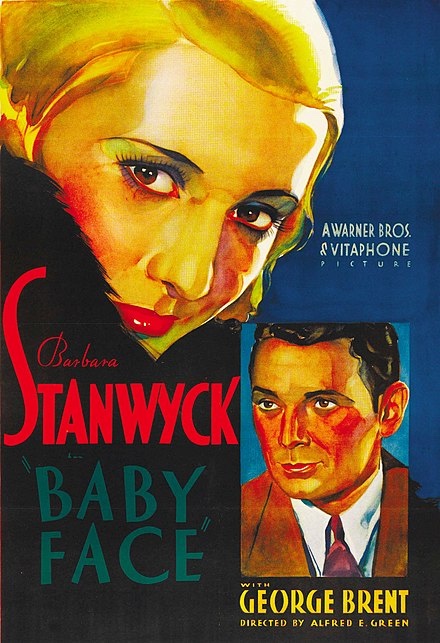
Deemed notorious and unsavory when released, “Baby Face” is a landmark movie to come out of the Pre-Code Era.
The Pre-Code era lasted from 1927 through 1934, sandwiched between the Silent movie era and the Classic Film Noir era. With limited censoring, it is one of the most interesting times in the history of American cinema, as it allowed movie makers more freedom and creativity.
We looked at three gangster movies from this era: “The Public Enemy,” “Little Caesar,” and “Scarface.” In each of these movies, the male protagonist took the path of criminal activity and used fear and violence to rise in the ranks to attain power and fortune.
“Baby Face” is a drama movie from this era where the female lead masters the art of sexual seduction and rises to the upper crust of society. With its irreverent tagline, “She had it and made it pay,” the movie defied the Victorian moral code that was prevalent at that time. “Babyface” is based on a story from Darryl F. Zanuck and directed by Alfred E. Green.
Barbara Stanwyck, who would later make her name as one of the greatest Femme Fatales in the film noir era, plays Lily Powers, a woman who breaks the rules of morality and the prevalent archetype of a traditional woman.
Lily is the daughter of a bar owner, Nick Powers (Robert Barrat), in Erie, Philadelphia, during the prohibition era. She lives with him and a black maid, Chico (Theresa Harris). Nick has been pimping Lily to bar patrons ever since she was a teenager. Chico is also her inseparable best friend and confidant.
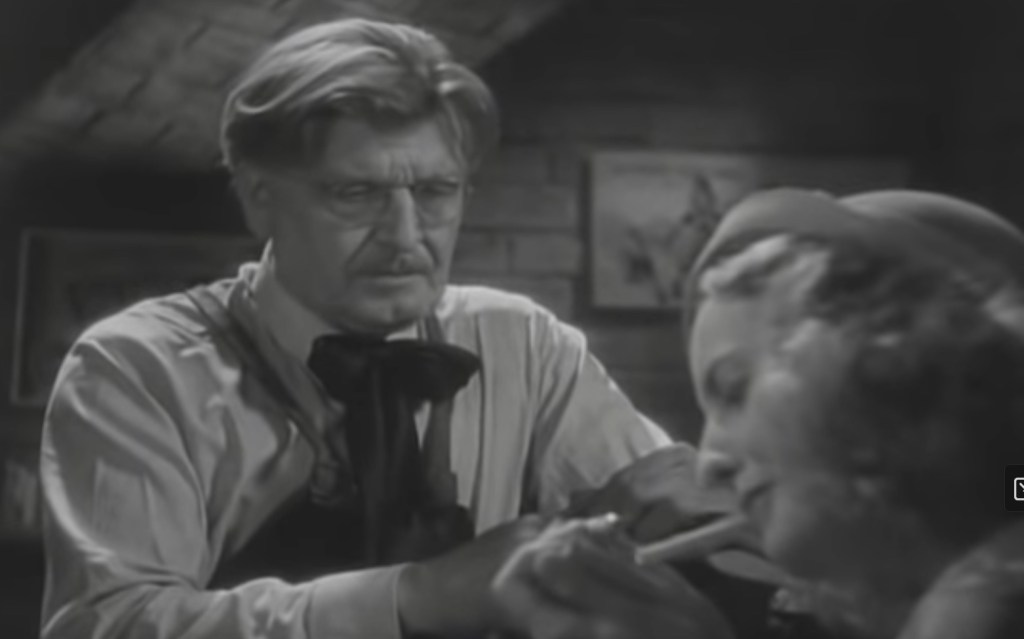
There is one patron who often visits the bar, a well-read cobbler named Cragg, who Lily trusts and respects. Cragg tells Lily that she is not living up to her true potential and hands her a copy of “The Will to Power” by Friedrich Nietzsche.
A local politician, with Nick’s blessings, tries to make moves on Lily, who rejects him with disdain. The lecherous old man persists and attempts to forcefully grab Lily. In response, Lily first drops coffee on his lap and then breaks a beer bottle over his head. The furious, bleeding politician leaves the bar, warning Nick that he will shut down the bar.
Soon after this, an explosion kills Nick, leaving Lily penniless. One of the people who attends Nick’s funeral offers Lily a stripper’s job at a local establishment. When Cragg hears of this, he berates Lily, saying she should stop seeing herself as a victim and use her charms to take control of the situation. Quoting Nietzsche, Cragg challenges Lily to exert her power on others to control them.
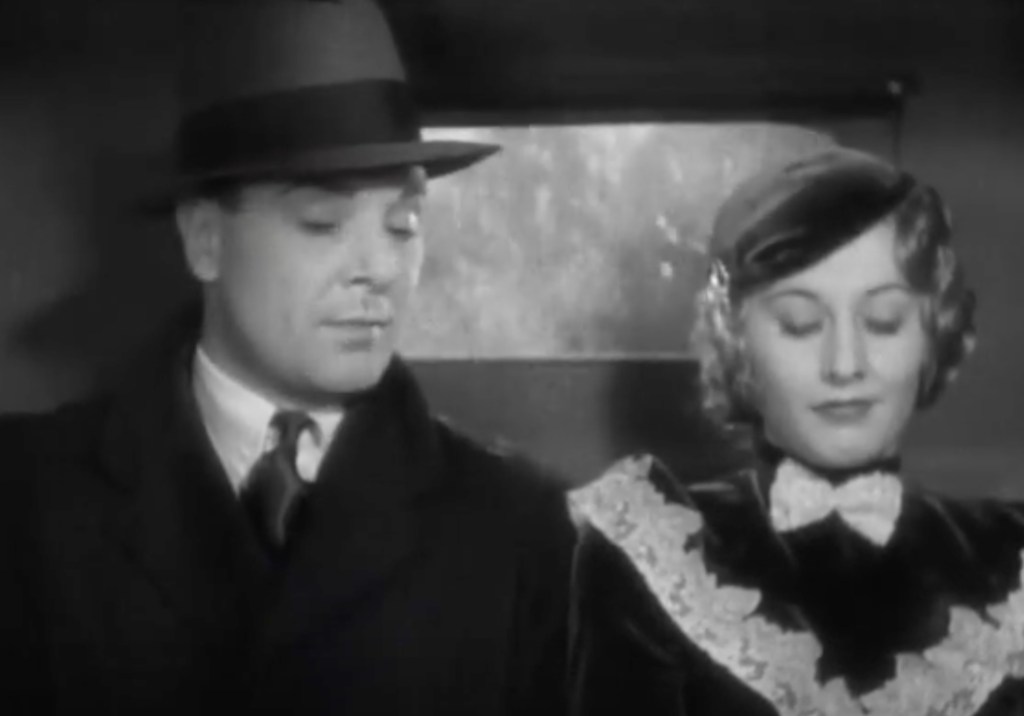
Lily and Chico board a freight train to New York, but a man who works on the train stops them and threatens to have them arrested. Lily instantly turns on her charms and seduces him in exchange for the man’s silence. The two women arrive in New York, where Lily seeks employment at Gotham Trust, a multinational and well-established bank.
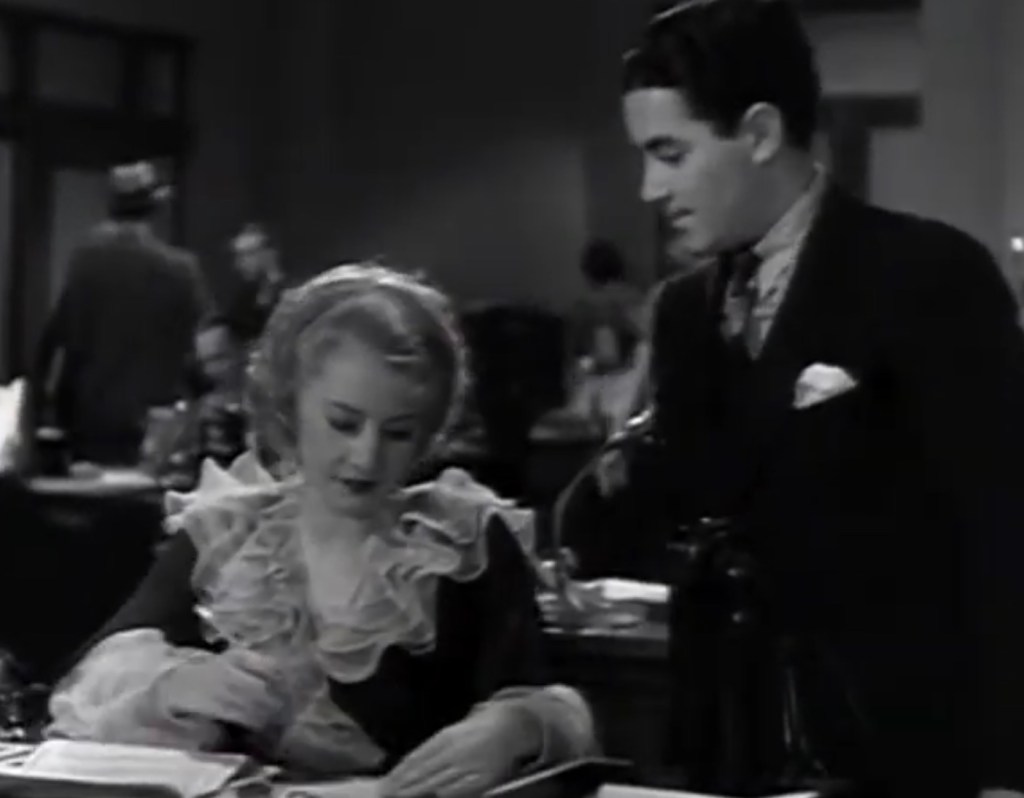
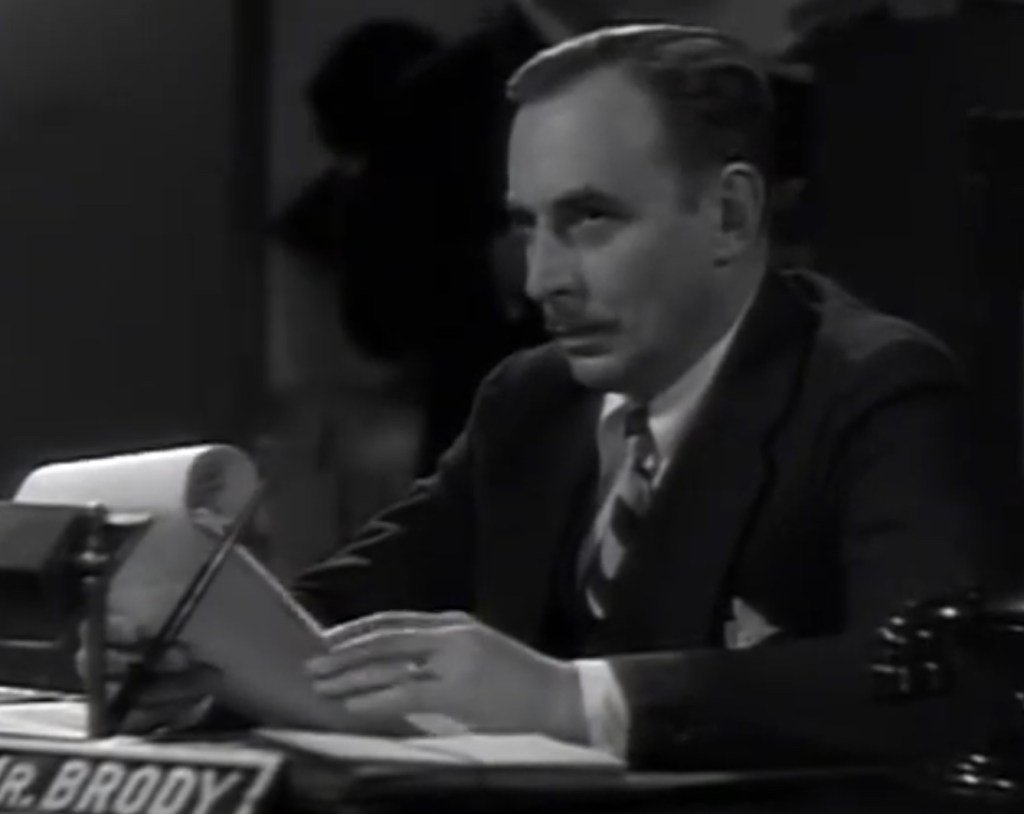
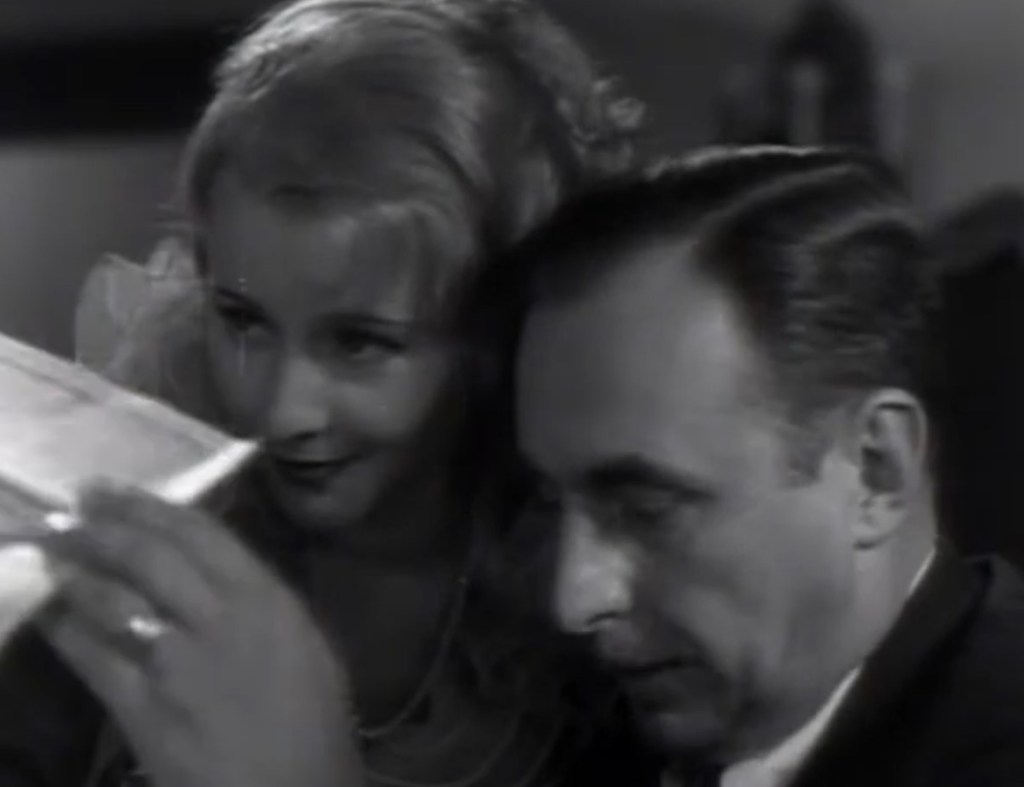
Lily flirts with a clerk, beckons him into an empty office, and does what she needs to do to get her first job at the bank. Lily then starts dating Jimmy McCoy (a young John Wayne), a low-level manager. Lily now steps up her game. She charms McCoy’s boss, Brody (Douglass Dumbrille), into the women’s restroom and has sex with him. Brody’s boss, Ned Stevens (Donald Cook), catches the couple in the restroom and fires Brody. Playing the innocent victim, Lily sheds crocodile tears, saying that it was the first time she had done something like this and that she is broke and knows no one in the city.
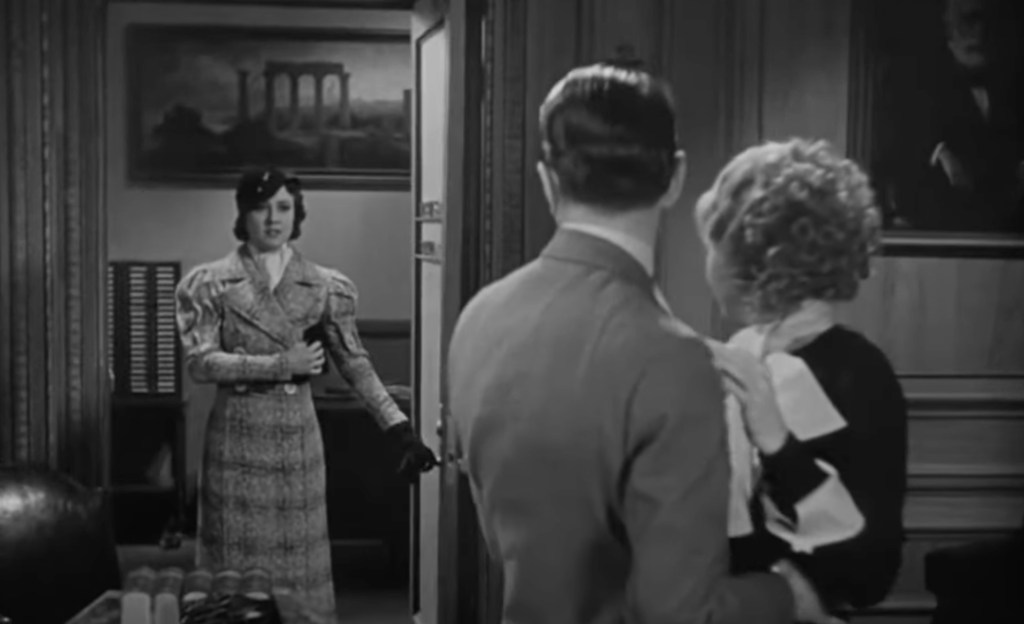
Soon, Ned becomes her latest patsy and falls in love with her. Again, with a carefully calculated step, Lily gets found in a compromising situation with Ned when his fiancée, Ann, visits him at his office. Ann’s father, J. P. Carter, a senior Vice President at the bank, sends Ned away on vacation to “even things out.”
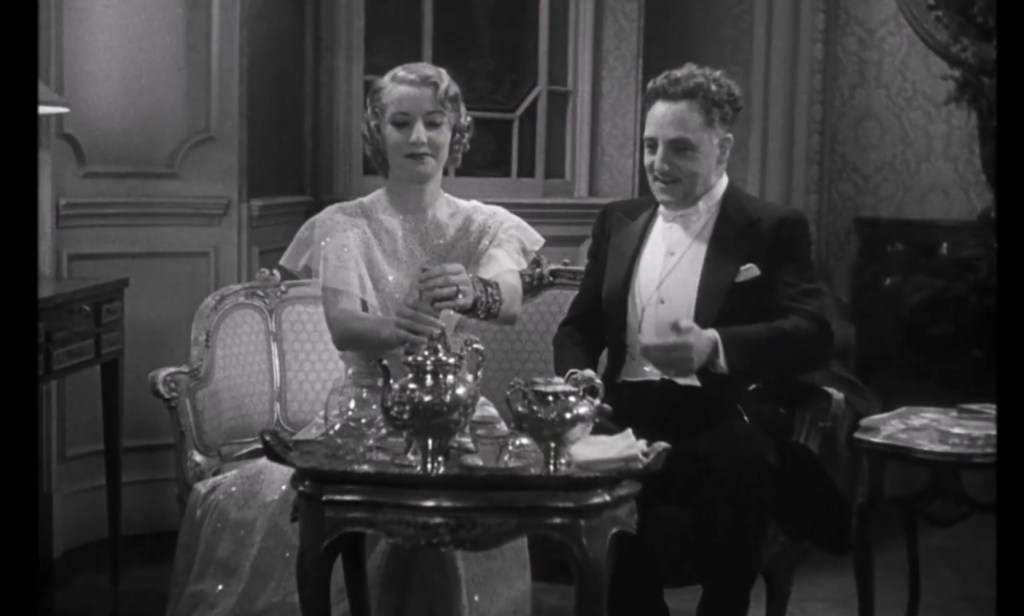
Lily, now a master of seduction, easily seduces Carter and becomes his mistress. When Ned, who is madly in love with Lily, returns from vacation and visits her apartment, he is devastated when he sees Carter there. In a moment of uncontrolled fury, Ned shoots Carter and then turns the gun on himself.
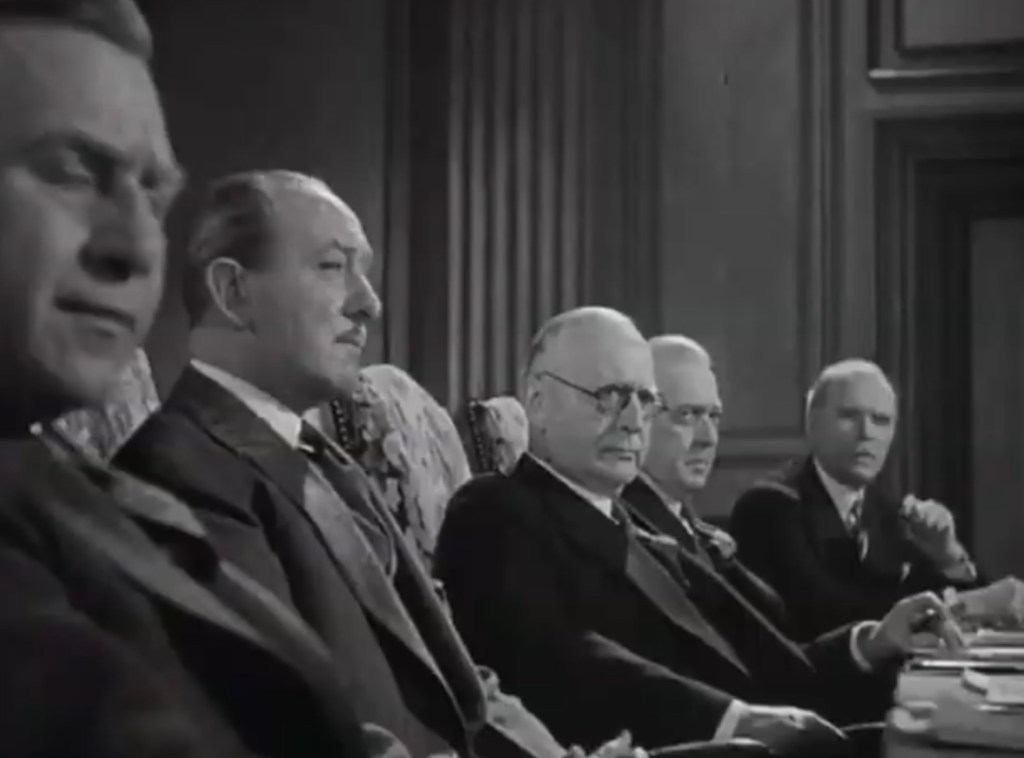
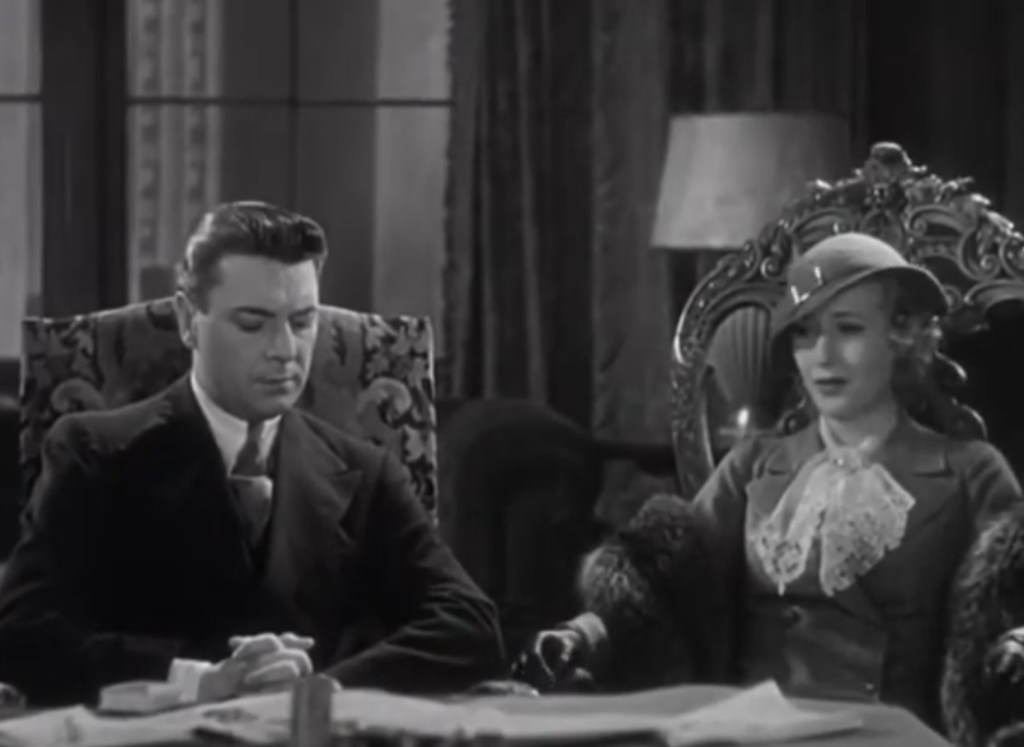
The murder-suicide creates a scandal for the bank. Finding themselves in a desperate situation, the bank appoints Courtland (George Brent), the grandson of the founder, a philanderer, as President. Courtland and the members of the board meet with Lily to work out a settlement in exchange for Lily’s silence with the press. Little do they know that the master of seduction is going to play her biggest game with patient, carefully calculated moves. Can Lily ever redeem her humanity and feel love or empathy for a man? Will it be too late, even if she did? The rest of the movie answers these questions.
Sexual innuendo galore is the hallmark of this movie. While there is no nudity or sex scenes in this one, Barbara Stanwyck’s stellar performance and charms are undeniably convincing that she is the quintessential seductress. One may say that she is an unstoppable Femme Fatale on steroids. Her disarming mischievous smile and seductive words were more than adequate to add credibility to Lily’s seduction game. She was indeed a trendsetter, long before the birth of modern feminism, and paved the way for other female thespians to take on bold roles.
It is indeed unfortunate that an actress like Theresa Harris, who had an innate charm, was never given a break and had to stick with playing the role of a ‘maid’ in several movies. Unfortunately for her, society had to evolve for non-whites to take on lead roles.
Alfred Green, known for his work with big stars, was unafraid to use a controversial plot like this and have Stanwyck do her magic. “Babyface” would be one of the ‘catalysts’ that would create a controversy and usher in the era of the Hayes Code. The Hayes Code would be strictly enforced in 1934 and would limit the creativity of movie makers until the late ’50s. “Babyface” is a must for lovers of drama and movie historians.
My musings:
It would be interesting to see this movie remade as a period film set in the ’30s but with a more contemporary and bolder screenplay. To push the idea further, I can envision a spinoff where Chico, Lily’s maid and confidant, sets out on her own and makes it big through both her own experiences and the lessons she learned from living with Lily.
There is so much room for a good plot focusing on an African American maid making it big in an unforgiving, racist, and male-dominated world using manipulation, just as Lily did. Yes, this may not be a movie to satisfy everyone.









 Bay Area Bloke