

The first “Scarface,” released in 1932 and directed by Howard Hawks, is loosely based on the 1929 novel “Scarface” by Armitage Trail, which was actually a pseudonym for Maurice R. Coons. In this post, we will compare it with its 1983 remake directed by one of my favorite directors of all time, Brian De Palma. Interestingly, the novel “Scarface” and the first movie adaptation were based on Al Capone, who was also nicknamed Scarface. De Palma’s “Scarface,” on the other hand, features a fictitious Cuban refugee.
Scarface (1932)
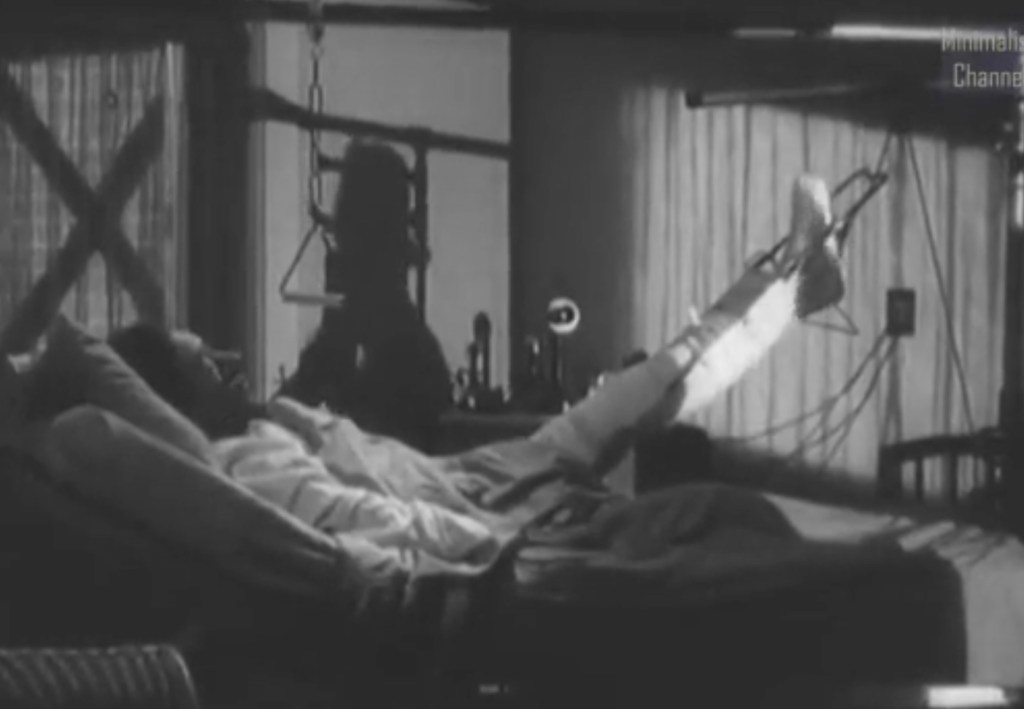
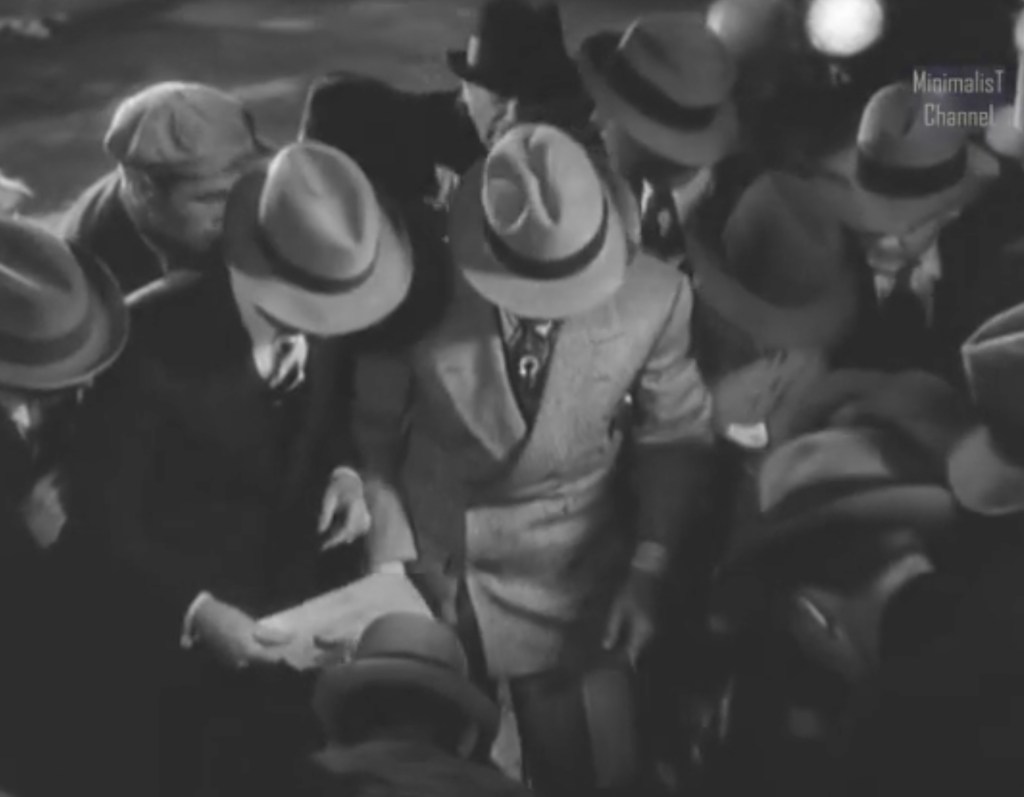
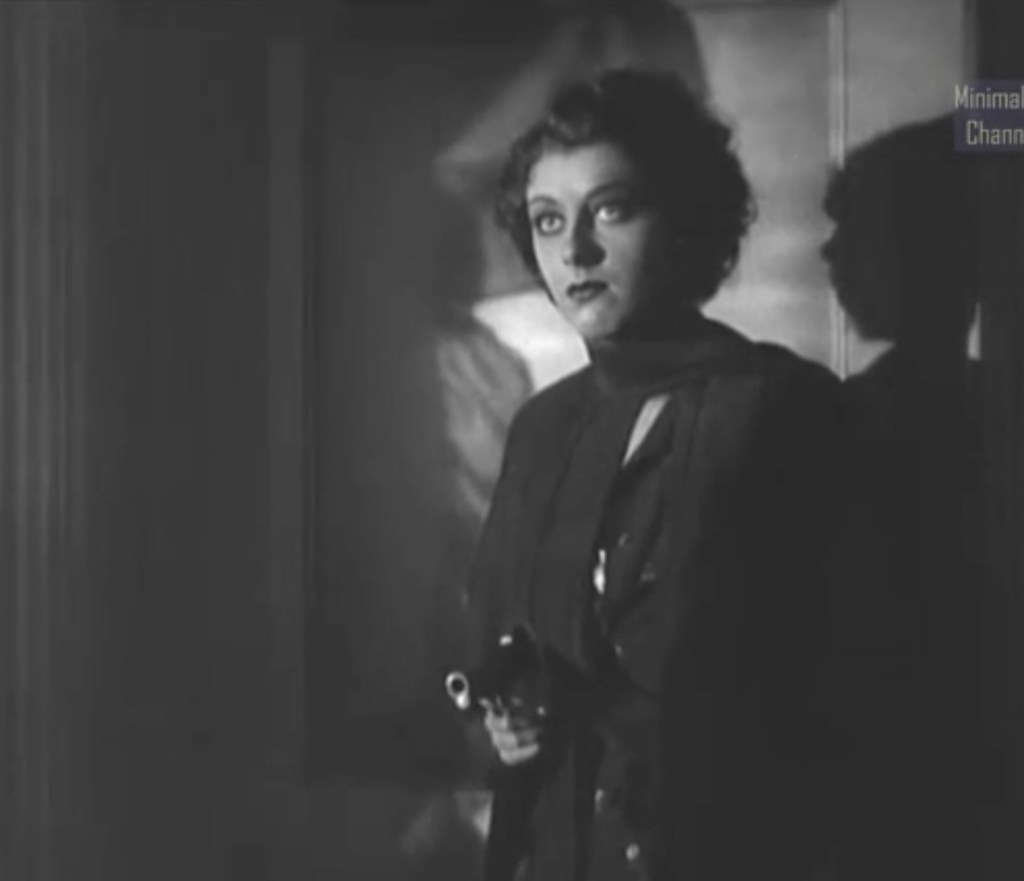
“Scarface” (1932) is part of a trifecta of pre-code movies that defined the gangster genre in filmmaking. The other two movies in this trifecta, “Little Caesar” and “The Public Enemy,” have already been reviewed here. In the same vein as the other two movies, “Scarface” is the tale of the rise and fall of a gangster in Chicago.
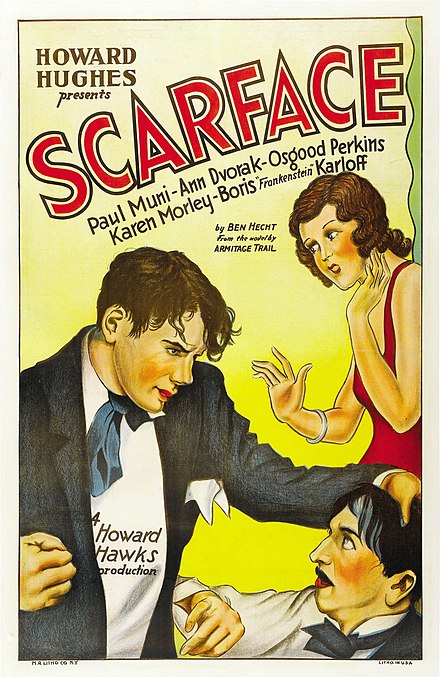
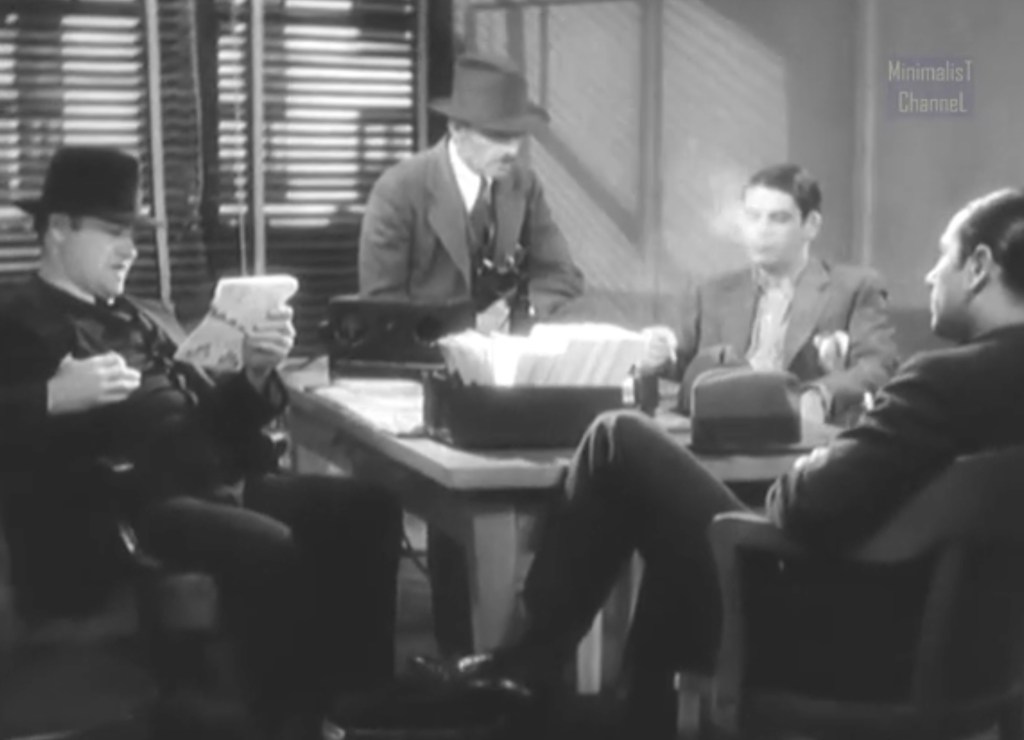
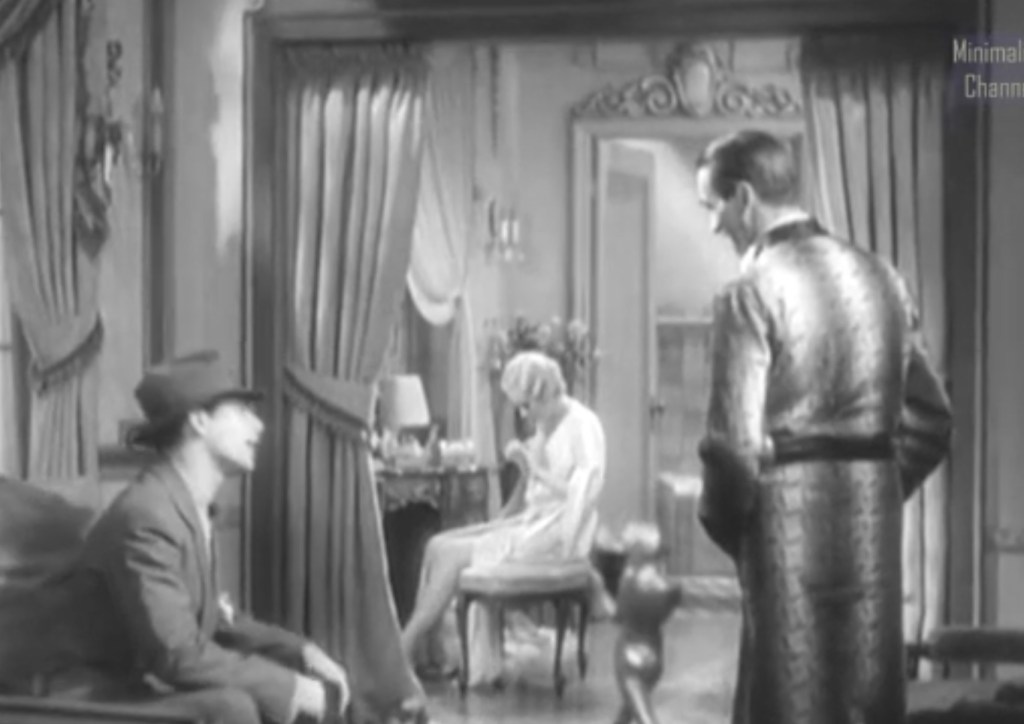
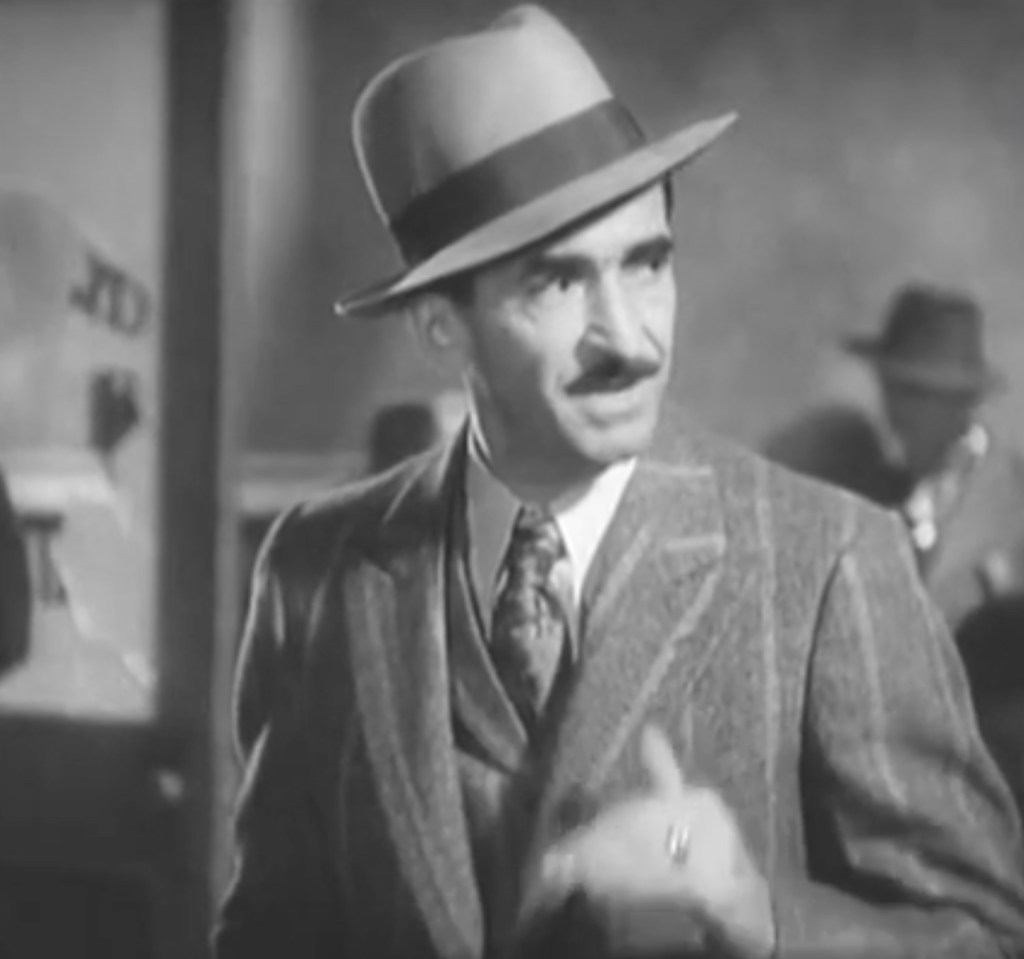
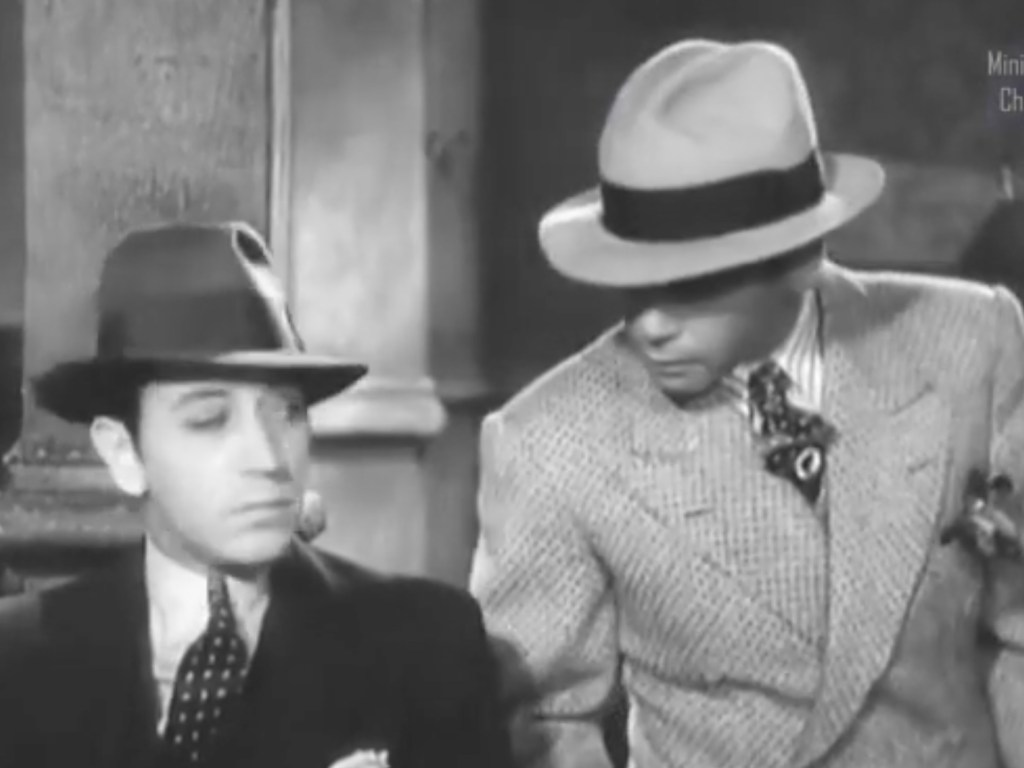
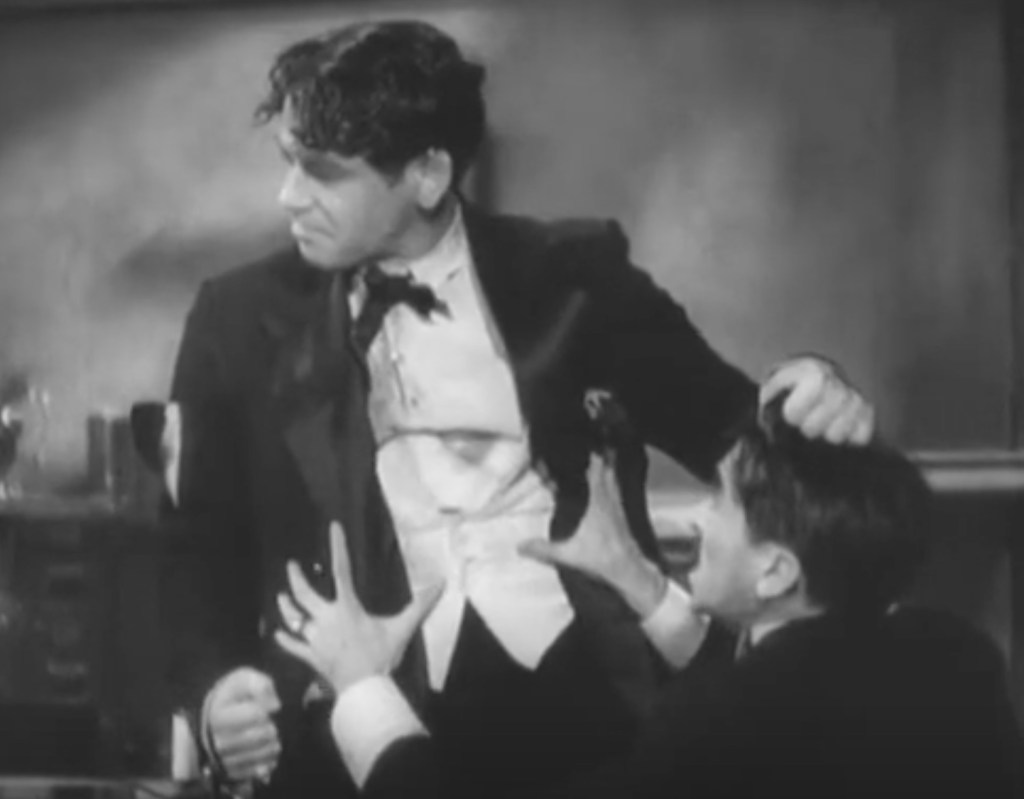
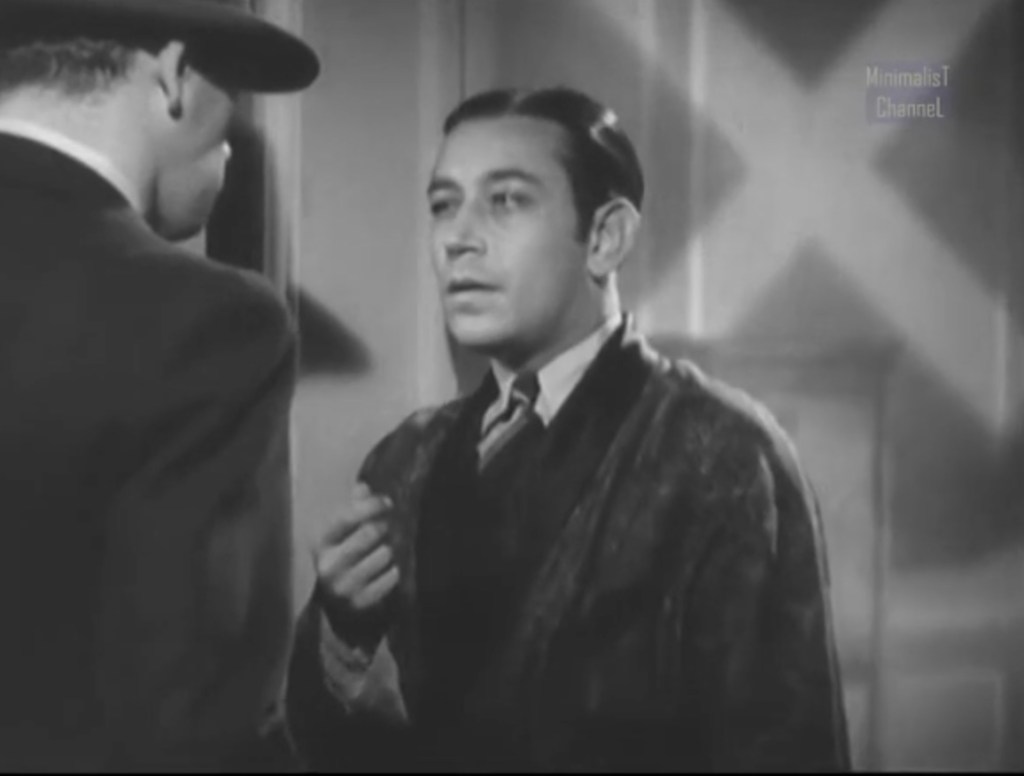
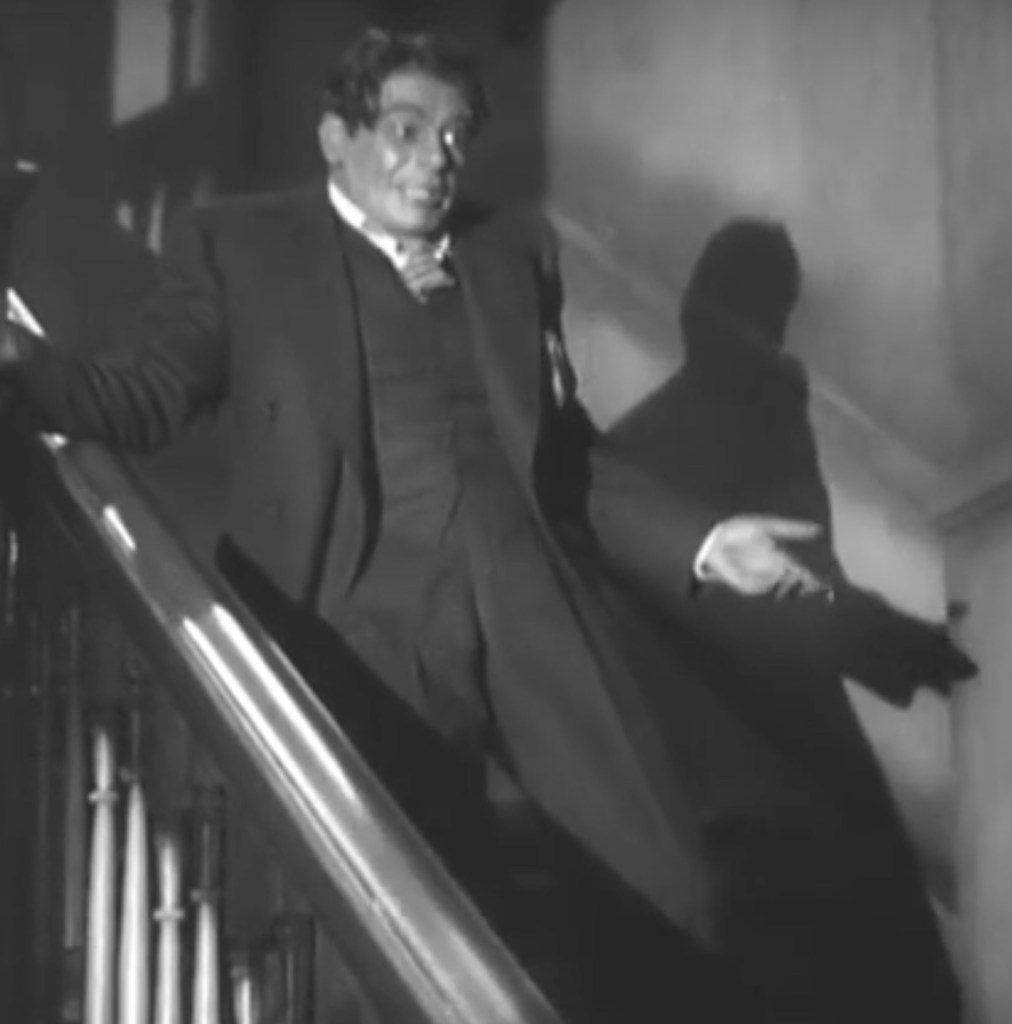
Tony Camonte (Paul Muni), an Italian immigrant, is the bodyguard of Louis Costillo, a mob leader. Taking instructions from John Lovo (Osgood Perkins), Costillo’s second-in-command, Tony assassinates his boss. Lovo seizes his boss’s territory and complete control of the area’s bootlegging business. Tony and his two sidekicks, Angelo (Vince Barnett) and Guino (George Raft), become Lovo’s enforcers. Tony suggests that they seize control of Chicago’s North Side from O’Hara’s Irish gang. Lovo turns him down, making it clear that he is in charge.
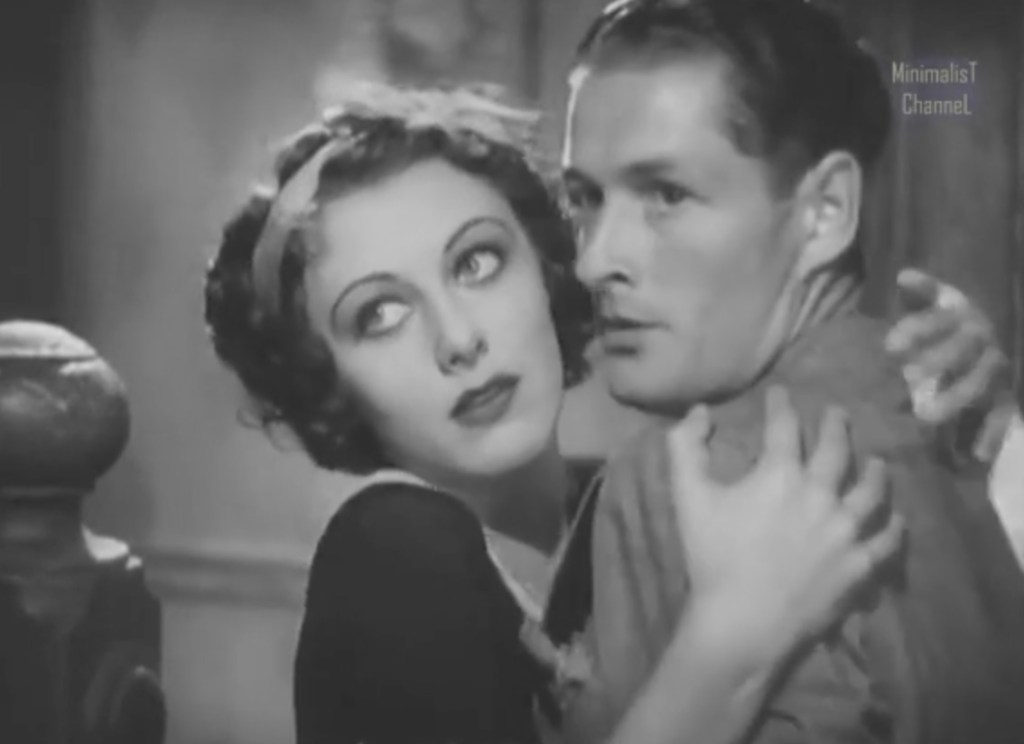
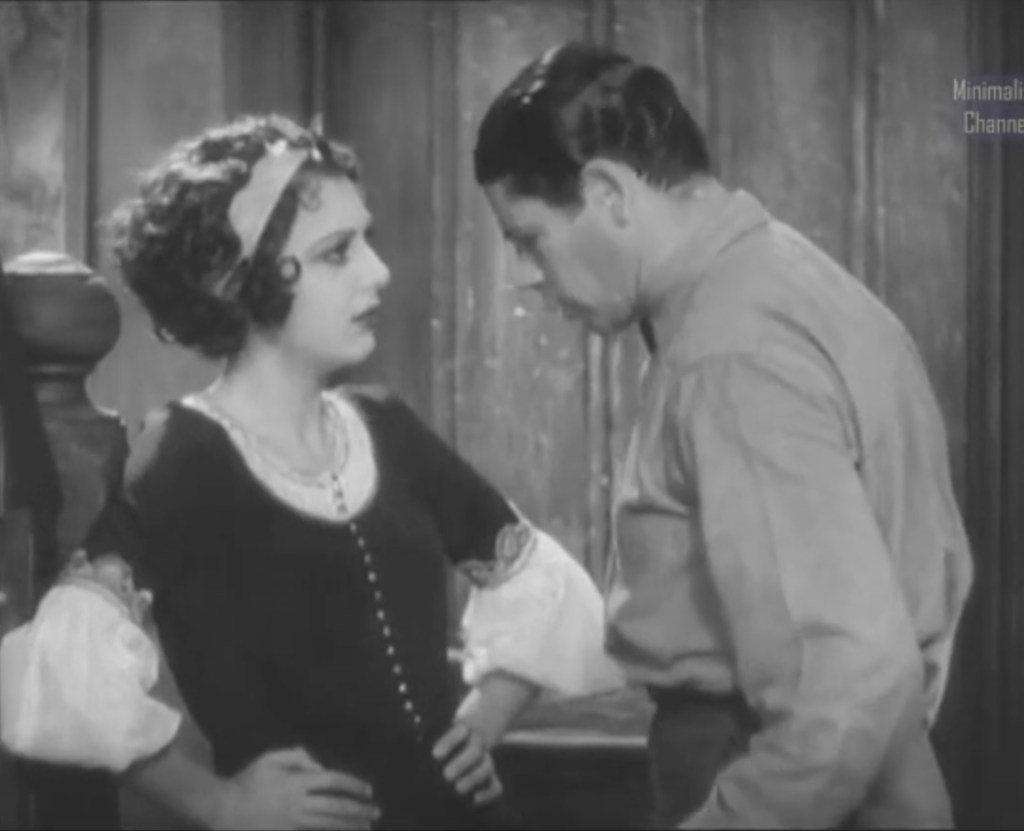
There is one person Tony cares for and protects: his young sister, Cesna (Ann Dvorak). He does his best to shield his sister from other men.
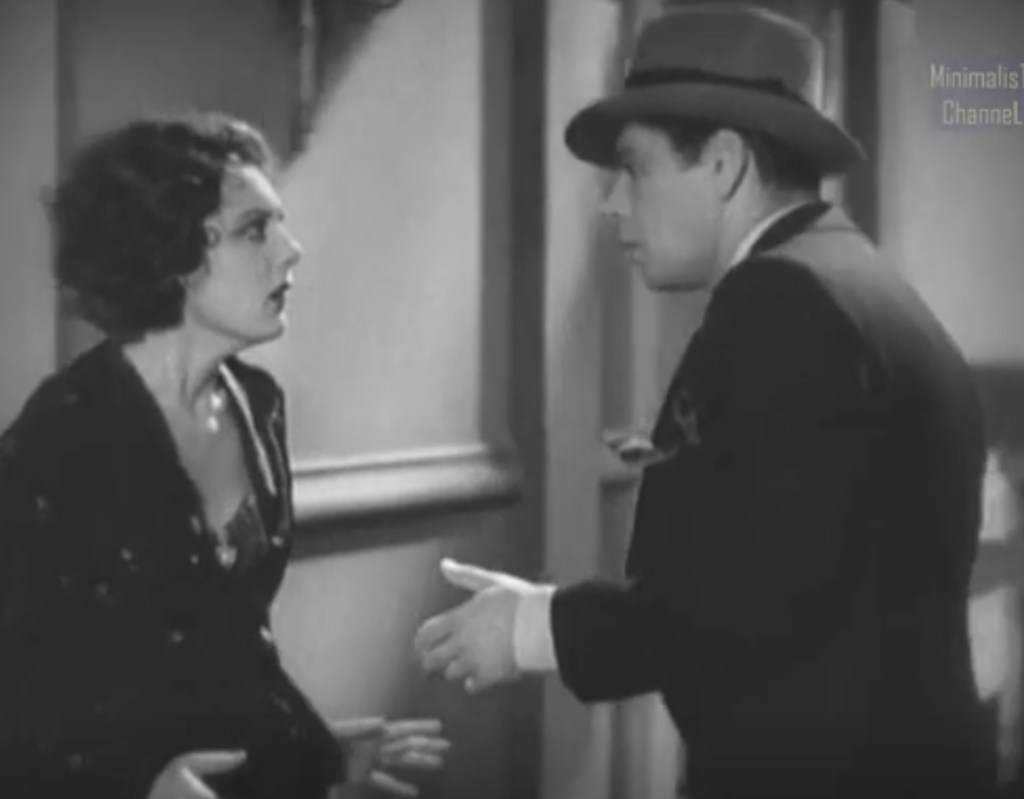
Next, Tony becomes enamored by Lovo’s girlfriend, Poppy (Karen Morley), and aggressively pursues her. Initially, she turns him down.
Despite Lovo’s instructions to the contrary, Tony starts working on his own ambitious plans. First, he inflicts damage on O’Hara’s interests, which wins him admiration from the rest of the gang.
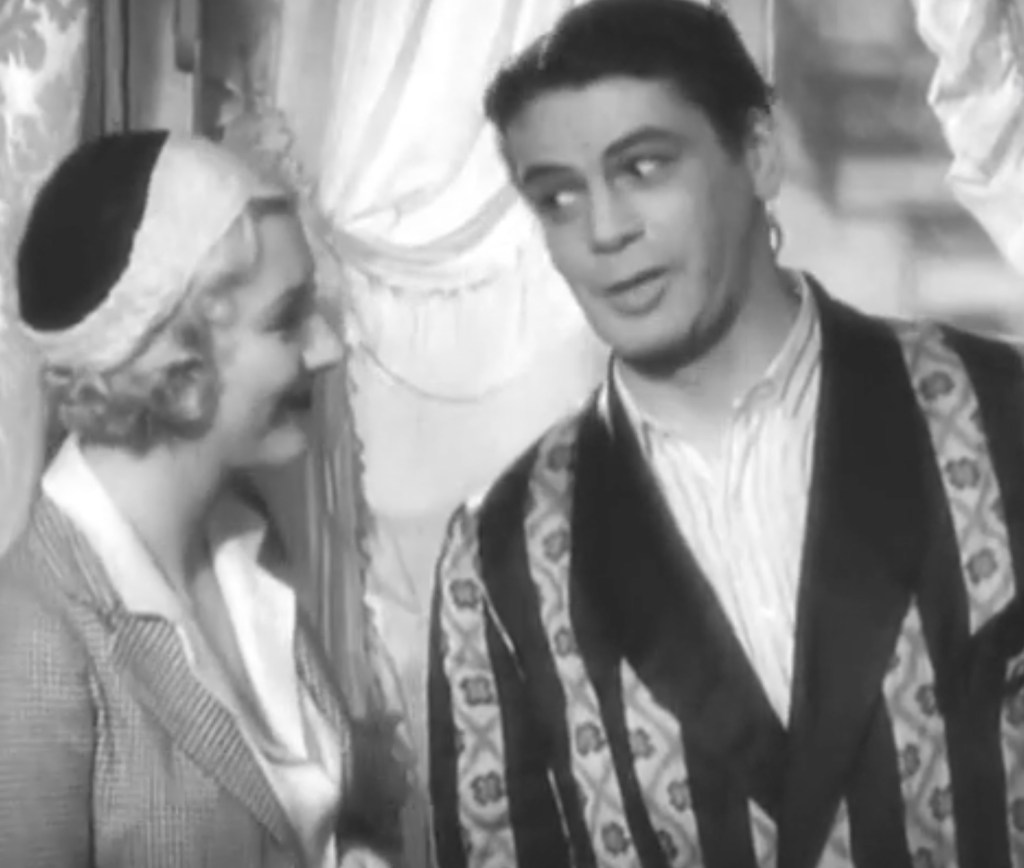
Tony aggressively starts to pursue Poppy. On one occasion, when she visits Tony’s apartment, Tony flamboyantly shows off his possessions, a move that she considers “unmanly”.
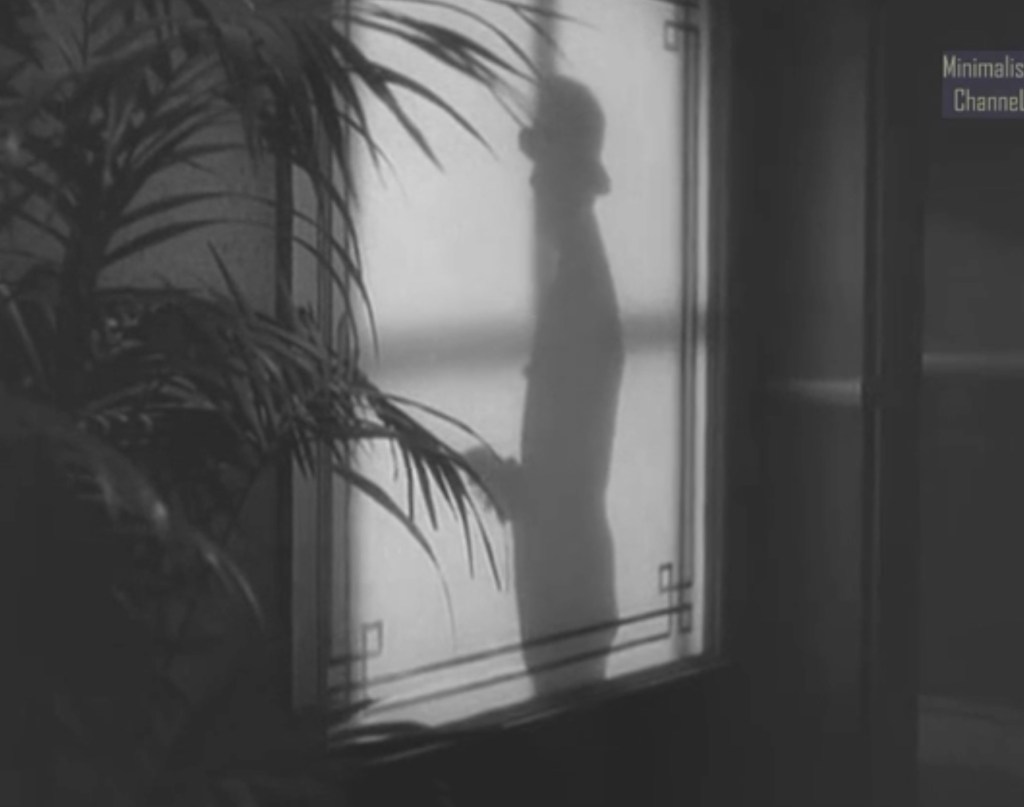
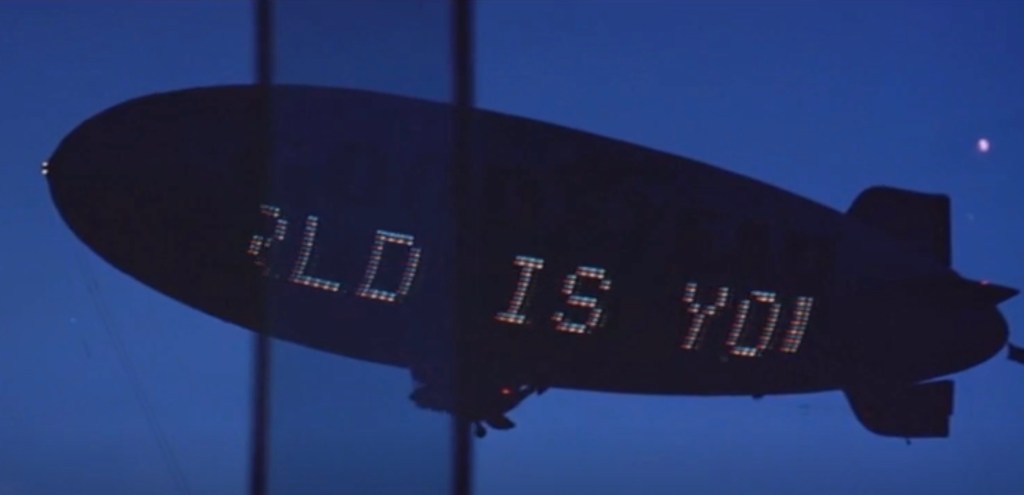
Then, Tony shows her a neon sign outside his window. The sign has the iconic lines: “The World is Yours.” Brian De Palma brought in these lines into the remake in his own creative way. Tony uses this sign to convey to Poppy that she is his next aspiration. With this, Poppy gives in to Tony.
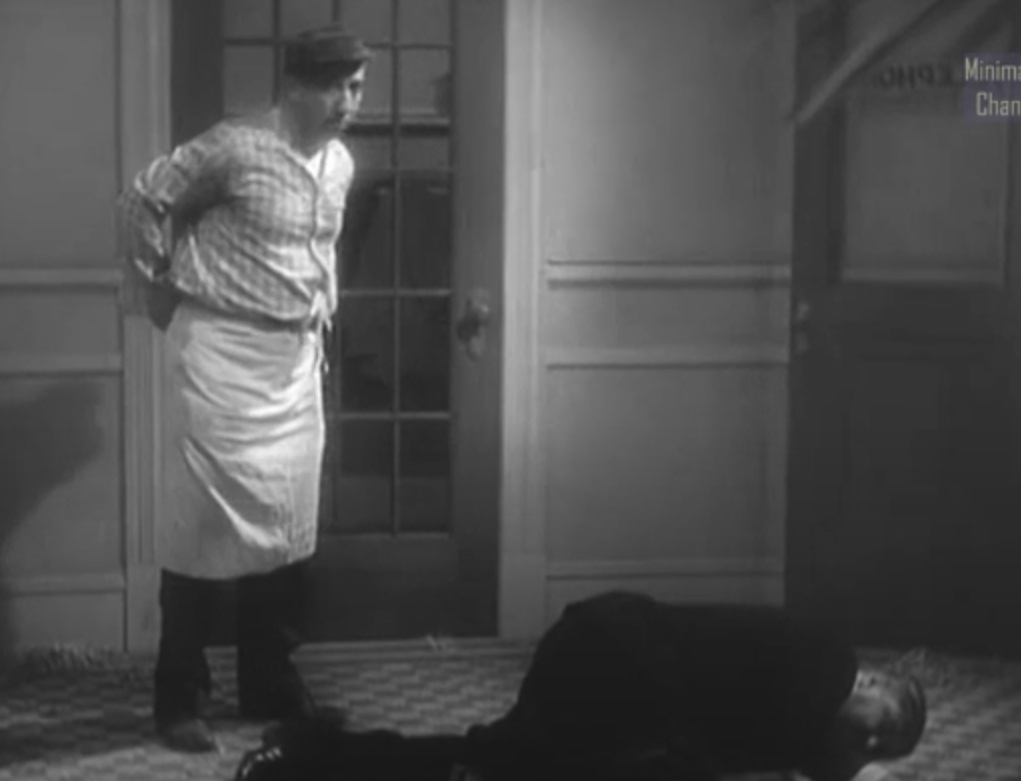
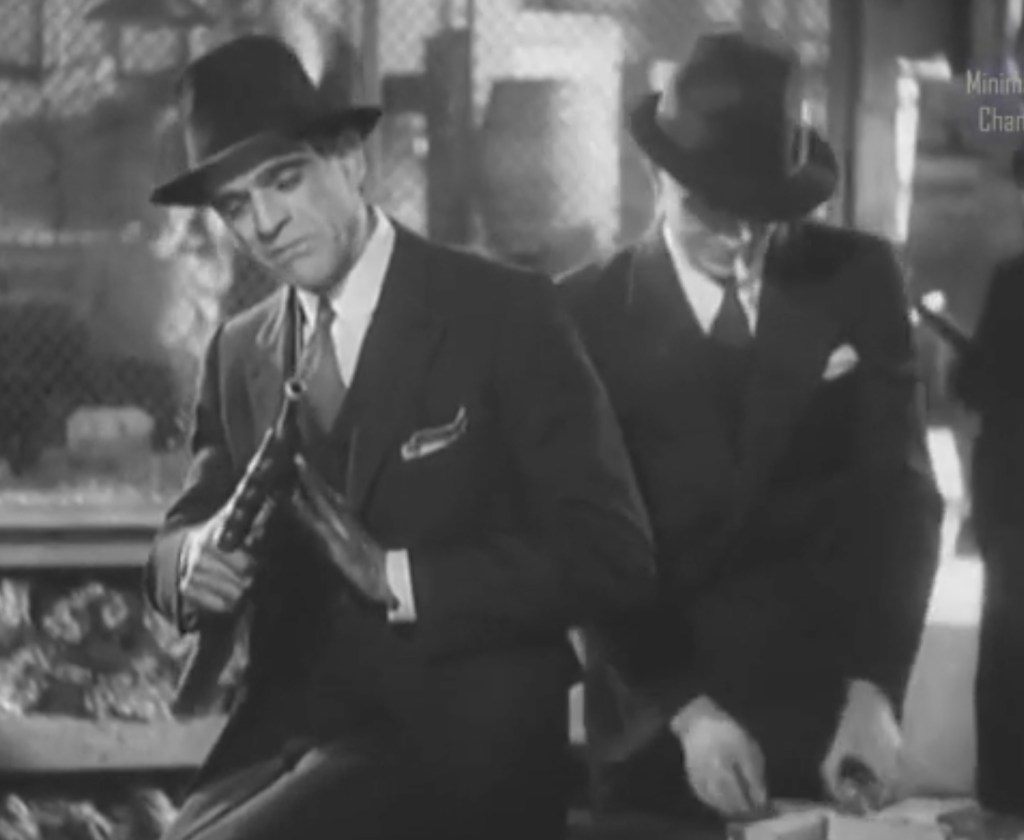
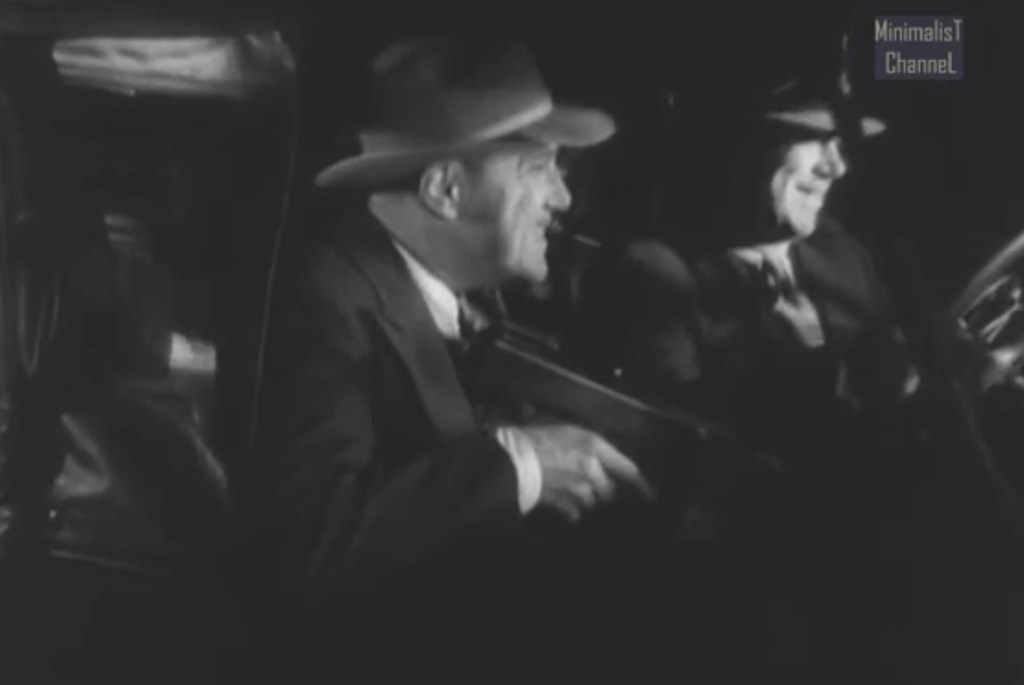
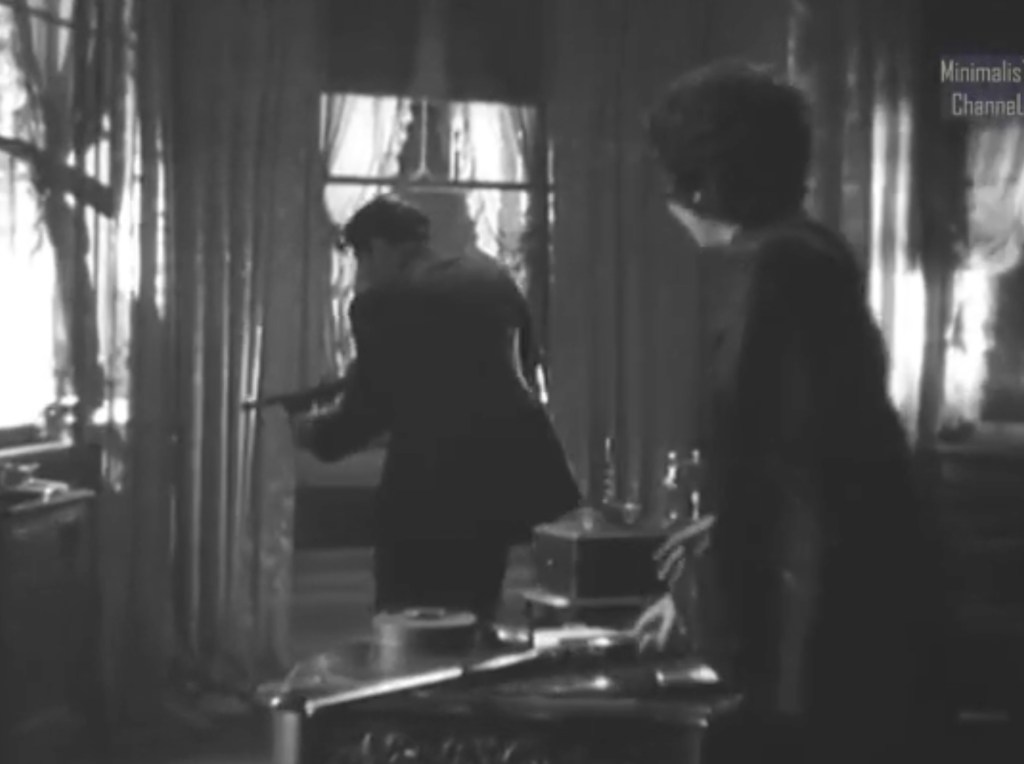
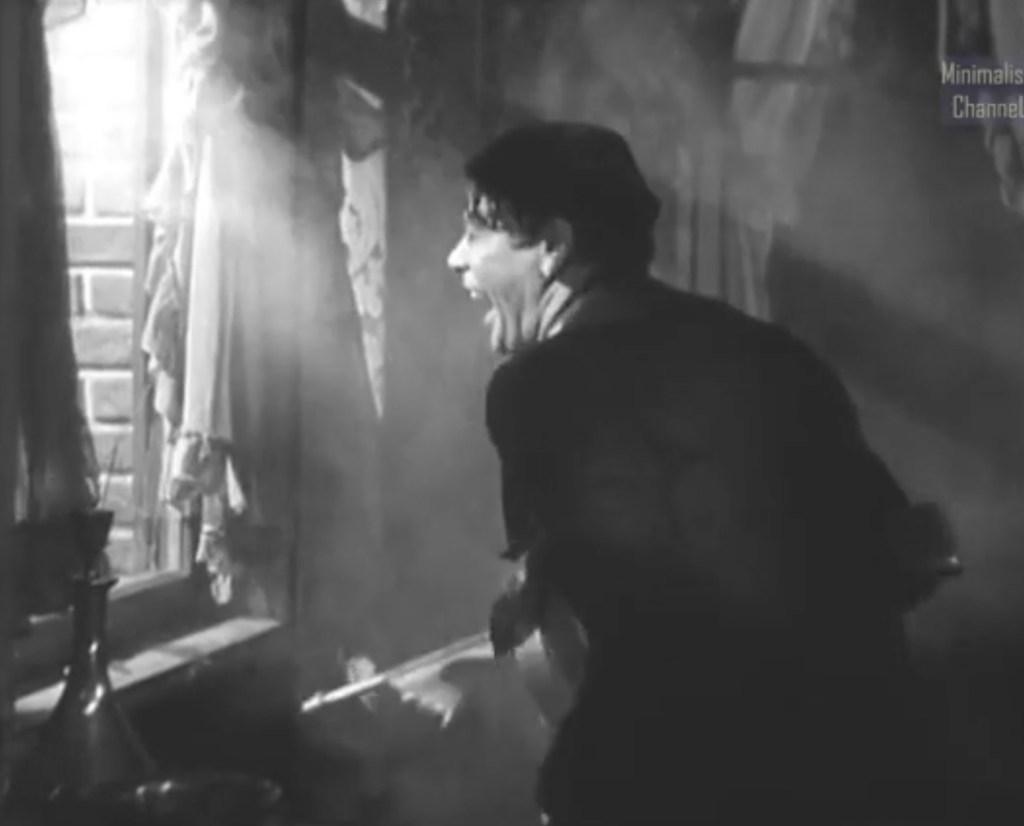
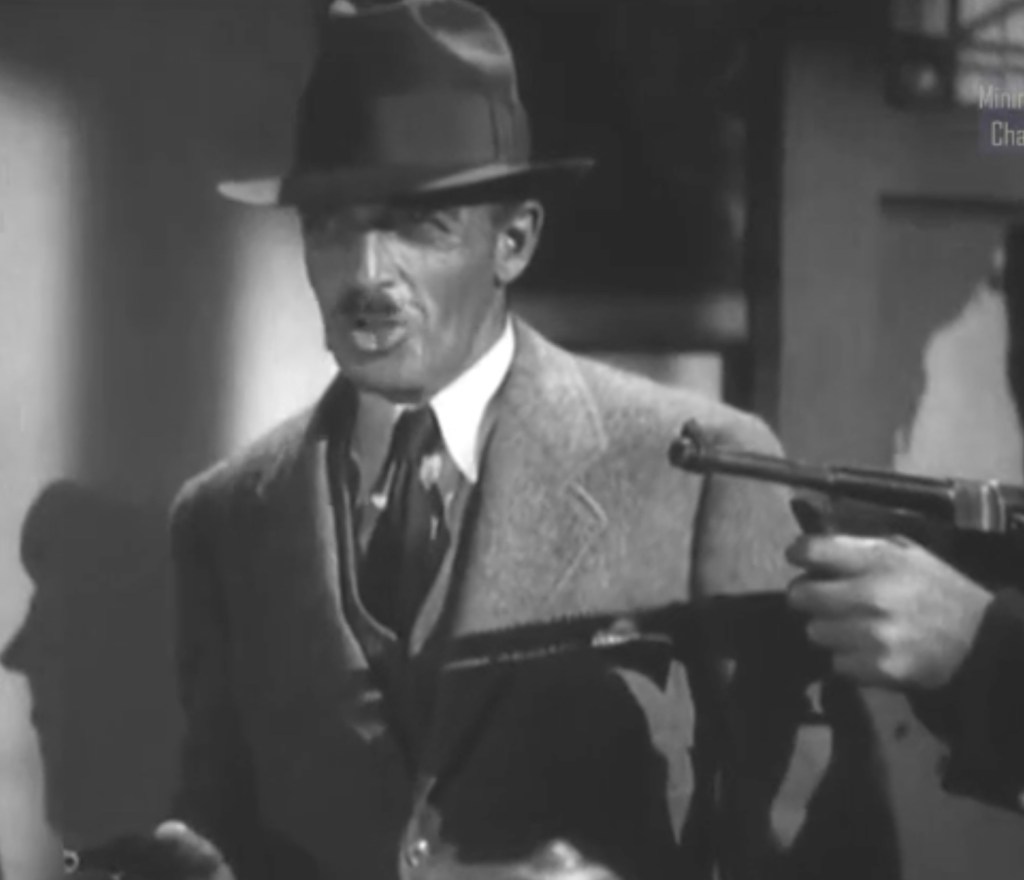
Then, Tony seizes the gang’s leadership from O’Hara. Finally, he gets O’Hara assassinated, invoking the anger of Tom Gaffney (Boris Karloff, of Dracula fame), O’Hara’s second-in-command. O’Hara orders a hit on Tony. His men try to assassinate Tony in a restaurant with Tommy guns. Tony survives the attack. Impressed with the Tommy guns, Tony arms his gang with them. Seeking vengeance, Tony eliminates Gaffney and his entire gang, angering the public and the law. The hit on Gaffney, which Tony puts in motion by creating his own alibi, is one of the movie’s highlights.
Lovo, now sidelined by Tony and realizing that he is also losing his woman to his former subordinate, sends a team of gunmen to get rid of Tony. Tony survives the second attempt on his life and soon confirms his suspicions that it was Lovo who planned his death this time. Tony eliminates Lovo, but fate would thrust another devastating blow to Tony through his sister, Cesna. This blow would give the law an opening to bring down Tony. The final showdown in this movie is among the most violent scenes for movies of that era.
Paul Muni’s characterization of Tony is one of the most iconic gangsters ever seen on screen. With his rugged looks, accentuated by facial scars, and his intense performance, Paul fits the role of Tony perfectly, and in my opinion, looks far more menacing than Robinson’s Caesar or Cagney’s Public Enemy. Paul Muni’s Tony would serve as an inspiration for Al Pacino, who would play the role of the dreaded gangster in the remake of this movie half a decade later.
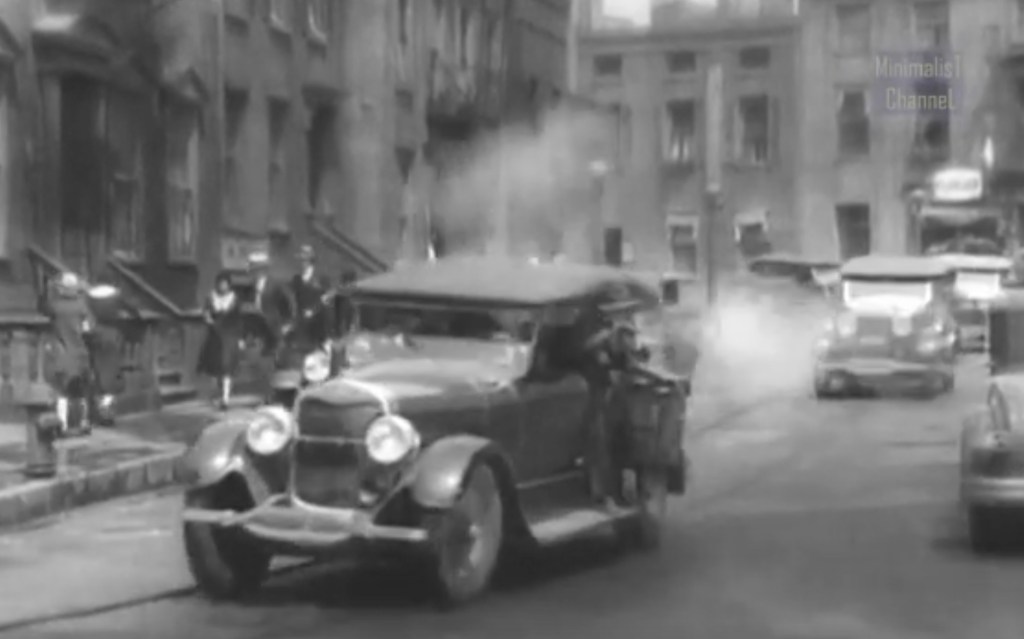
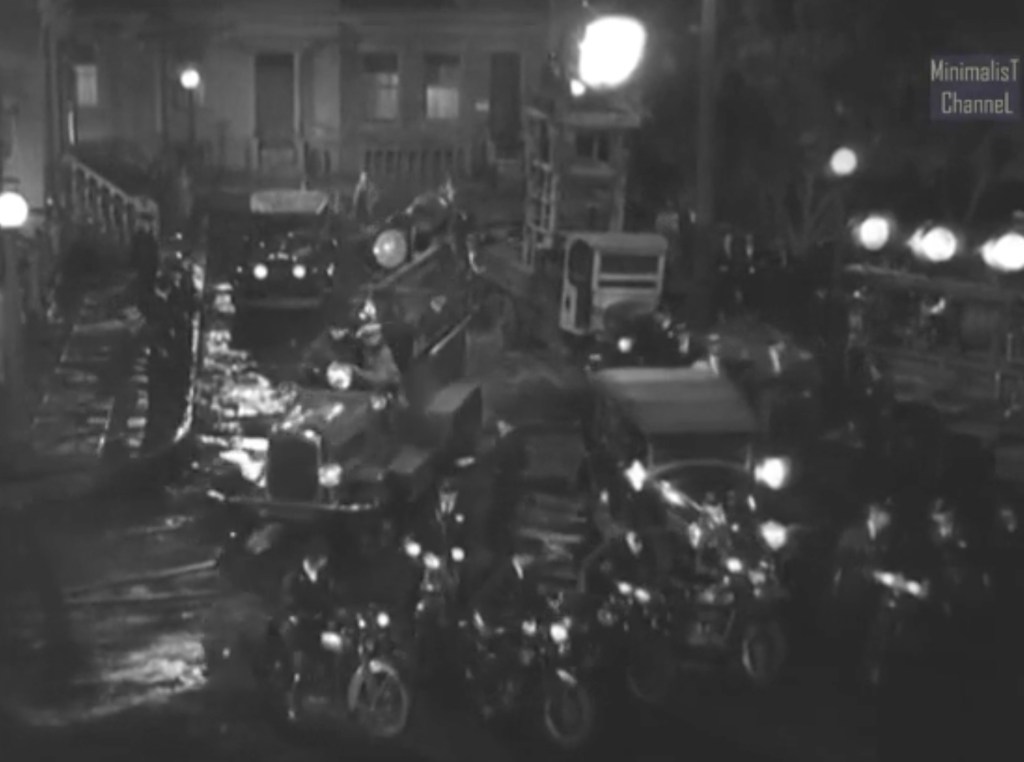
Other noteworthy performances are from Osgood Perkins, who plays Lovo, and Ann Dvorak, who plays the coquettish Cesna. Boris Karloff also impresses as Gaffney, the Irish mobster in his small role. The car chases and shootouts are impressive, considering that the movie was made in the 30s. Scarface, with its unrelenting violence and strong performances, leaves its mark on the pre-code era and is regarded as one of the best gangster movies of all time.
Please scroll below to read my review of Scarface (1983).






Scarface(1983)
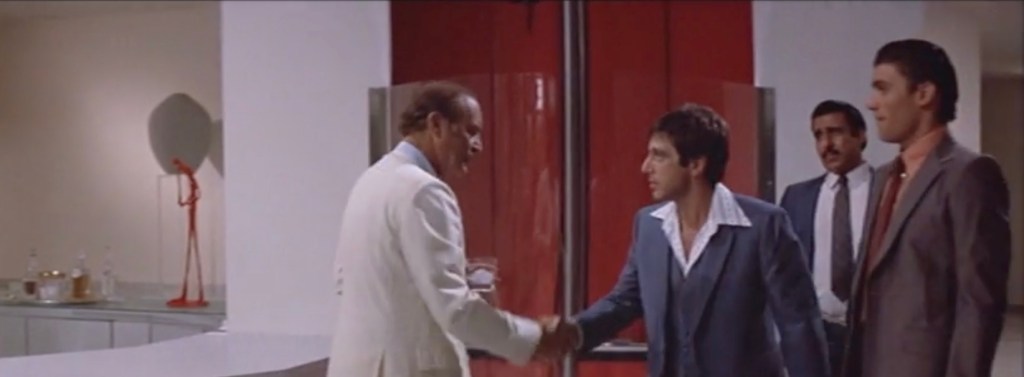
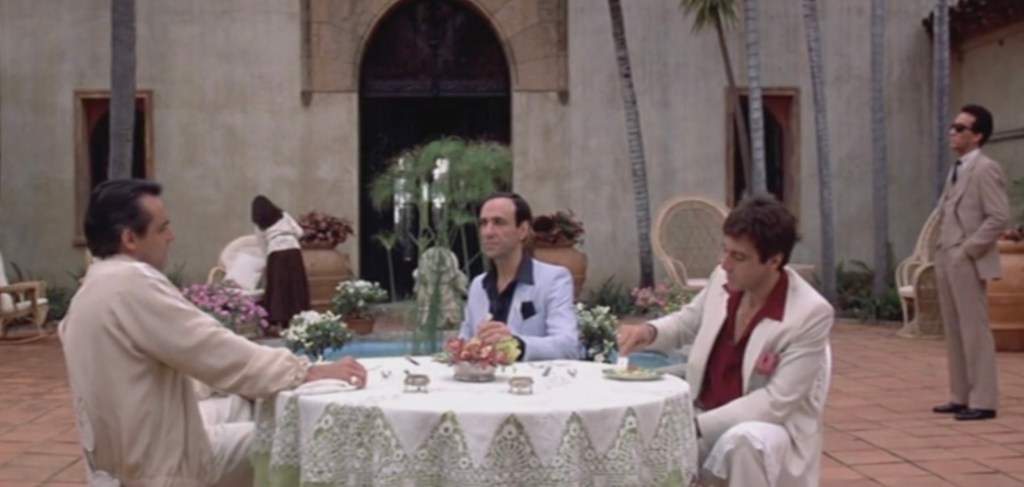
If one were to sum up Brian De Palma’s rendition of Scarface (which I will refer to as Scarface (1983)), one might say he went big! While the settings of the 1932 version of Scarface (which I will refer to as Scarface (1932)) were confined to Chicago, Scarface (1983) is far larger in magnitude, with breathtaking imagery, beginning with an introductory narrative in Cuba and then moving to Florida, with a few scenes set in Bolivia and New York. It should be mentioned that apart from Miami, Key Biscayne, and a few other Florida venues, a lot of the filming of Scarface (1983) was done in LA, West Hollywood, Beverly Hills, some other California locales, and of course, Universal Studios.

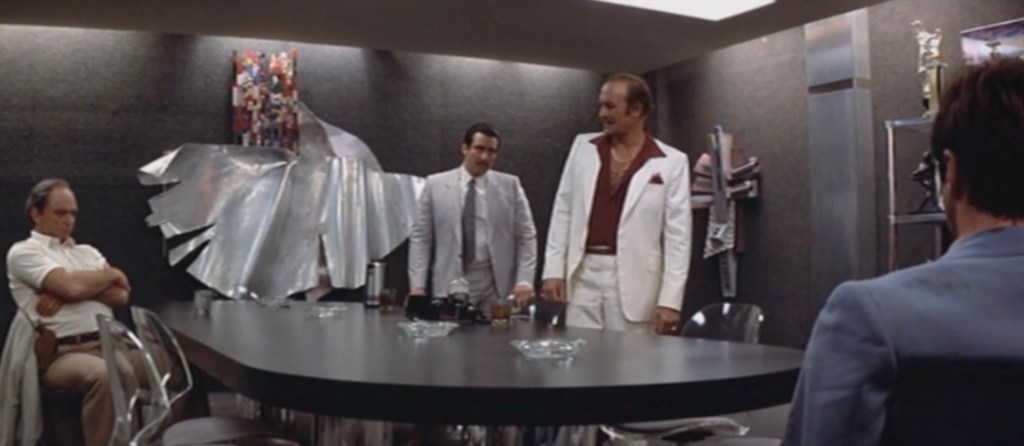
As this is a Brian De Palma movie, the sets are far more ostentatious, and the cinematography is slick. De Palma goes big on violence and profanity too. While Scarface (1932) is considered the most violent movie for its time, Scarface (1983) was initially released with an X rating for excessive violence and nudity. Another significant aspect of Scarface (1983) is Al Pacino.
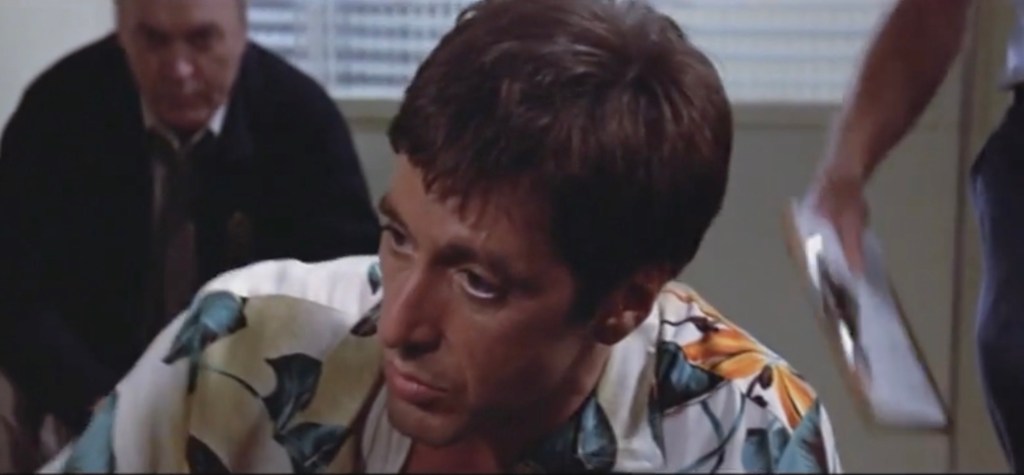
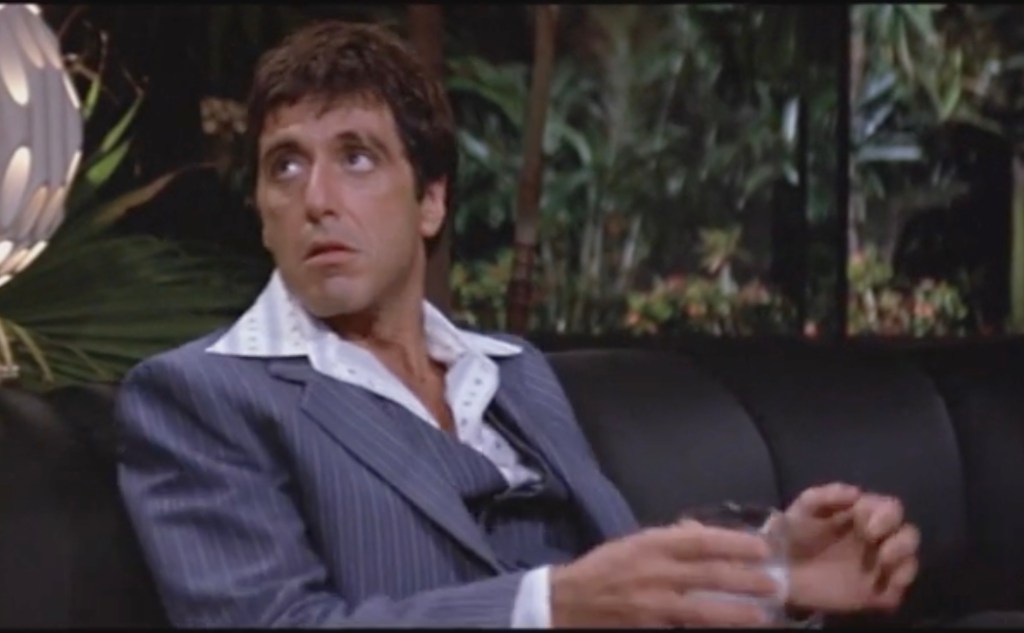
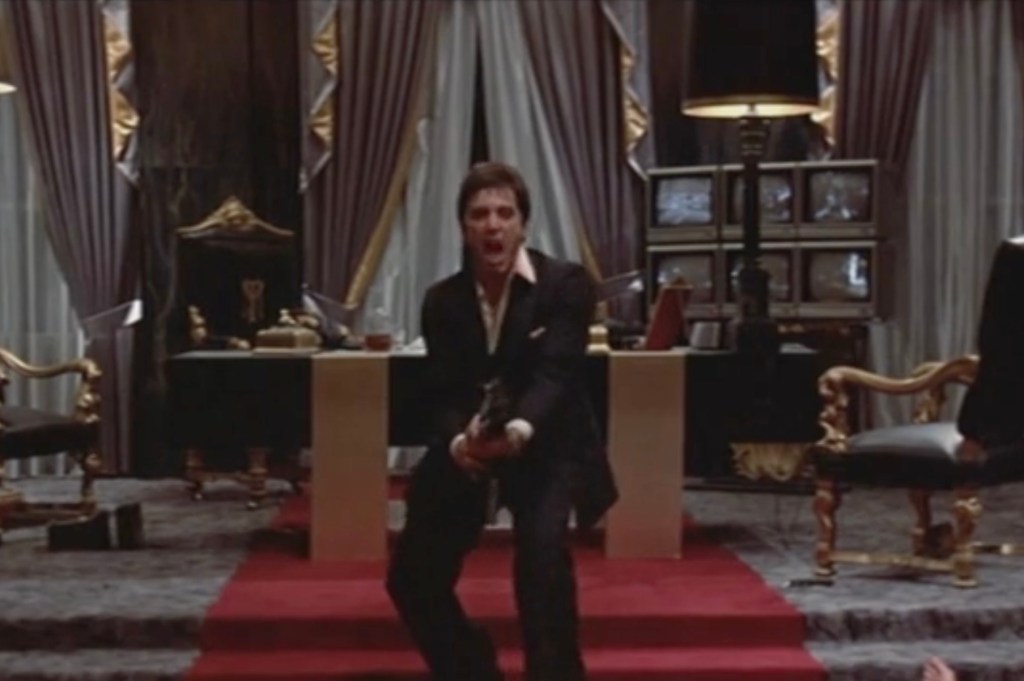
Al Pacino delivers a tour-de-force performance as the film’s protagonist and anti-hero, Tony Montana.
De Palma also almost doubles the running time of Scarface (1983) from that of Scarface (1932). Scarface (1983) has a running time of almost three hours.
The film created a lot of polarity among its critics and audiences. Besides being criticized for its gratuitous violence and language, many Cuban ex-pats also criticized it for portraying Cubans in a bad light.
Today, it is considered one of the greatest gangster movies of all time and has found its place in comics, TV, and video games. It still has a cult following.
The plot begins with an introductory documentary that tells the tale of Fidel Castro’s wicked plan of planting criminals among the refugees who arrived on American shores in the 80s. After this, we are first introduced to Tony Montana (Al Pacino), a wise-cracking, lying thug, being questioned by immigration officials in Miami, Florida. Al Pacino channels a lot of Paul Muni’s arrogant and crude Tony Camonte in this scene.
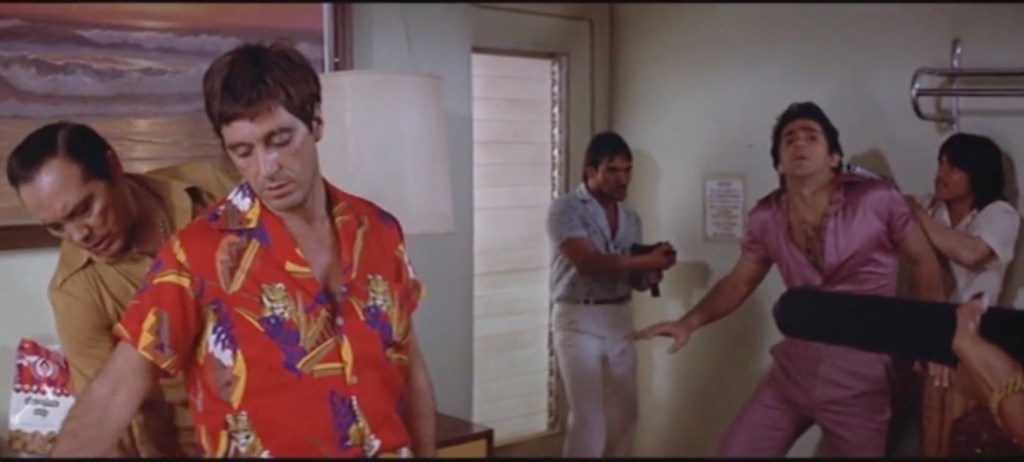
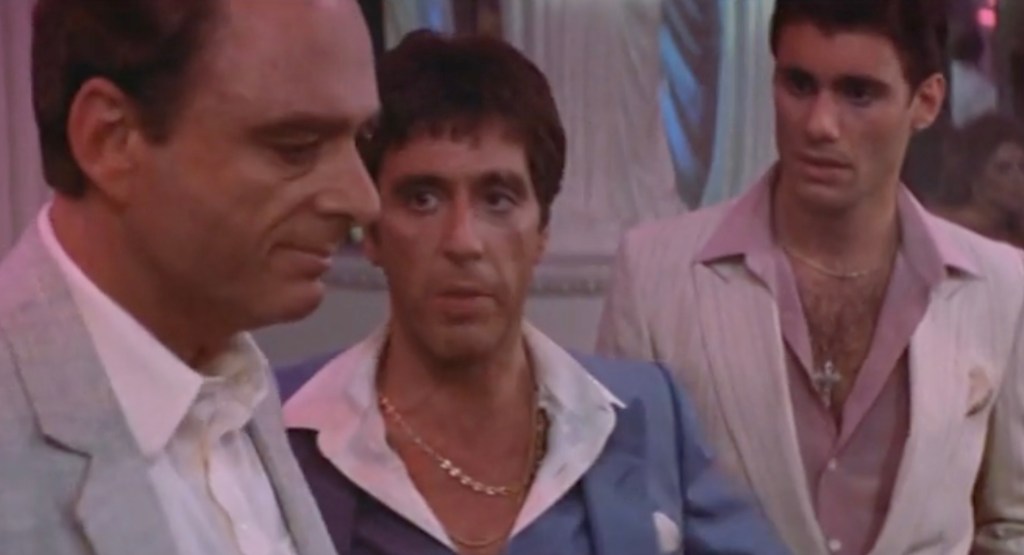
Tony’s questionable responses to the questions posed by the officials about his past, his tattoos, or the scar on his face do not give him credibility either to the officials or the viewers. He is sent away with his best friend, Manny Ray (Steven Bauer), to a fenced refugee camp. The duo assassinates a Cuban general at the camp as part of a quid pro quo with an associate of Frank Lopez (Robert Loggia), a Miami drug lord, for their release. While temporarily doing menial work at a pizza place, Omar Suarez, Frank’s immediate subordinate, tasks Tony, Manny, and two of their friends to acquire cocaine from Colombian dealers.
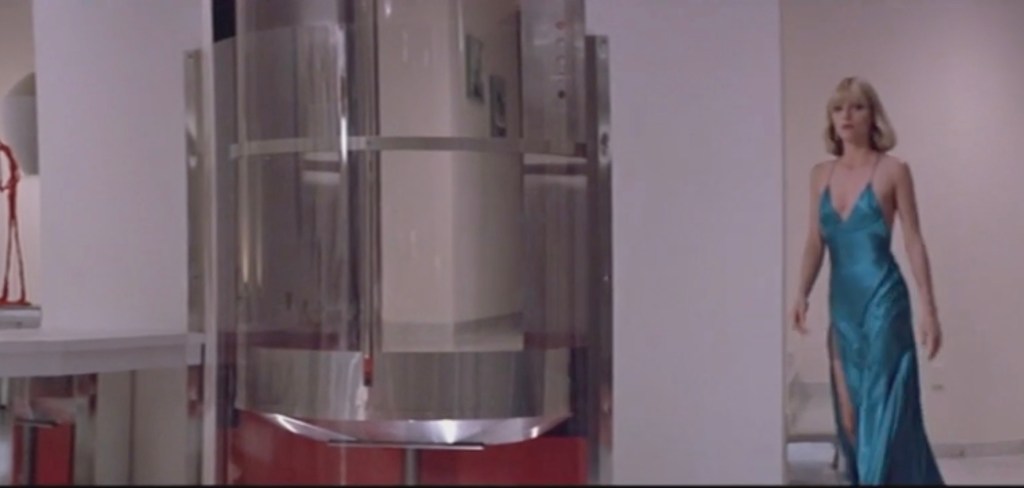
The deal soon turns violent, and Tony’s gang loses a member but kills all the Colombians and salvages both the drugs and the money. Tony and Manny soon meet Frank, who is impressed with Tony’s resourcefulness and offers both him and Manny employment. Tony then meets Frank’s moll, Elvira (Michelle Pfeiffer), and immediately decides that he wants her.
Frank sends Tony with Omar to meet with the dreaded Bolivian drug lord, Alejandro Sosa (Paul Shenar), at the latter’s lair. Sosa has Omar killed before Tony, claiming that Omar was a police informer. However, he appreciates Tony’s direct talk and expresses interest in working with Tony. Sosa strikes a deal with Tony with an ominous warning, “I Only Tell You Once. Don’t fuck me. Don’t ever fuck me.”
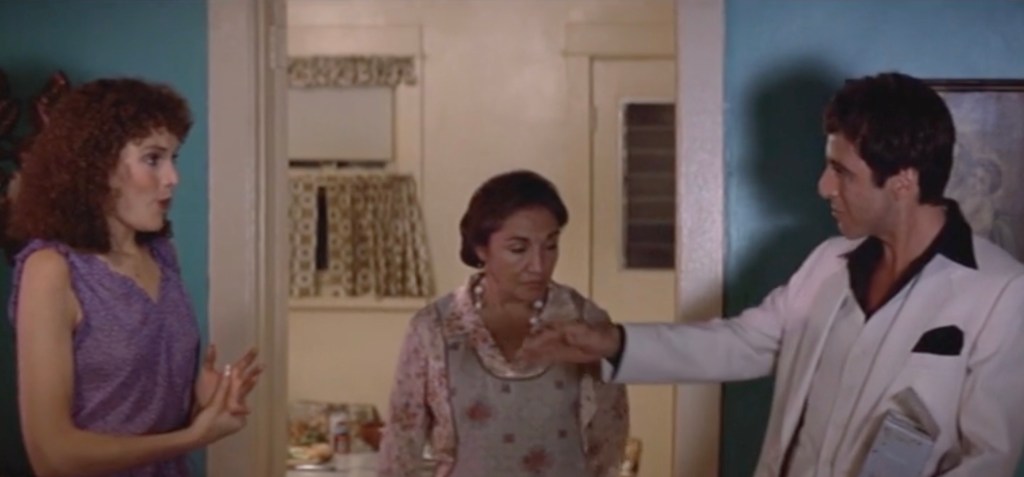
When Tony returns, it is revealed that his mother and sister are also residing in Miami. Tony visits their humble home. While he gets a warm, emotional welcome from his sister, Gina, his mother wants nothing to do with him and wants him to leave.
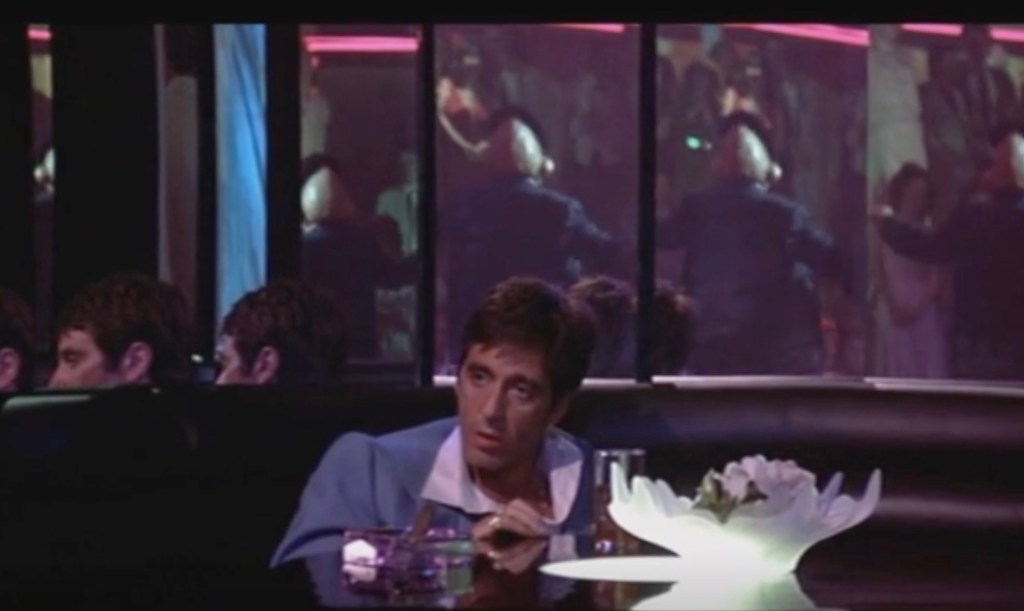
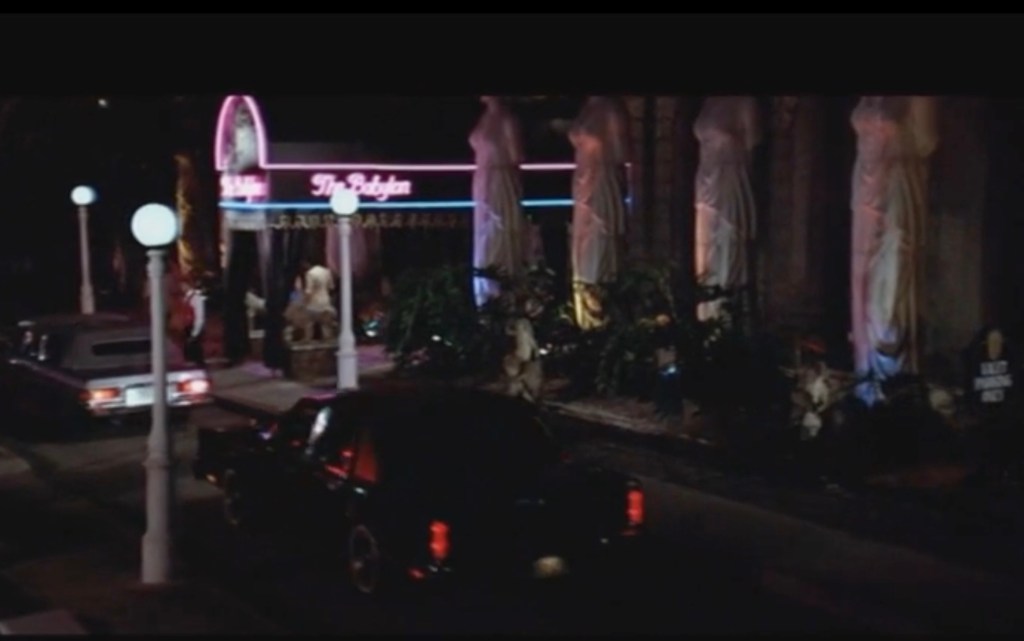
Frank is not pleased with the deal Tony made with Sosa. Tony ignores him, leaves his employment, and sets up his own drug operation. Tony’s visit to Babylon, a trendy nightclub, would bring him multiple challenges. This scene has De Palma’s signature all over it, with riveting cinematography and captivating visuals. First, a corrupt police officer, under Frank’s instructions, accosts Tony and attempts to extort money from him. Next, Tony catches a man attempting to grope his sister in the restroom and furiously asks Manny to take her home. Then, two hitmen open fire on a partially intoxicated and drugged Tony.
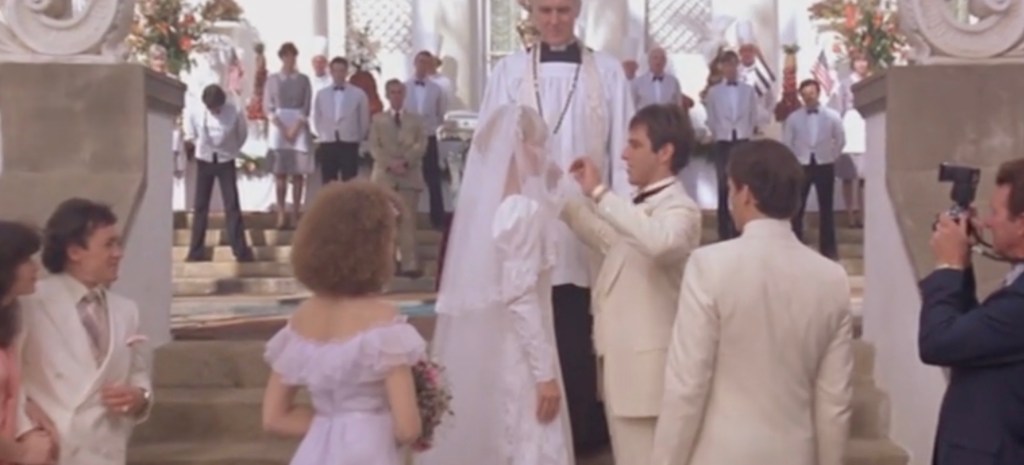
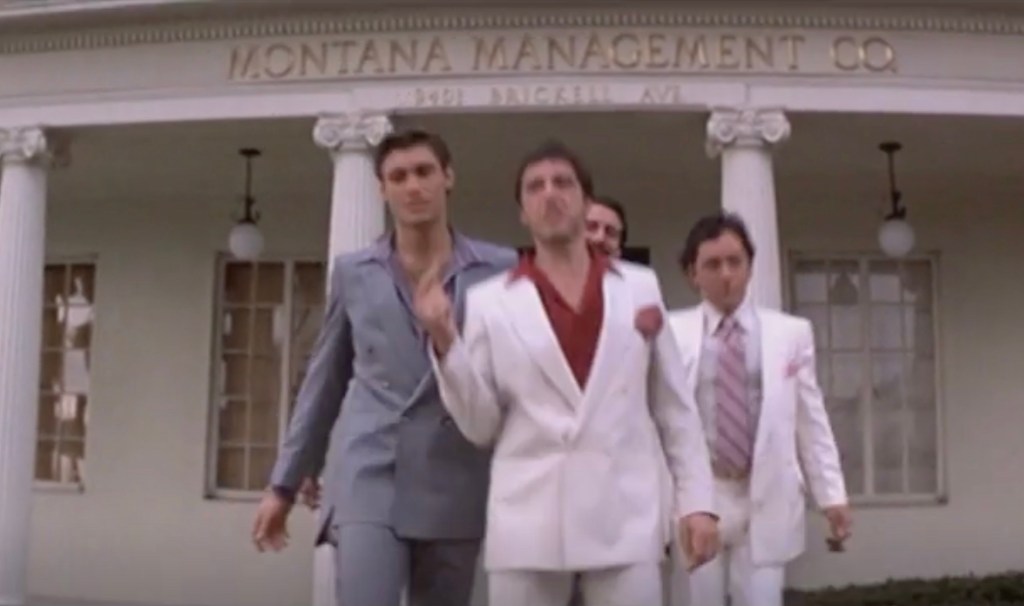
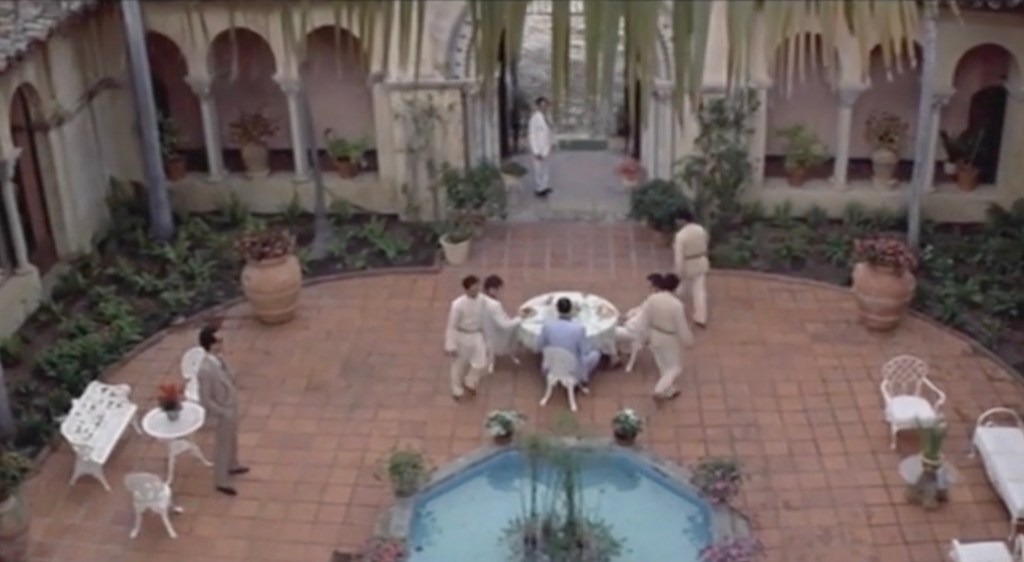
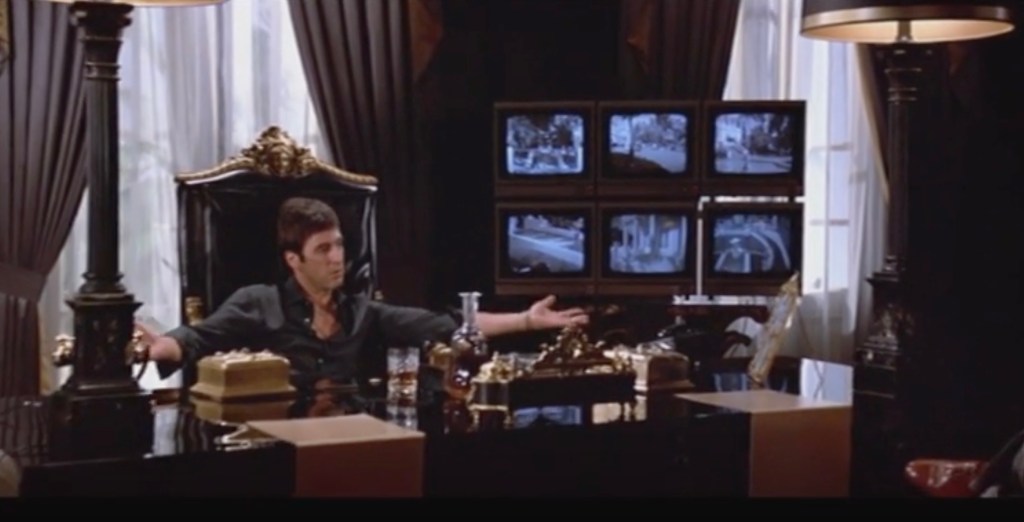
Tony survives the attack and immediately infers that Frank ordered it. Then, in quick succession, Tony confronts Frank, has Manny eliminate him, kills the corrupt cop himself, seizes ownership of all Frank’s operations, and takes Frank’s woman. Tony marries Elvira and over the next few years establishes himself as Miami’s undisputed kingpin. He sets up multiple business ventures besides his drug operation and becomes wealthy beyond his wildest dreams.
The final hour of the movie is all about Tony’s unraveling and disastrous fall from grace. While Scarface (1932) limited Tony’s downfall to the last 15 minutes, De Palma’s rendition accentuates it and presents it as the movie’s message. Tony, the slick talker, master hustler, and Miami’s undisputed kingpin, also has his share of self-destructive tendencies. He disregards Elvira’s ominous advice, “Don’t get high on your own supply” (She does the same too.) His cocaine addiction hampers his thinking and feeds his hair-triggered temper. The wealth he has accumulated makes him indifferent and complacent to all the challenges that are to come.
Elvira is disillusioned with Tony and grows tired of his obsession with money. With both Tony and Elvira’s growing substance addiction, the marriage disintegrates and finally ends with a public spat over dinner at a trendy restaurant. Next, a misunderstanding with his sister’s situation triggers impulsive actions from him that prove devastating to Tony and everyone he holds close. Ironically, Tony’s last humane act would pit him against Sosa, triggering one of the most violent and epic shootouts in the history of cinema.
It would be hard to exaggerate Al Pacino’s iconic performance as Tony Montana. Paradoxically, Tony Montana is larger than life yet human. He is a crude, ruthless, vicious, dangerous, and unrelenting thug. However, he is human, with aspirations of building a better life for himself, wanting a family with children, and having affections for those in his close circle. He has uncontrollable and impulsive propensities and addictions that lead to his ultimate destruction. Montana is a far cry from another calm, centered, and refined gangster Al Pacino portrayed, Michael Corleone from the Godfather movies. In fact, Sosa’s character has more in common with Michael Corleone of the Godfather than does Tony Montana.
Another great performance is from the then-rising star Michelle Pfeiffer as the cynical, spoiled, and bored Elvira, who, like Montana, is addicted to drugs. Elvira is first resigned to a dull life with Frank, is intrigued by Tony’s advances, and finally gives in to him. However, she ends up bitter, resentful, and bored.
The rest of the cast also turns in superb performances. One of the greatest strengths of the movie is that each of its characters is so well-defined, and audiences can relate to each of them. With great performances, screenplay, and outstanding visuals, Scarface (1983) will continue to wow audiences and critics for years to come.
Both Scarface movies are essential watches for all adult fans of gangster movies.
Before I conclude, I am going to voice my strong disagreement with my idol Roger Ebert’s review of Scarface (1983). In fact, I think that his characterization of Tony Montana is very flawed.
Ebert writes:
We see Montana trying to bluff his way through an interrogation by US federal agents, and that’s basically what he’ll do for the whole movie: bluff. He has no real character and no real courage, although for a short time cocaine gives him the illusion of both.
https://www.rogerebert.com/reviews/scarface-1983
It is true that cocaine makes Montana react impulsively and violently in some situations. One example of this is when he feels that his sister is heading down a destructive path. The second example is when he prematurely declares war on Sosa, which turns out to be his worst decision. However, throughout the movie, we see that Montana’s courage is one of the reasons he attains all he desires.
He is unafraid to participate in a dangerous drug deal early in the movie. He is brave enough to pursue Frank’s woman and walk away from Frank’s organization. He takes the initiative to strike a deal with Sosa while he is still on Frank’s payroll. It seems to me that Ebert may have reviewed the movie long after he had seen it, and he may have forgotten some details. I encourage my readers to read the review from the link provided in the quote above or from the link in the references section below. Please read it and let me know your thoughts in the comments.
Trivia
- The novel, ‘Armitage Trail’, was based on Al Capone, who was nicknamed Scarface. Al Capone like the protagonists in both movies, aggressively pursued his boss’s mistress while his sister fell for Al’s hit-man.
- Scarface (1933) is ranked the 6th best gangster film by AFI , while Scarface(1983) is ranked 10. This is the first time that both, a movie and its remake appear on AFI’s list.
- Many quotes from the Scarface(1933) were used in Scarface (1953) such as
Tony To Elvira: I like Frank(Johnny in Scarface (1933 ) . But I like you more.
Frank to Tony,(paraphrased) when he pleads for his life : You can take everything. You can have Elivira(Poppy in Scarface (1933)
- The line “The World Belongs to You” appears on a neon sign outside Tony’s apartment in Scarface(1933) . The line appears first on a blimp ,and then prominently on the statue at the stairwell in Tony’s mansion in Scarface(1983)
References
https://en.wikipedia.org/wiki/Scarface_(1983_film)
https://en.wikipedia.org/wiki/Scarface_(1932_film)
https://www.rogerebert.com/reviews/scarface-1983













 Bay Area Bloke