

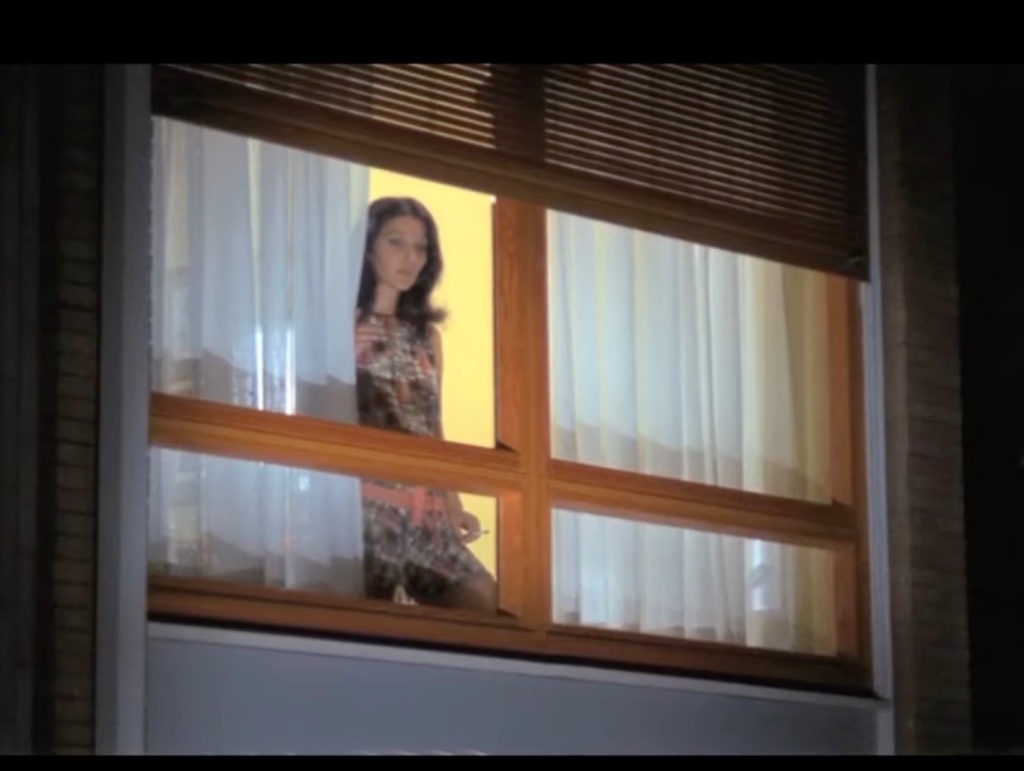
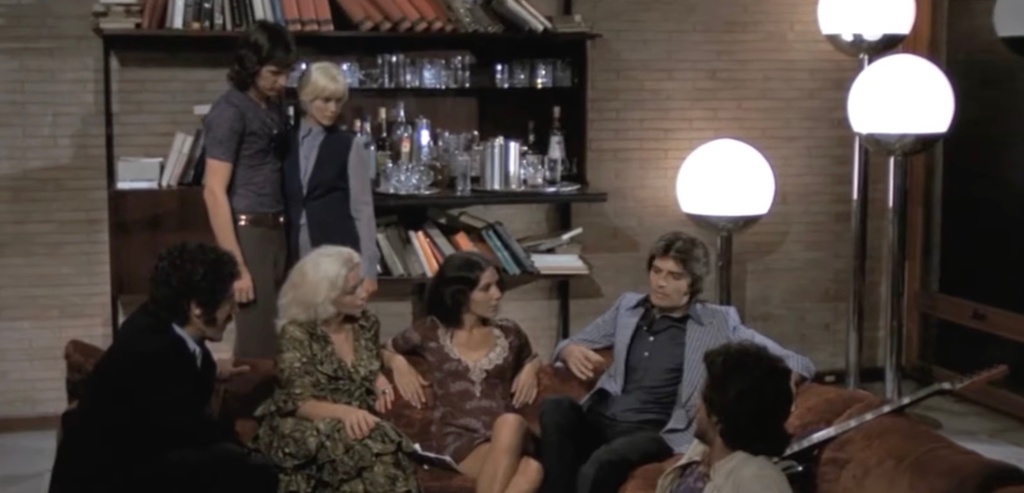
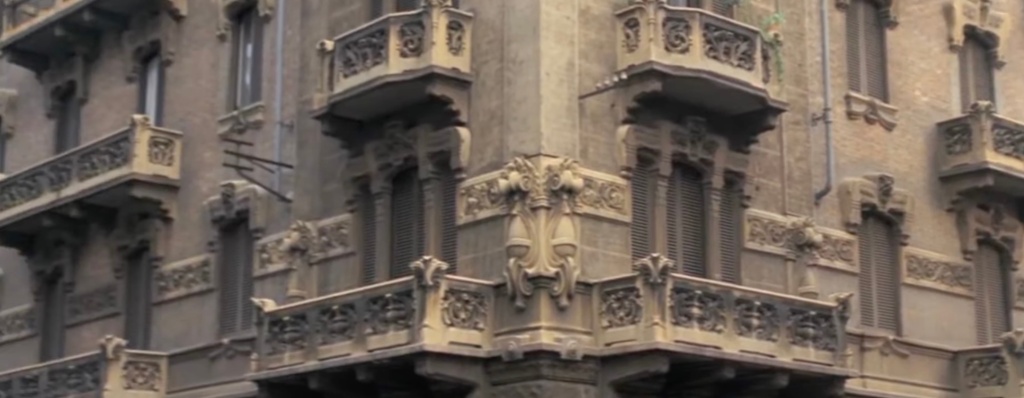
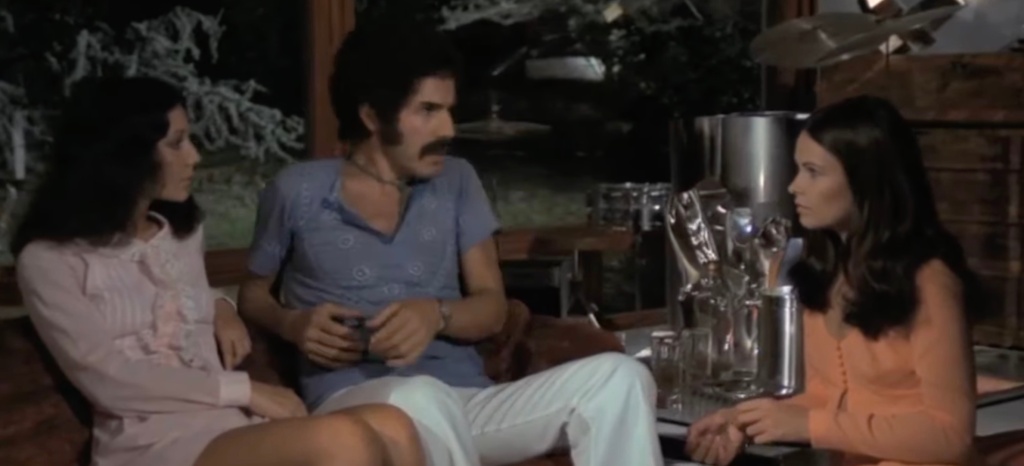
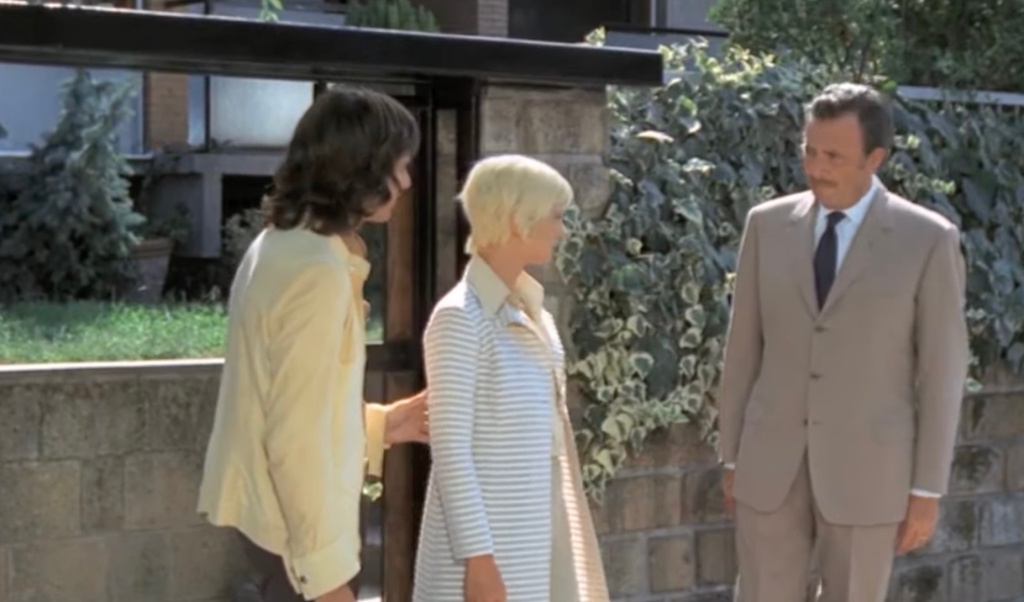
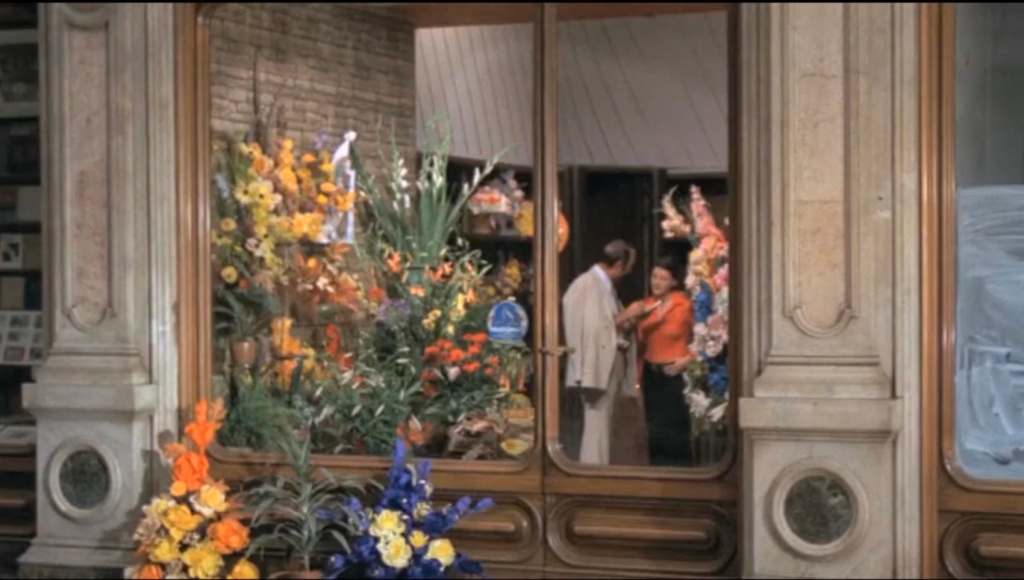
‘Four Flies on Grey Velvet’ (FFGV) is a Giallo movie directed by ‘The Master of Horror’, Dario Argento. It is the third movie in his ‘Animal Trilogy’. (Apparently, flies qualify as animals) My previous review covered the first movie of the series. FFGV has all the elements of an Argento movie: gruesome murders, drama, ostentatious sets, and excellent cinematography. Set in the 70s, FFGV showcases great views of Italian locales like Milan, Turin, and Umbria, and elegant indoor sets with artistic use of color. The movie gives us a snapshot of Italy in the 70s, a time when tight-fitting clothes, bell-bottoms, and long hair were in vogue.
The background music, accentuated with drums, as the lead character is a musician, sets the tone for FFGV’s fast-paced plot. While there are giant loopholes in the screenplay, the fast-moving plot and visuals make FFGV a decent watch.
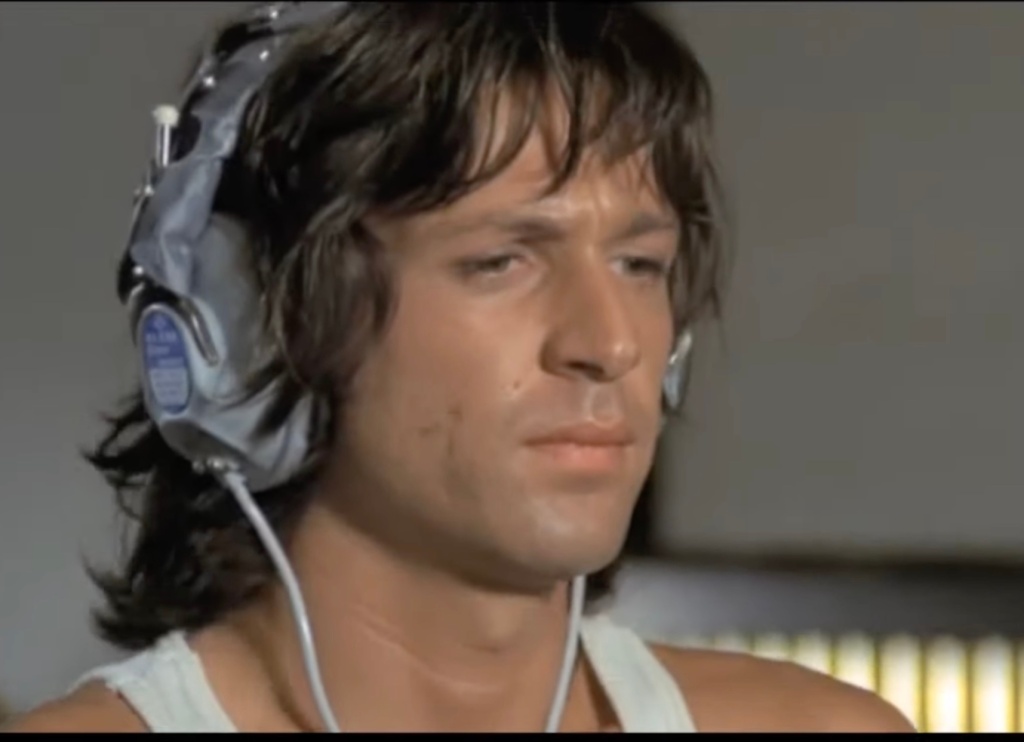
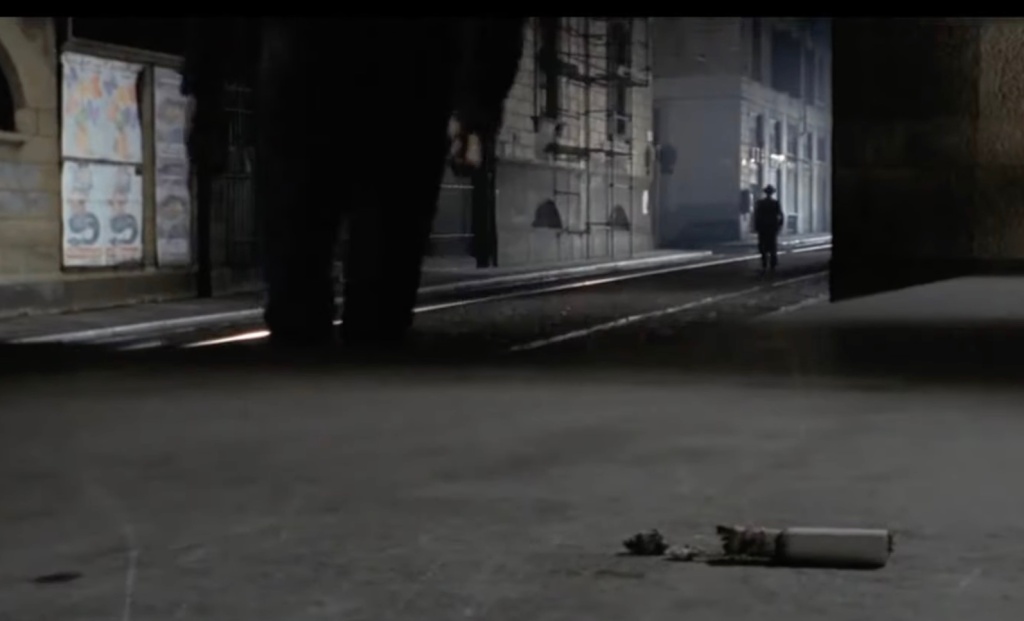
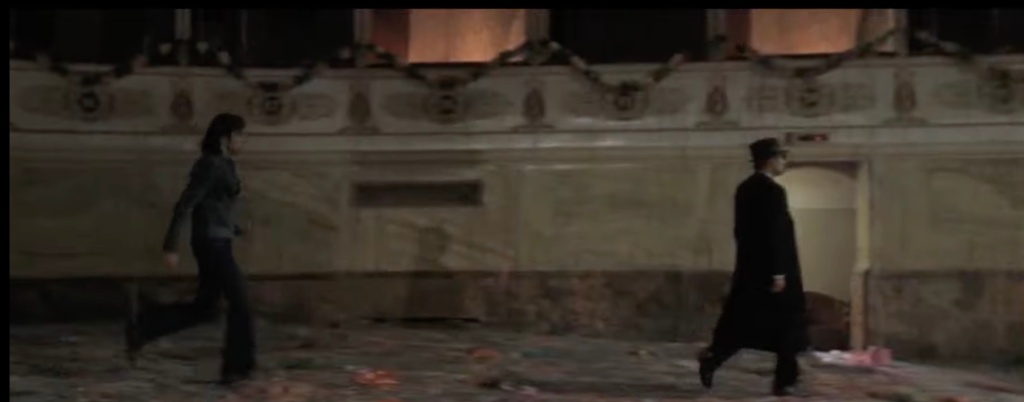
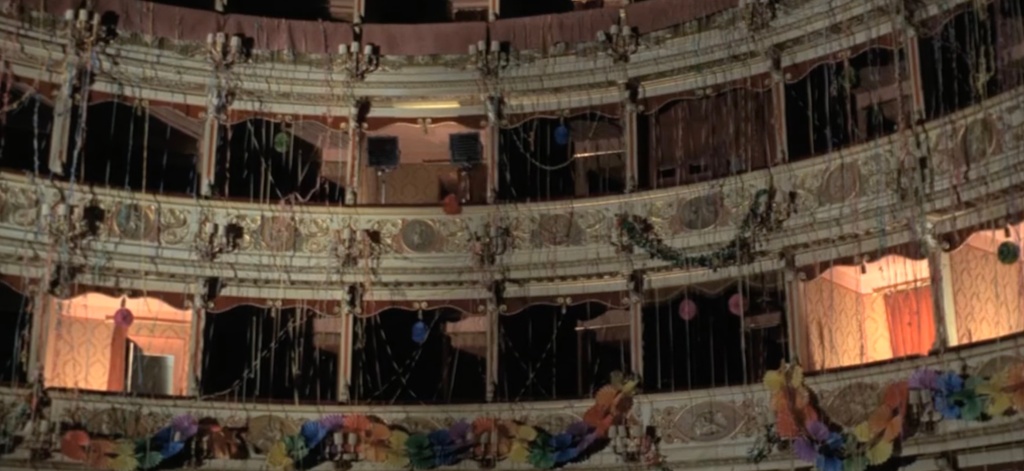
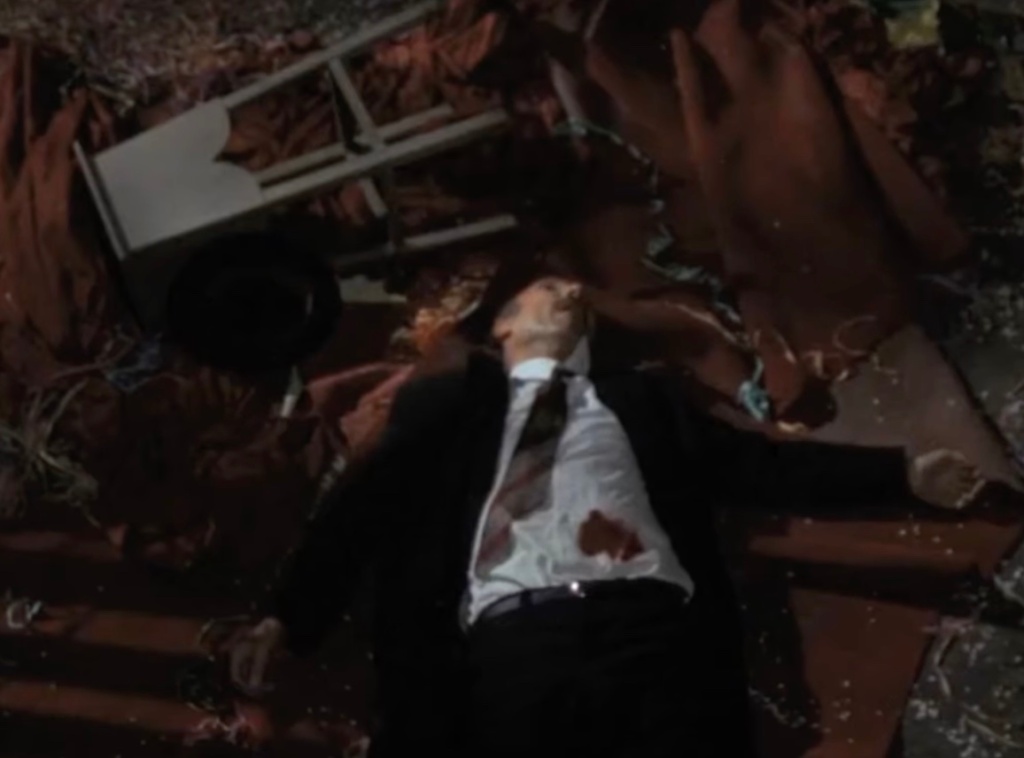
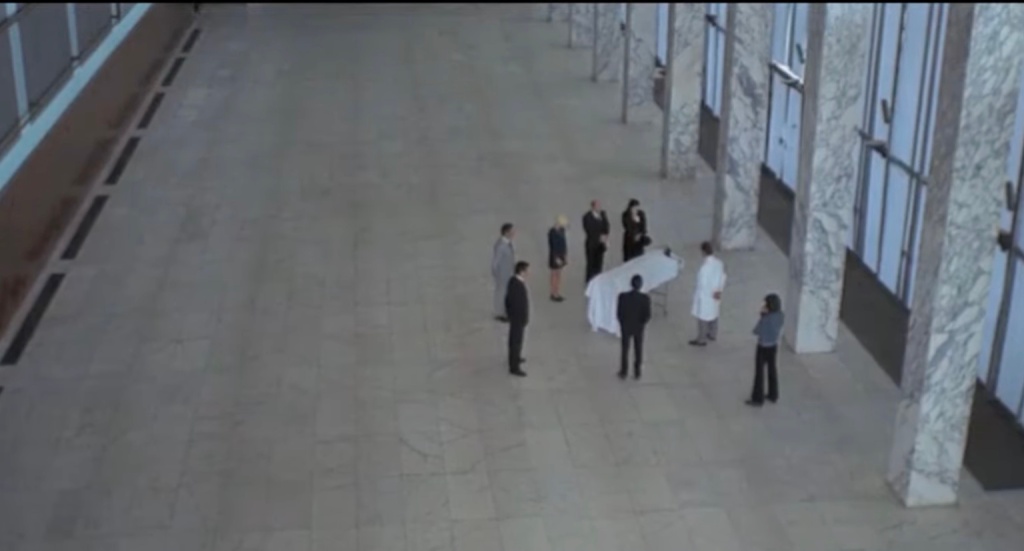
Robert Tobias (Michael Brandon) is a drummer in a band. Over a few days, he notices that a shady man, dressed in black, is stalking him. The man watches Robert perform, follows him everywhere, on foot, and even while Robert is driving. Robert returns the favor, trails the man, and finally catches up to him in a giant auditorium. A brief confrontation ensues as the man pulls out a knife. Robert grabs the knife, and in the scuffle that follows, the man is stabbed to death with his own knife.
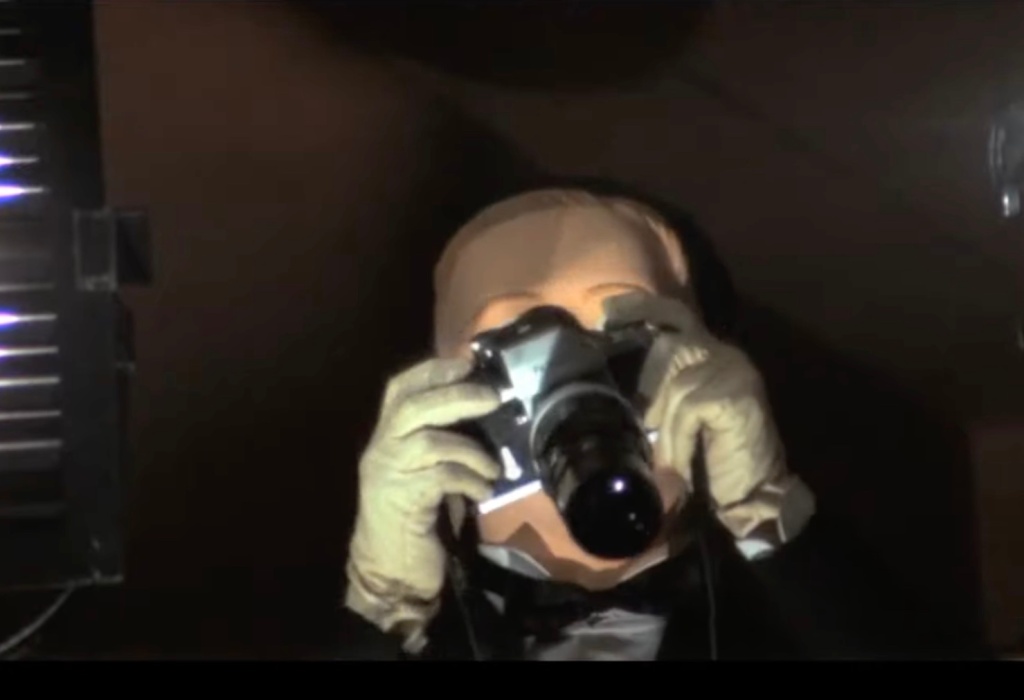
Suddenly, the lights of the auditorium come on and reveal a person in a puppet mask, capturing the entire happening on camera. Robert leaves as the mysterious character calls out to him, that he is in big trouble. The next day, newspapers mention that a man named Carlo Marosi was murdered the previous night.
Over the next few days, Robert gets calls that threaten his exposure. On one occasion, he is attacked by an unseen assailant in his own house, who then leaves with a warning that more is to come. The housemaid, Amelia (Marisa Fabbri), witnesses the entire attack by concealing herself in the darkness of the apartment.
Robert’s wife Nina (Mimsy Farmer) returns later, senses that Robert is not his real self, and forces Robert to tell her about all the recent happenings. She insists that they abscond from town, but Robert insists that he cannot run away. Robert is intrigued about why his blackmailer, who continues to make threats, has not demanded a ransom.
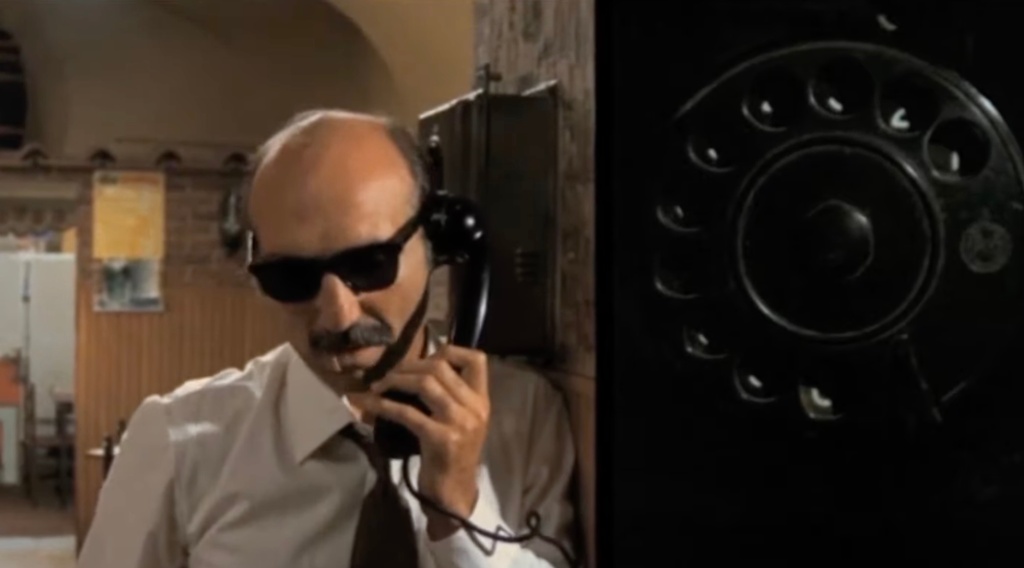
Amelia, who has been eavesdropping on the entire conversation between the couple, uses the situation to her advantage. She makes a call to the couple demanding payment and arranges to meet one of them at a nearby park.
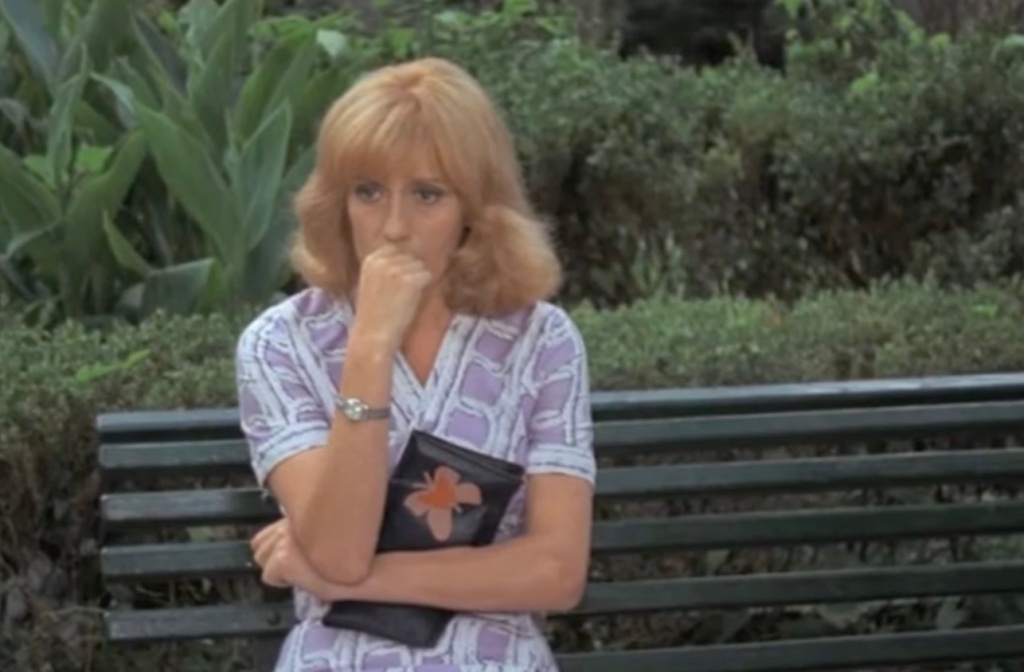
The next scene is a long sequence with only a background score and no dialogs. It features Amelia alone in a park, waiting for her ransom. As it gets dark, she realizes that no one is coming to deliver the money and decides to leave. However, she senses her immediate dangerous predicament. As she makes her way through a maze of bushes in the darkness, one realizes that she will soon meet her gruesome end. It is quite apparent that director Brian De Palma, who has used similar sequences in ‘Body Double’ and ‘Raising Cain’, got his inspiration from Giallo movies like FFGV.
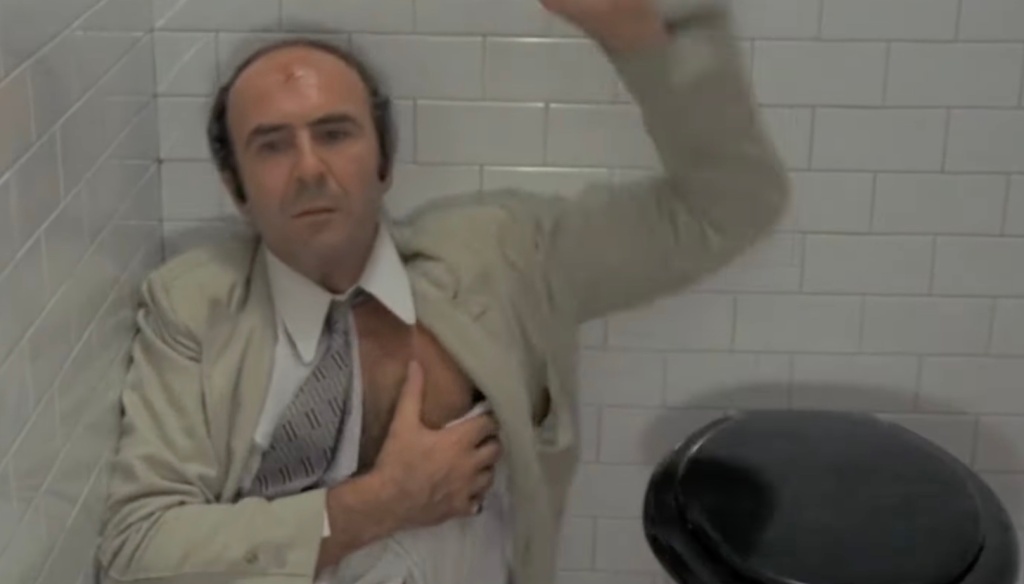
It is then revealed Carlo Marosi, the stalker, is still alive. (I am not sure how the newspapers proclaimed him dead earlier). Well, not for long. In typical fashion, he asks for more money from the killer and also meets his doom. Next, Nina’s cousin, Dalia (Francine Racette), enters the scene, and much to Robert’s dismay, stays as a guest at the couple’s house.
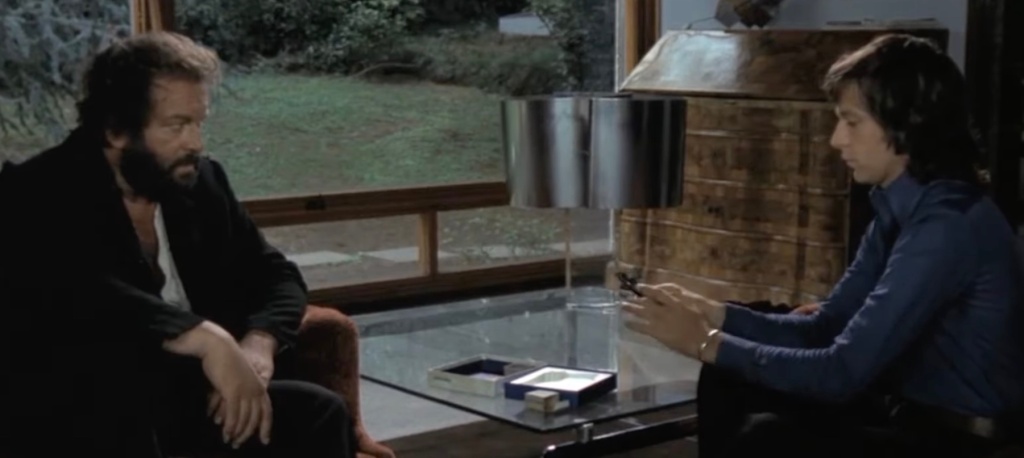
One of the aspects of FFGV that fails badly is the needless attempts at humor. Robert’s encounter with a postman is one such annoying scene. Another is when Robert hires a gay detective, Arrosio. For reasons beyond me, gay characters in Argento’s movies are portrayed as buffoons. Well, Arrosio begins his investigation that leads him to a psychiatric facility.
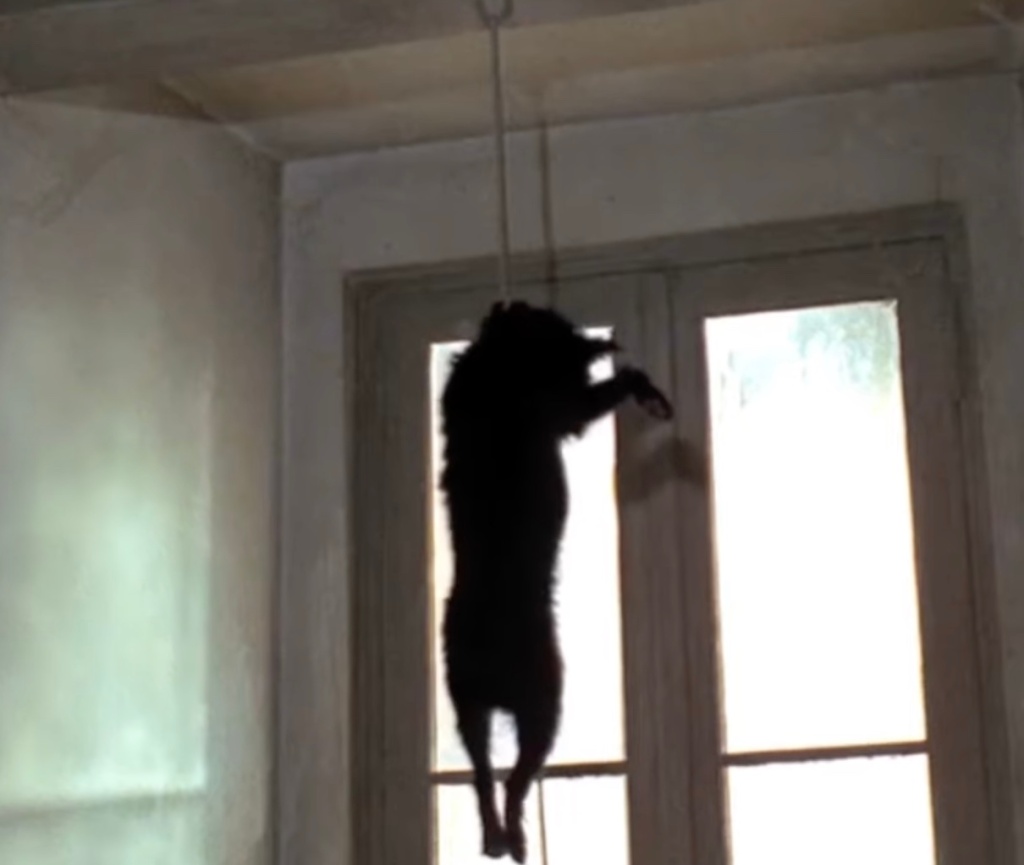
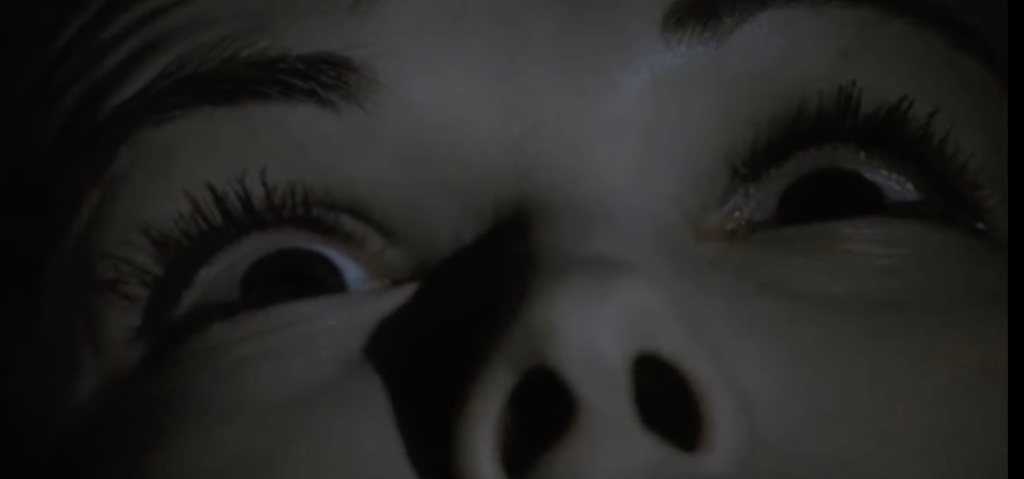
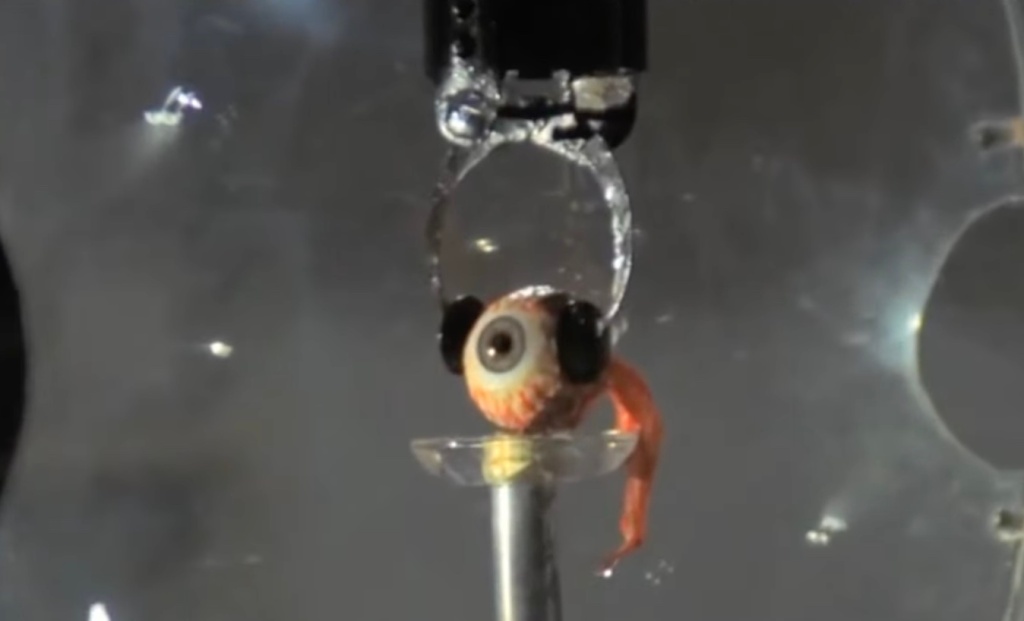
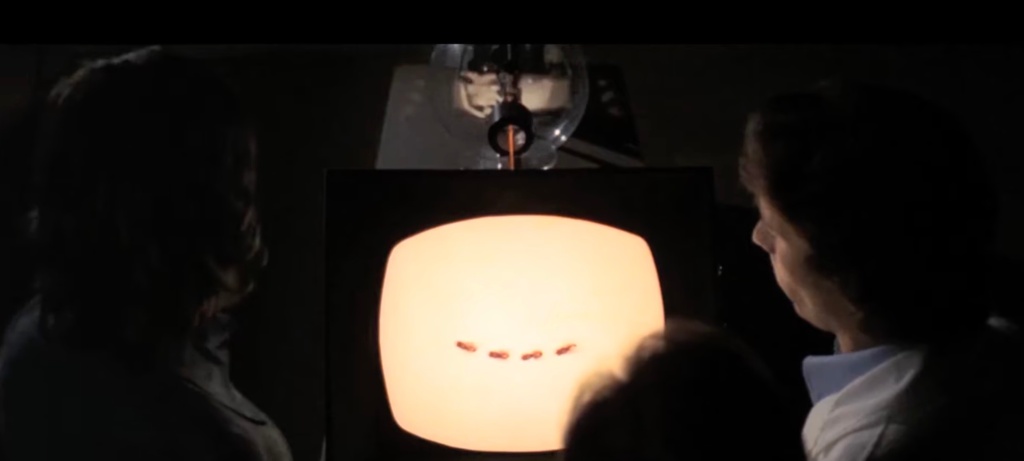
Meanwhile, the escalating tension at home causes Nina to move out of the apartment, leaving Robert alone with Dalia. The plot continues with more gruesome murders until the police get a vital clue about the murderer by using Optography on a diseased victim’s retina. In the climax, the image obtained from the Optography helps identify the killer. The end is certainly one of the most gruesome ones I have seen.
It should be stated that Optography, which is the process of retrieving the last-seen image from the retina of a dead person, is debunked junk science. Argento’s use of Optography as part of his plot attracted a lot of criticism from many critics, including Roger Ebert.
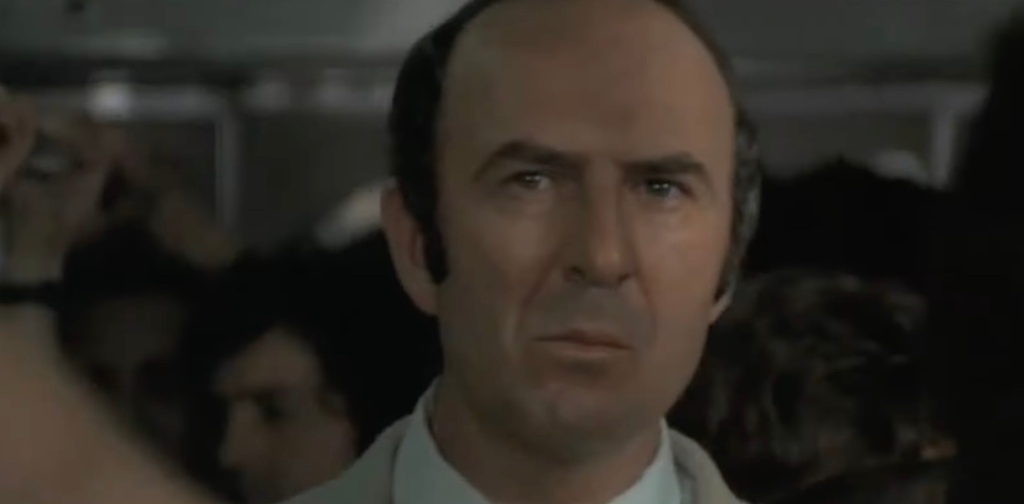
Despite loopholes in the plot and the lame comedy, the stunning views of Italy and ostentatious sets make FFGV a watchable movie, though it may not be one of the best of Argento’s films. While the entire cast has turned in decent performances, the one person who throws in a noteworthy performance is the one who plays the murderer. Go ahead and watch this movie.




 Bay Area Bloke