

It’s yet another day, and it’s time to review yet another Brian De Palma movie, which is yet another homage to Hitchcock. “Sisters,” an early ’70s Brian De Palma tribute to Hitchcock, is a psychological horror movie with quite a few of De Palma’s own fixations, such as look-alikes, siblings, use of illusion, and some fixations he shares with Hitchcock, like voyeurism and, of course, trailing or stalking.
Like many of De Palma’s movies, “Sisters” pays homage to Hitchcock’s classics, “Rear Window,” “Psycho,” and “Vertigo.” Though not as obvious as references to the movies mentioned above, the plot of the movie also shares similarities with an older Hitchcock classic, “Notorious.”
Voyeurism is a recurring theme in the movie. The opening scene of the movie shows a young creep ogling a blind woman who is just about to undress. It turns out that this sequence is actually part of what looks like a combined adult-themed mix of a reality show, a quiz show, and candid camera. De Palma, the master of illusion, once again plays one of his signature tricks on the viewer by blending reality and illusion.
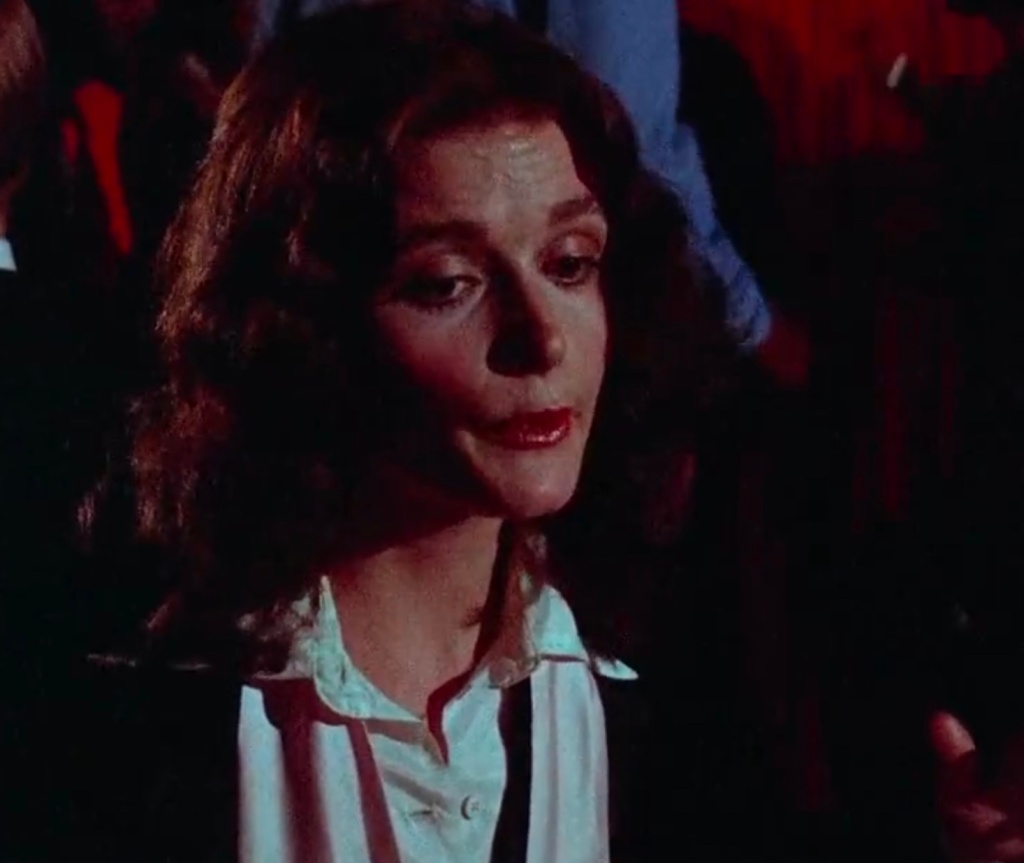
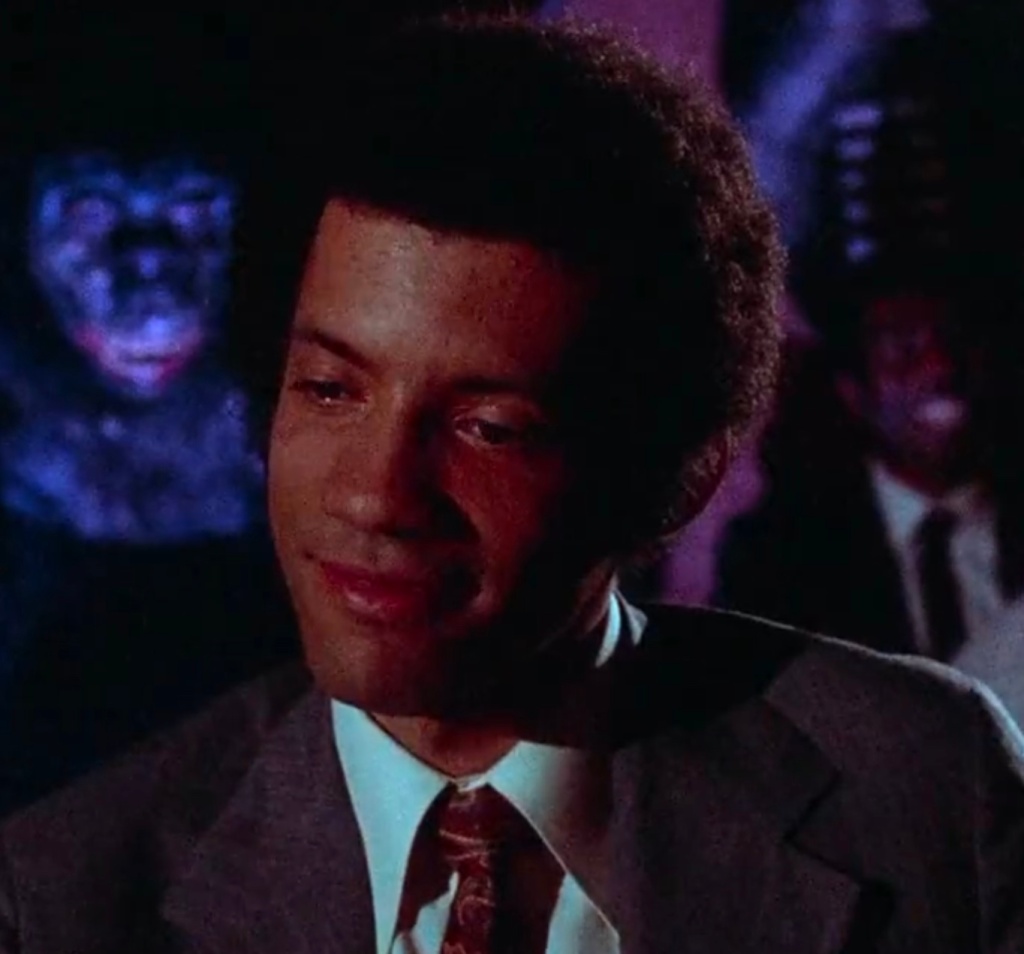
The man and woman are revealed to be a salesman, Philip Woode (Lisle Wilson), and Danielle (Margot Kidder), two aspiring actors. The two are later seen on a date, having dinner, and a talkative Danielle is narrating stories from her past nonstop to Philip, with a strong French accent.
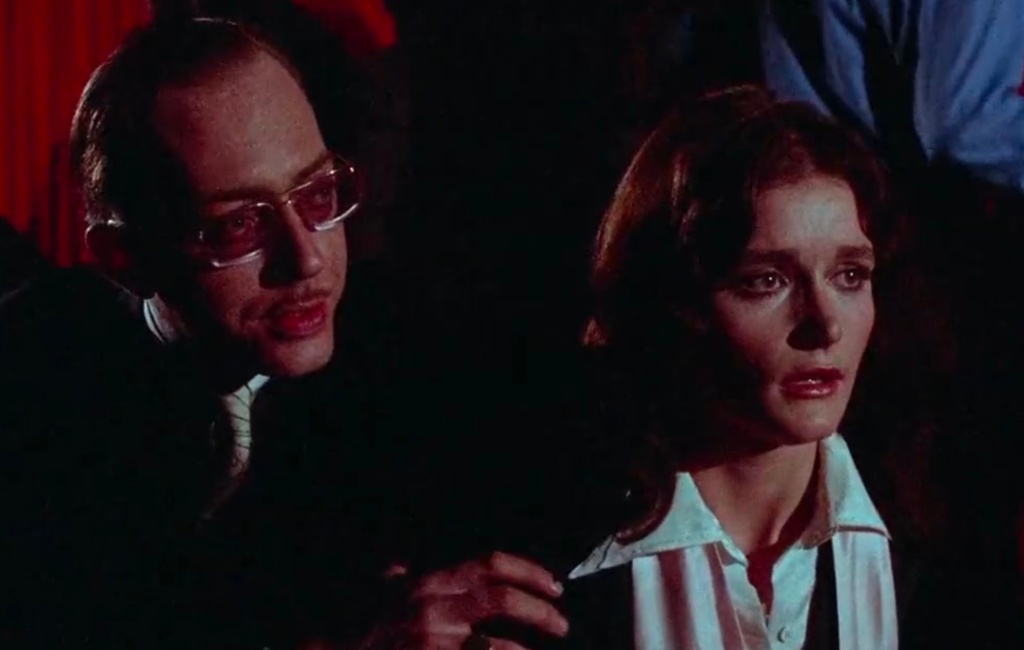
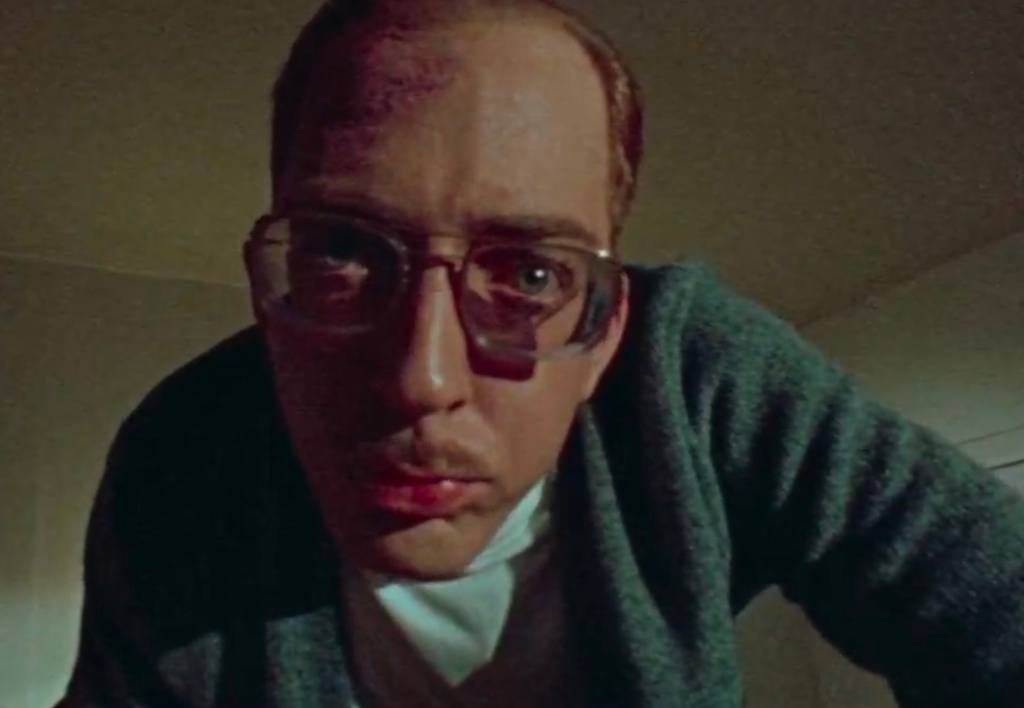
While some viewers may find her annoying, Philip seems to be in love with her, attentively listening to her talk and hanging on to every word. Their dinner is briefly interrupted by a strange spectacled man (William Finley) who attempts to take Danielle away with him. Philip complains to the staff, who drag away the protesting man. Danielle tells Philip that the man is her ex-husband Emil, who refuses to leave her alone after the divorce.
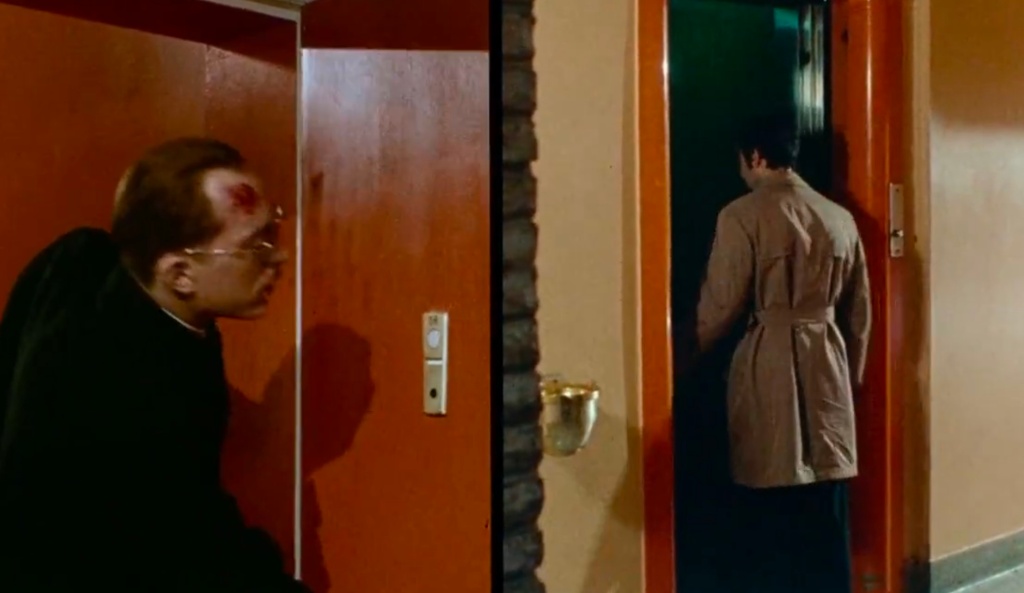
Philip and Danielle retire to Danielle’s apartment on a high rise, and after a while, Emil is seen at the entrance of the building. Philip feigns leaving the apartment to make the jealous Emil leave with the impression that his ex-wife and Philip were not spending that night at her apartment. After Emil leaves, Philip returns, and as the couple gets intimate, a shot of Danielle’s thigh reveals a large scar of damaged tissue, probably caused by surgery.
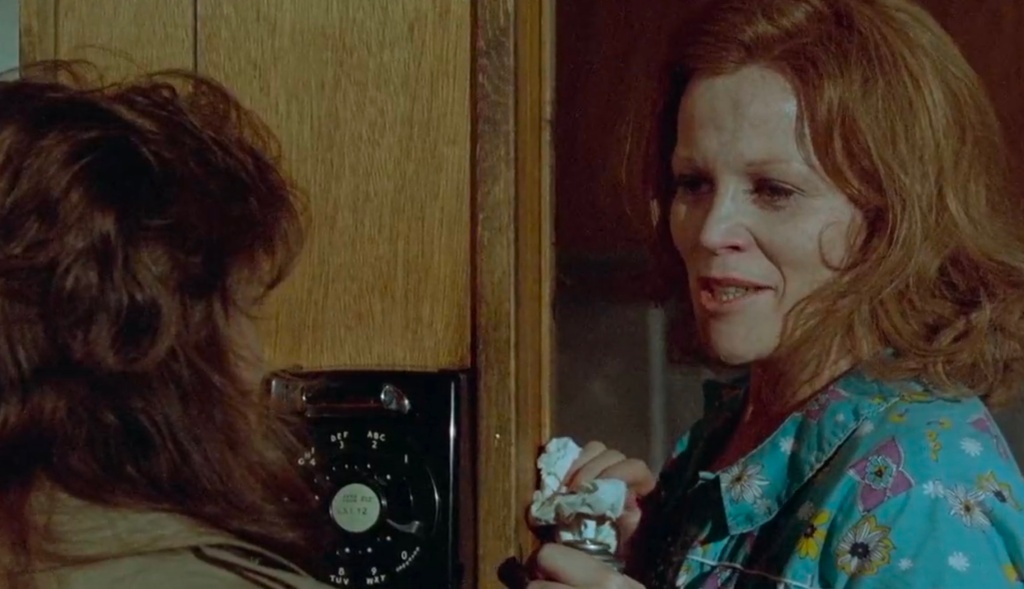
The following morning, Philip wakes up to the sound of voices. A woman’s voice is heard reprimanding Danielle for bringing her lover to the apartment. A hysterical Danielle soon comes to Philip and tells him that her twin sister Dominique is visiting her to celebrate their birthday, which is on that day.
Danielle requests Philip to run an errand for her. He is to go to a pharmacy and pick up a prescription for her. Philip accepts and picks up the medication at a pharmacy. Right next to the pharmacy is a bakery, and Philip, playing the well-mannered gentleman, decides to buy the two sisters a cake for their birthday. Philip enters the bakery, buys the cake, and asks one of the staff to inscribe a birthday greeting on the cake.
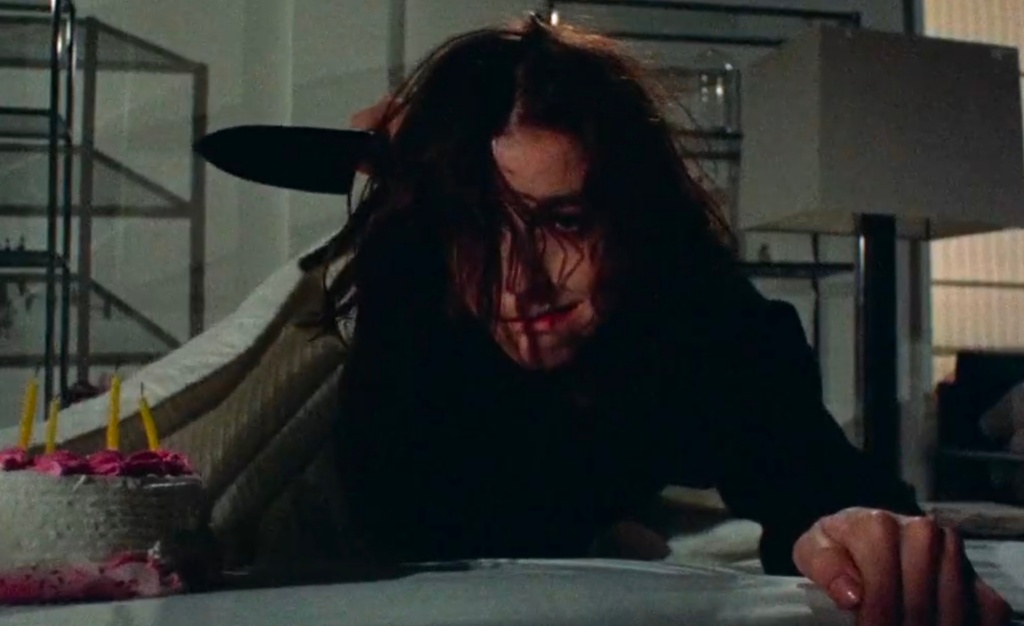
Upon returning to the apartment, Philip finds a box in the kitchen with a number of sharp tools, including a few large knives. Taking two knives and the cake with him to the bedroom, Philip tries to wake up a sleeping Danielle. Abruptly, Danielle wakes up from sleep, takes one of the knives, and starts stabbing Philip.
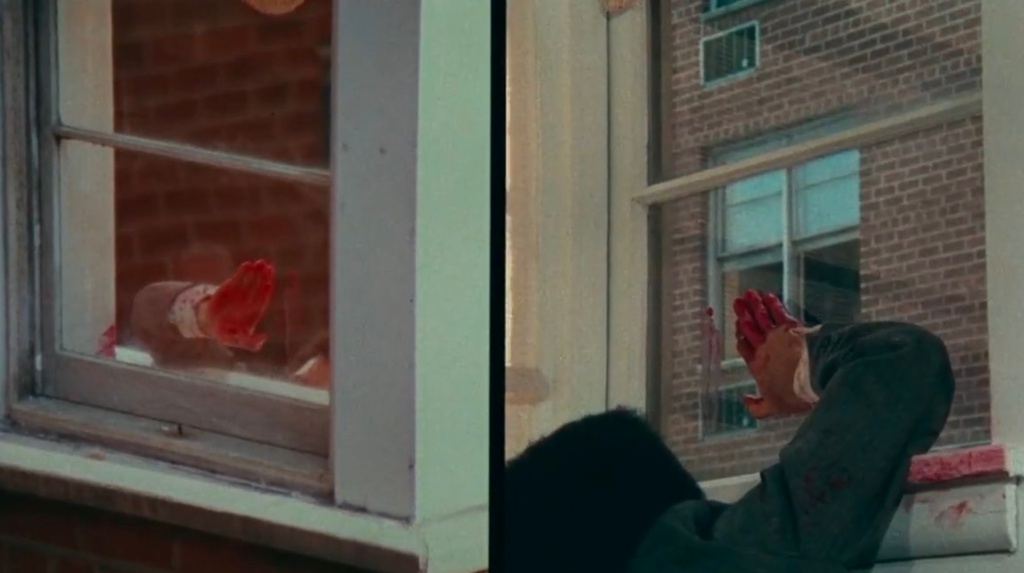
Badly injured and barely conscious, Philip tries to crawl away, but Danielle easily gets hold of him and continues to stab him. Using all his remaining strength, a profusely bleeding Philip gets to a window and writes the word “help” with his finger on the glass, using his own blood. Danielle pursues him and continues her stabbing spree, taking away the little life that is still in him. In typical De Palma style, just as in one of his later movies, “Dressed to Kill,” the plot introduces a central character at the beginning of the movie and kills this character somewhere halfway into the movie.
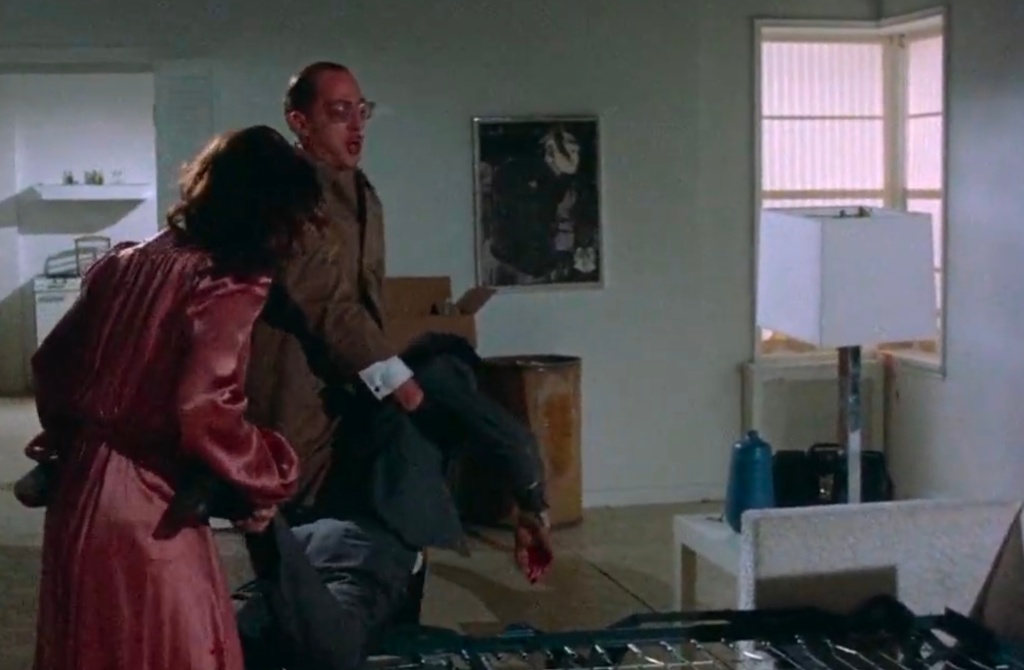
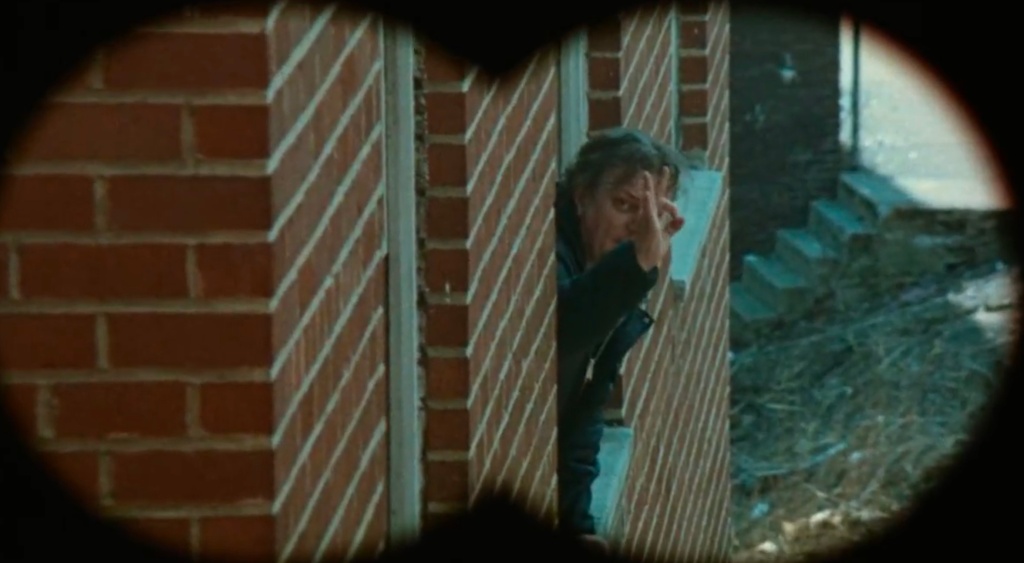
In the tradition of Hitchcock’s “Rear Window,” a neighbor of Danielle witnesses her commit the murder and calls the police. The witness is revealed to be Grace (Jennifer Salt), a passionate and committed reporter looking for a sensational story. In the meantime, Emil comes to Danielle’s apartment and helps her remove any evidence of Philip by hiding Philip’s lifeless body in a sofa and wiping away all the blood from the floor and walls.
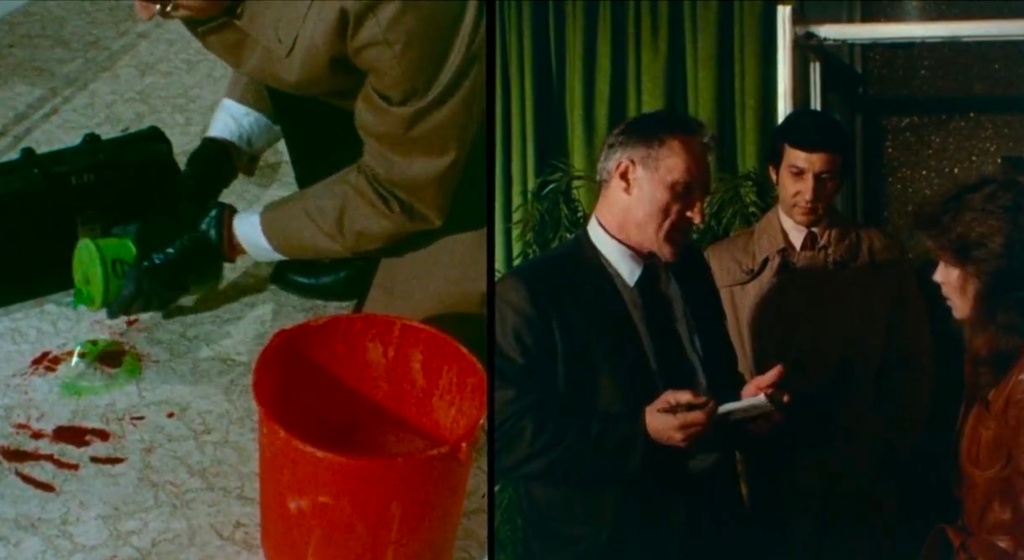
In stereotypical fashion, a police detective, Kelly, arrives at the scene, does not trust Grace’s allegations, and then reprimands her when no evidence of a crime is found in Danielle’s apartment. Gloria hires Larch, an investigator, to break into Danielle’s apartment in the latter’s absence to find evidence for the crime she witnessed.
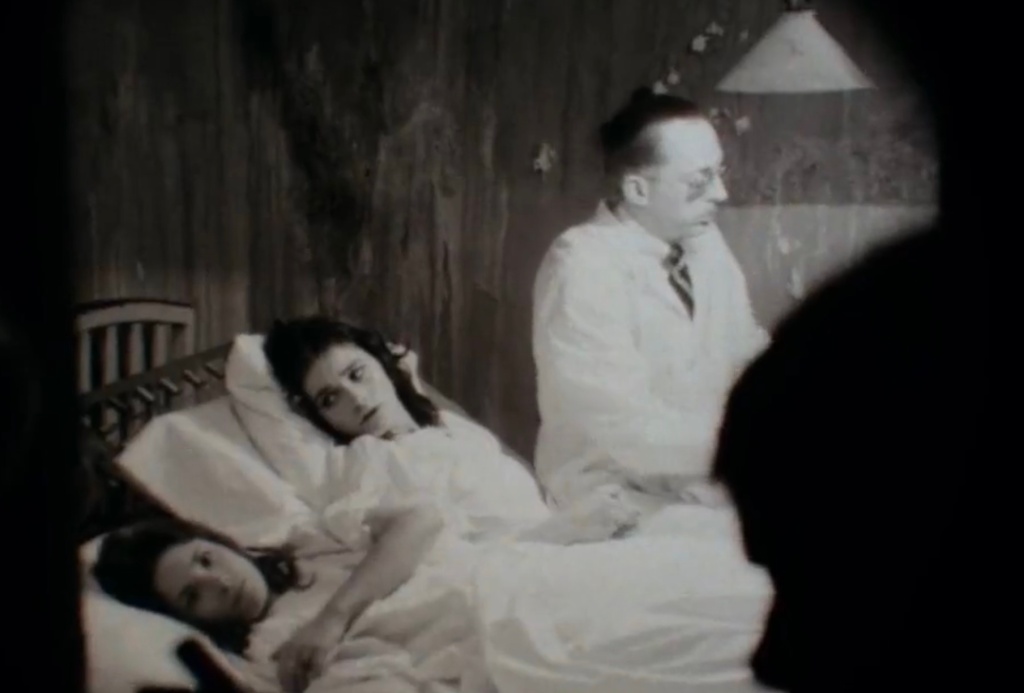
Another cliché suspense sequence seen in many mystery movies ensues, where Danielle arrives with Emil at the apartment, and Larch manages to slip out just in the nick of time. Larch hands a folder to Gloria that he magically and conveniently found in the apartment. The folder contains a file from the Loisel Institute with details on a surgery performed on Canada’s first conjoined twins, Danielle and Dominique. Only Danielle has survived the surgery according to the file. The surgery was covered in an article in Life magazine.
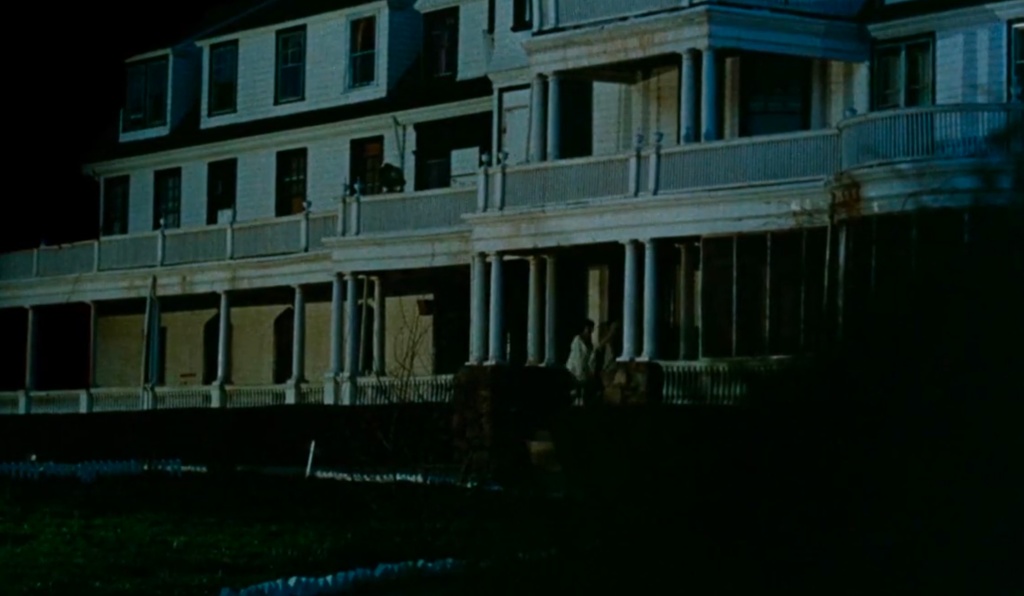
Gloria tracks down and meets the author of the article, who shares some disturbing details about the twins. Next, Larch catches two individuals hauling a couch from Danielle’s apartment onto a van and then driving away in it. Larch tails them all the way to Canada to find out where they are taking the couch, which he suspects has Philip’s body. Gloria tails Emil and Danielle to a mental hospital to uncover the truth. What exactly is the relationship between Danielle and Emil? Who killed Philip? Was it Danielle, or was her allegedly diseased sister Dominique? The rest of the plot answers these questions. “Sisters” is a chilling psychological thriller with some terrifying imagery that blurs the lines between hallucination and reality.
One scene where a disturbed, sedated Gloria is taken away by two individuals is very reminiscent of a scene from the old Hitchcock thriller “Notorious.” The truth behind all the mystery is finally revealed through Gloria’s hallucinatory dream. The ending of the movie is unexpected, offbeat, and unique.
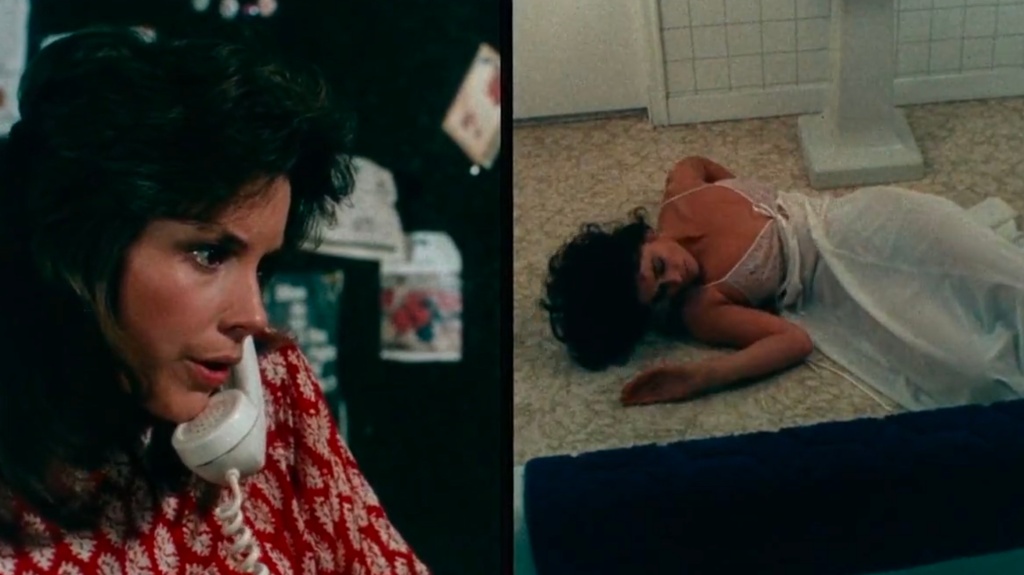
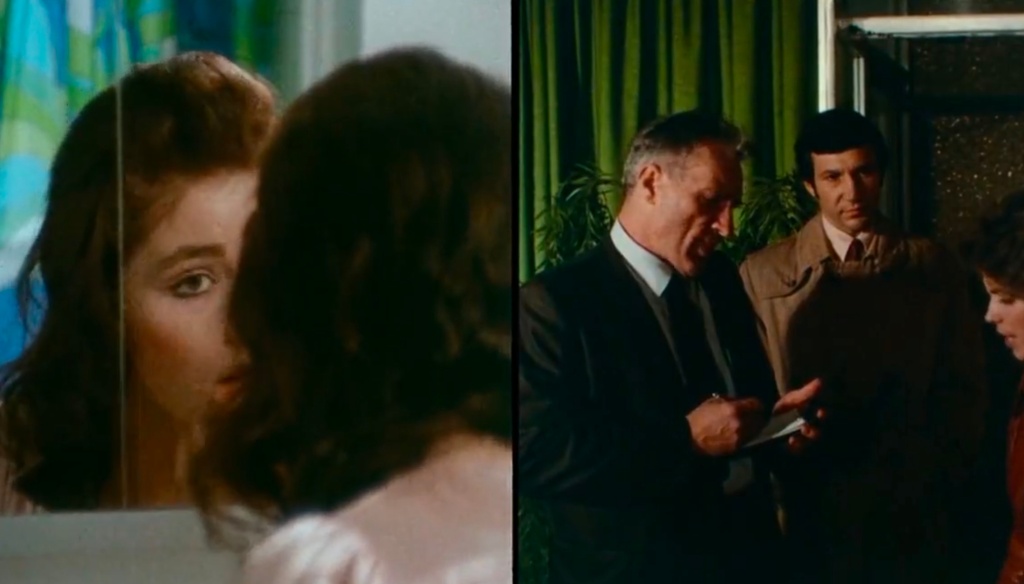
The cinematography in the movie is spectacular. De Palma’s use of split screens and point of focus techniques in some scenes accentuates the riveting intrigue in the movie. The standout performance in the movie comes from Margot Kidder, who transitions effortlessly from the talkative Danielle to the psychopathic Dominique. William Kinley effectively plays the fearsome evil doctor Emil. Catherine Gaffigan is most effective in her small role as Arlene, a patient at the mental hospital. “Sisters” is yet another highly recommended mystery thriller from one of the greatest masters of illusion, De Palma.




 Bay Area Bloke