

While I have limited my definition of Film Noir to movies made in the US in the 40s and 50s with a certain set of characteristics, it is important to mention that many filmmakers all over the world made movies that were inspired by film noir and brought in a lot of film noir aspects to their movies. From now on, to avoid any confusion or contradiction, let us ‘christen’ these movies ‘Foreign Film Noir.’ “The Third Man” is one such movie.
“The Third Man,” starring Joseph Cotten, Alida Valli, and Orson Welles in the lead, is among the best of Foreign Film Noir. Directed by Carol Reed and with a screenplay by Graham Greene, the movie is a British production set in the wake of WWII.
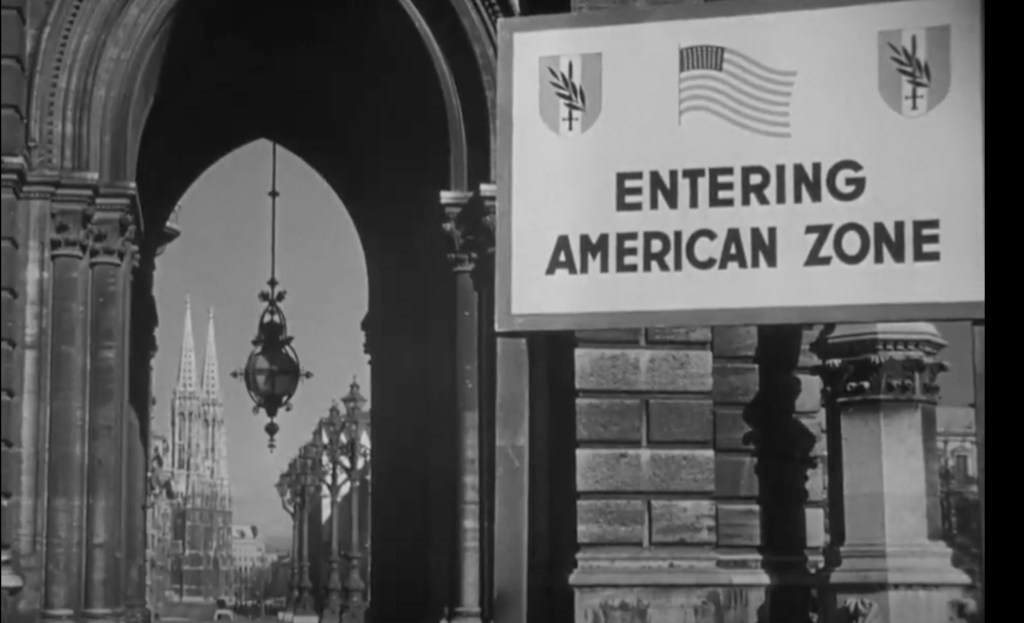
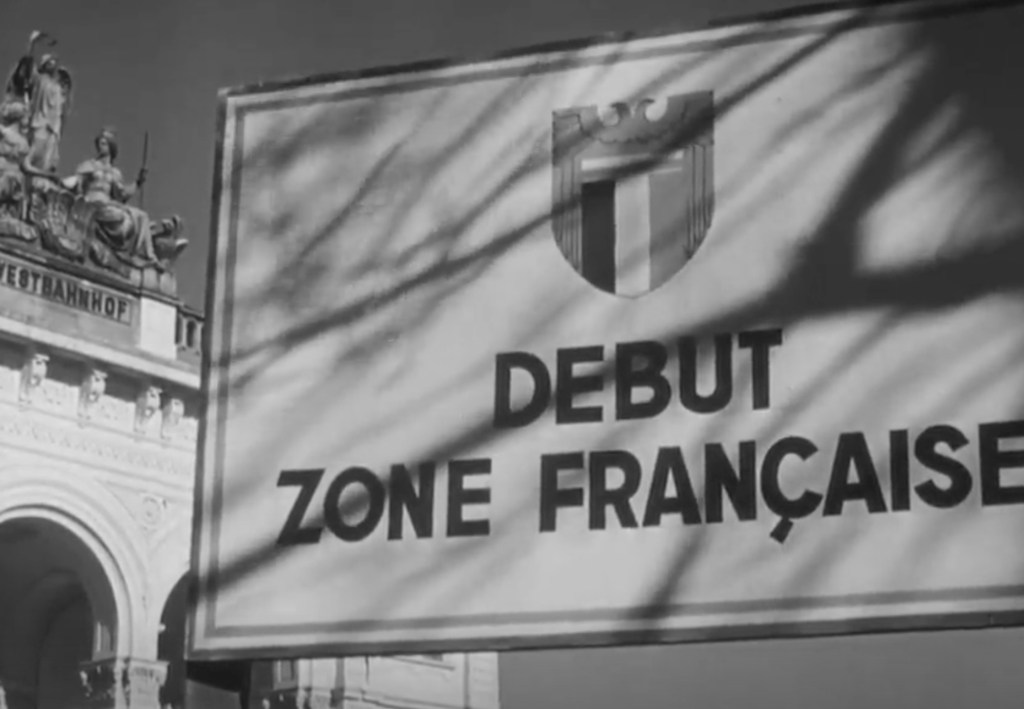
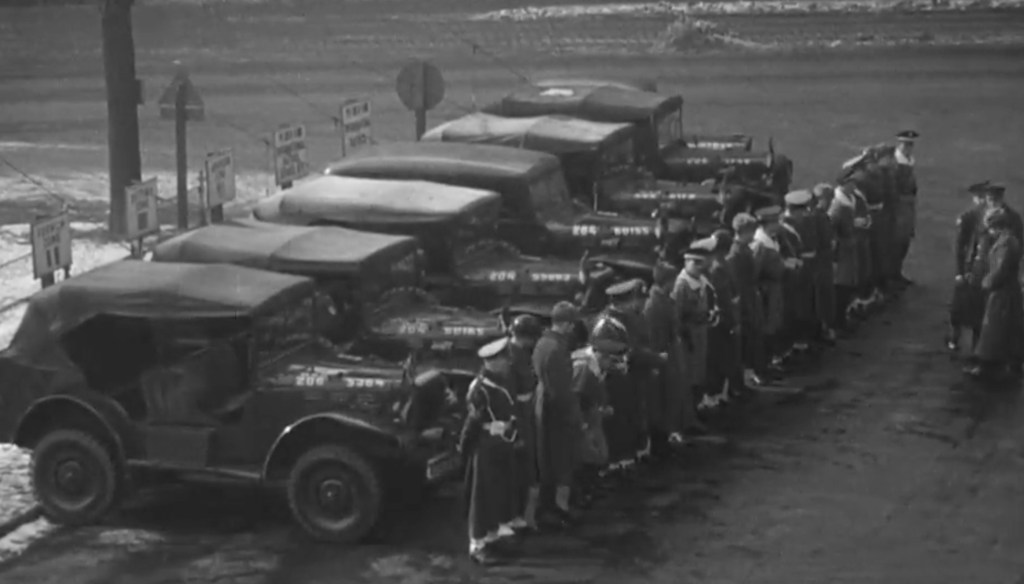
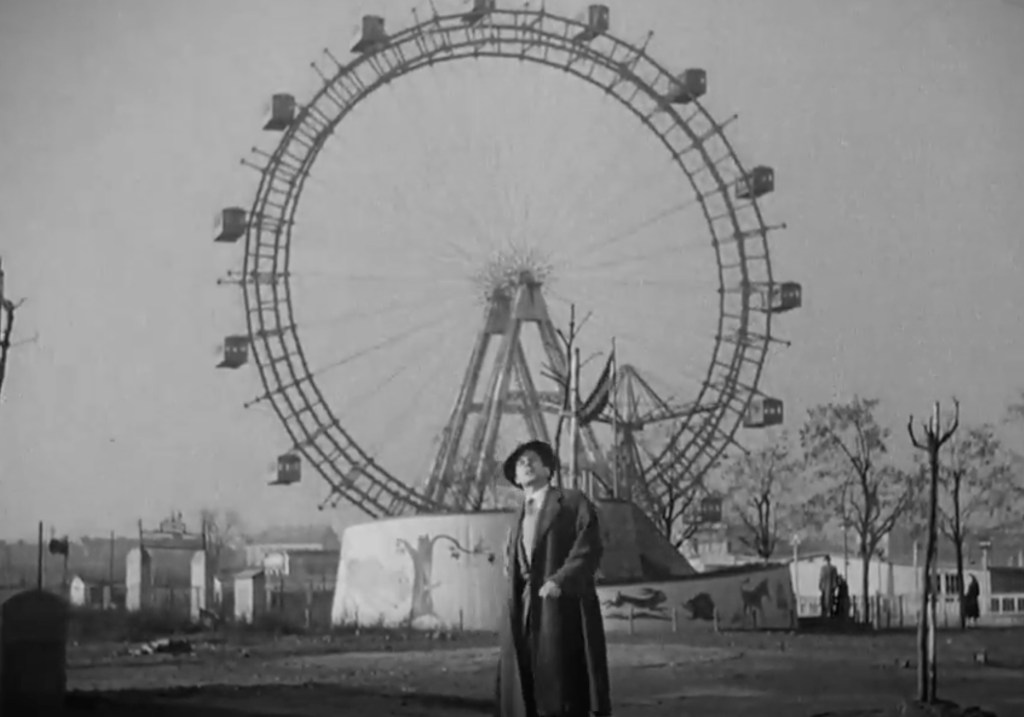
Post-war Vienna. Images of parts of the city razed by bombing with many structures demolished appear on the screen. There are, however, many beautiful buildings, some with intricate architecture that are still intact. The narrator tells us that Vienna has been dissected into four zones: the American, British, Russian, and the French. The central zone of the city is governed by a joint force. Teams of four, with one member of the four parts, are responsible for maintaining law and order in this zone. Having set the scene, it is time for the plot to unfold.
An out-of-work author of fiction, Holly Martins (Cotten), arrives in Vienna at the behest of his childhood friend, Harry Lime, who has offered the former a job. Upon arrival at Lime’s apartment, Holly is informed that Lime had died from a car accident and that the funeral is in process.
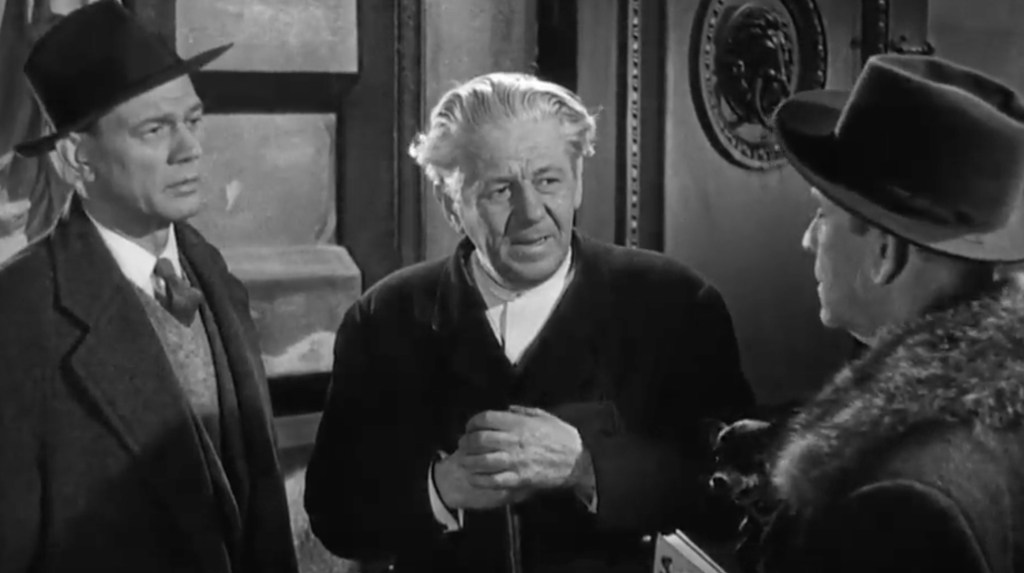
Holly arrives at the funeral, catches a glimpse of a grieving woman, and meets Major Calloway, a representative of the British police force in Vienna. Calloway invites Holly for a drink. The two of them are joined by Sergeant Paine, a subordinate of Calloway and an avid reader of Paine’s books.
The conversation gets hostile when Calloway accuses the late Lime of illegal activity in the black market that ascends to the level of homicide. Holly, slightly tipsy, takes a swing at Calloway but is easily knocked down by Paine. Calloway calmly instructs Paine to take Holly to a military hotel. Holly meets Crabbin, who is part of a British propaganda initiative in Vienna. Crabbin asks Holly to stay a few more days in Vienna and present a speech at their next cultural event.
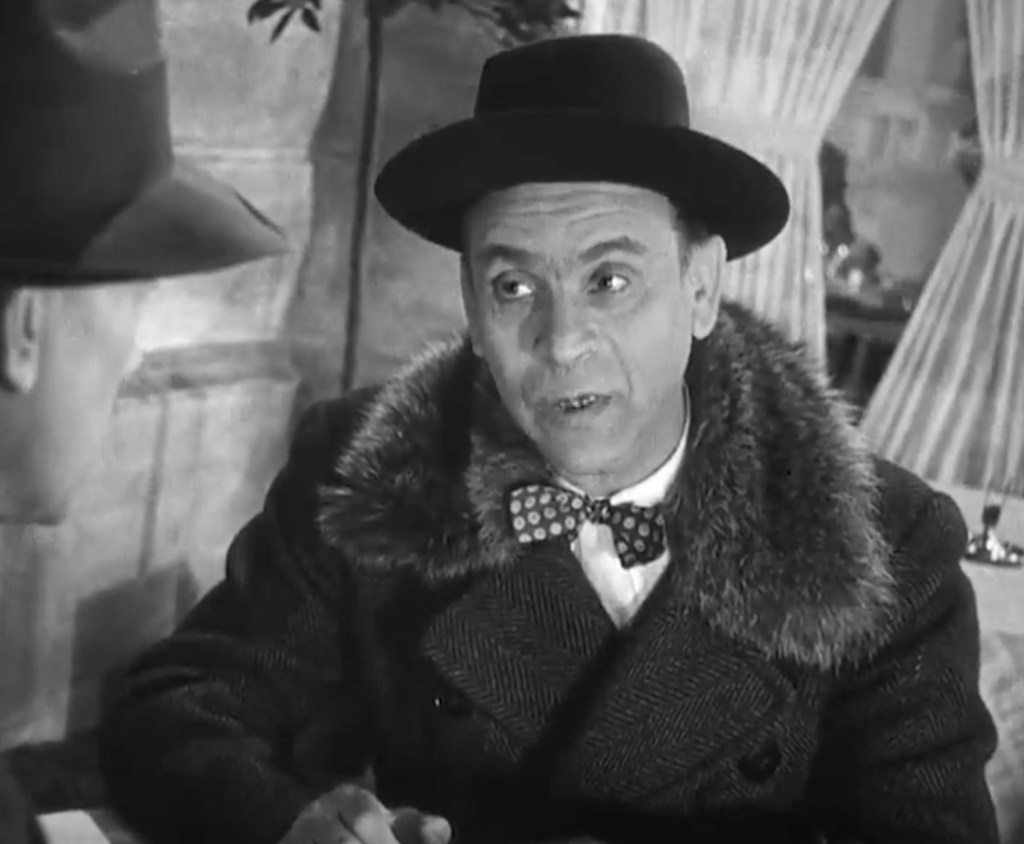
The next day at the hotel, Holly is accosted by a strange-looking man holding a book that he, Holly, authored. The man introduces himself as Baron Kurtz, a friend of the late Lime, and claims that he was with Lime at the time of his fatal accident and helped carry Lime’s body to the car with another friend of Lime, a Polish man, Popescu. He also mentions to Holly that Lime insisted that he, Baron, takes great care of Lime’s Czechoslovakian lover, Anna Schmidt, and Holly. Kurtz tells Holly that Harry was taken to a Dr. Winkel where he was pronounced dead.
Kurtz gives Anna’s address to Holly and tells the latter that Anna performs at an Opera. He visits her home, where a porter tells him that while he did not see the accident happen, he heard the noise and rushed to his balcony. His version of events differs from the version narrated by Kurtz, that there were three men and not two, who carried Harry’s corpse and took it to the doctor. Holly suspects foul play and a cover-up in the death of Harry.
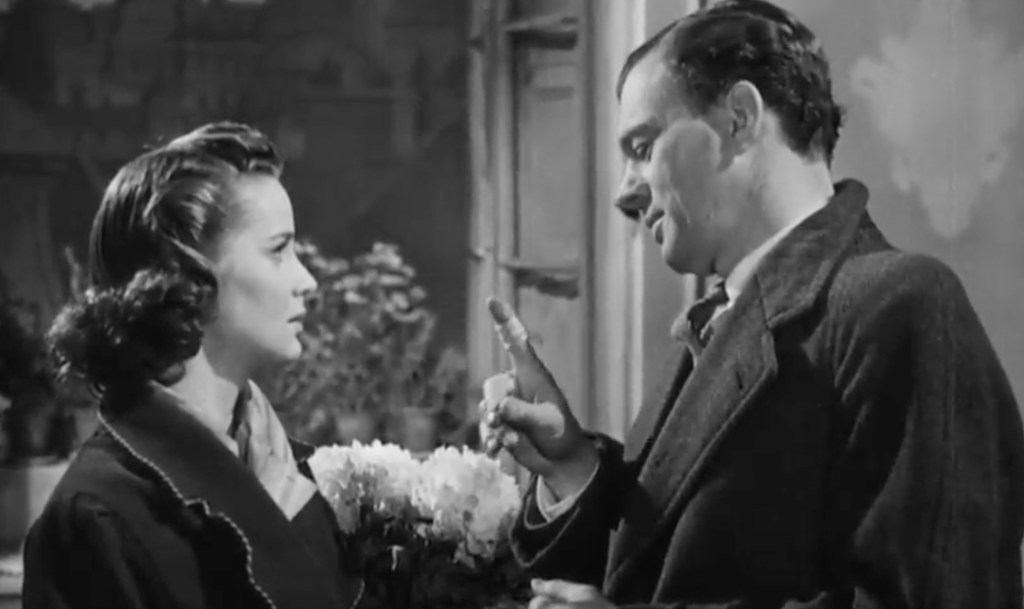
Holly proceeds to watch the Opera with Anna in its cast. This is a beautiful scene in the movie. Just as Holly befriends Anna, Calloway arrests her. It is revealed that Anna’s papers have been forged. Calloway now also alleges, to Holly, that Lime was stealing Penicillin from hospitals, diluting it, and then selling it on the black market, causing the deaths of numerous people, including many children.
Holly’s meeting with the enigmatic doctor later in the movie also sheds little evidence on Lime’s death. Holly is falling in love with Anna.
Further, the porter who alleged that there were three men who carried Harry’s lifeless corpse is also murdered. Holly must unlock the mystery of Harry Lime. Who was the mysterious third man? Was Harry Lime the person Holly used to know, or did he have dark secrets? The rest of the plot answers these questions.
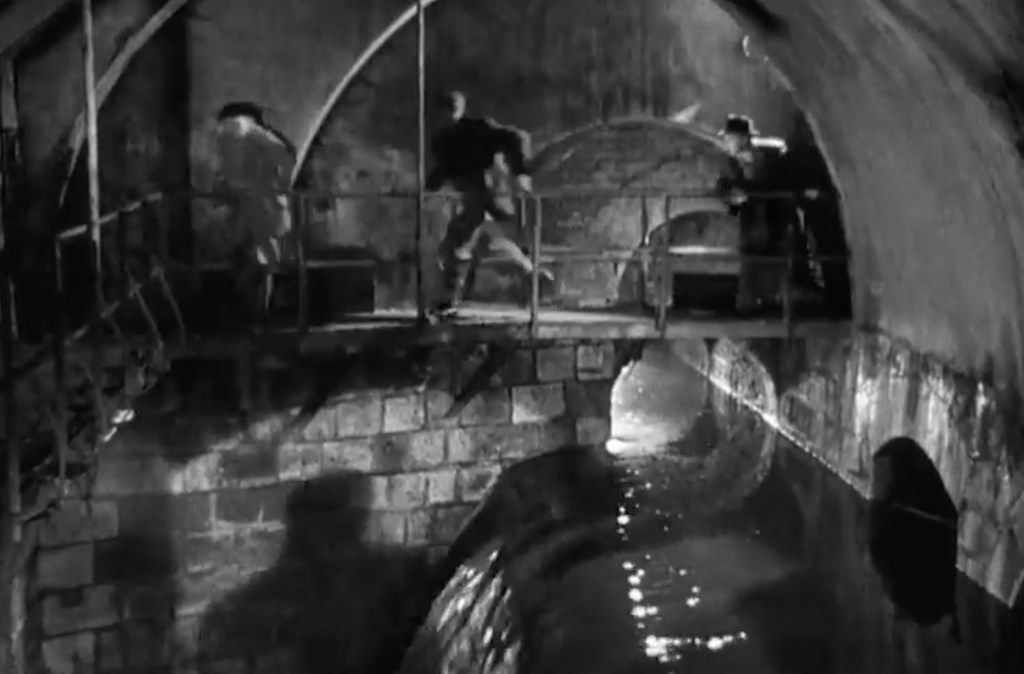
As mentioned earlier, this movie is one of the best noir movies ever made. Despite being black and white, its cinematography is extraordinary. While most film noir movies are shot with mostly indoor scenes, this movie exhibits Vienna with both its razed buildings and its surviving beautiful architecture. Robert Krasker, the cinematographer, masterly blends light and shade in displaying scenes in dark alleyways, underground tunnels, exquisite indoor architecture in hotels, and apartments. This sets the tone for the film’s intense themes of mystery and intrigue. Another interesting aspect about the camera-work is that sometimes it seems slanted at times. This technique of setting the camera at an angle is called the ‘Dutch Angle.’ Critics are divided on whether or not this was an artistic enhancement or an experiment that failed. I thought that it did add to the intensity of the plot in its own ‘skewed’ way.
The intrigue is further accentuated with the movie’s beautiful score from composer Anton Karas.
I have often said that character definition is one of the key factors of a great movie. This movie is testimony to my statement. Cotton and Valli turn in fine performances, but Orson Welles, who appears later in the movie, steals the show with yet another powerful exhibition of his acting talent. His disturbing speech towards the end is one of the highlights of the movie.
The unexpected, shocking, and offbeat end The Third Man is another aspect that sets it apart from the rest. The movie is riveting from start to finish, even by contemporary standards. It is a must-see for any lover of cinema.









 Bay Area Bloke