

In this post, we will look at a film noir classic directed by and starring Orson Welles. My last post on another Orson Welles film noir gem is the most popular among all the posts in this blog.
“The Stranger” stars Edward G. Robinson, Loretta Young, and Orson Welles. As previously mentioned in the last part of my guide to film noir, film noir themes often involved World War-related plots involving returning vets or Nazi criminals.
The plot of “The Stranger” begins with Mr. Wilson (Robinson) of the United Nations War Crimes Commission tracking down a notorious Nazi criminal, Franz Kindler. Just as he did in “A Touch of Evil,” Welles plays the antagonist, a role he seems to relish.
Kindler has cleverly covered up his tracks, leaving no trace of evidence or photographs of himself that can be used to identify him. Wilson releases Meineke, a former associate of Kindler, to lead him to Kindler.
Wilson follows Meineke, who takes a bus to a small Connecticut town. Meineke steps out of the bus and soon realizes that he is being followed, attempting to disappear into a school building. Wilson enters the school and the gymnasium, looking for Meineke, when the latter attempts to murder Wilson by dropping a heavy gymnastics ring on him.
Kindler has been living in this town as Charles Rankin. With Wilson knocked out, Meineke goes to Rankin’s home, where he meets a young lady. It is revealed that this lady is Mary, the daughter of Supreme Court Judge Longstreet. Further, she is going to marry Rankin that very day.
Mary informs Meineke that Rankin would be home soon. Almost on the verge of a breakdown, Meineke leaves and finds Rankin just as he is coming back home. Rankin and Meineke converse in the woods, where Meineke relates his encounter with Wilson and tells Rankin that he has found salvation through his repentance, suggesting that Rankin should do the same.
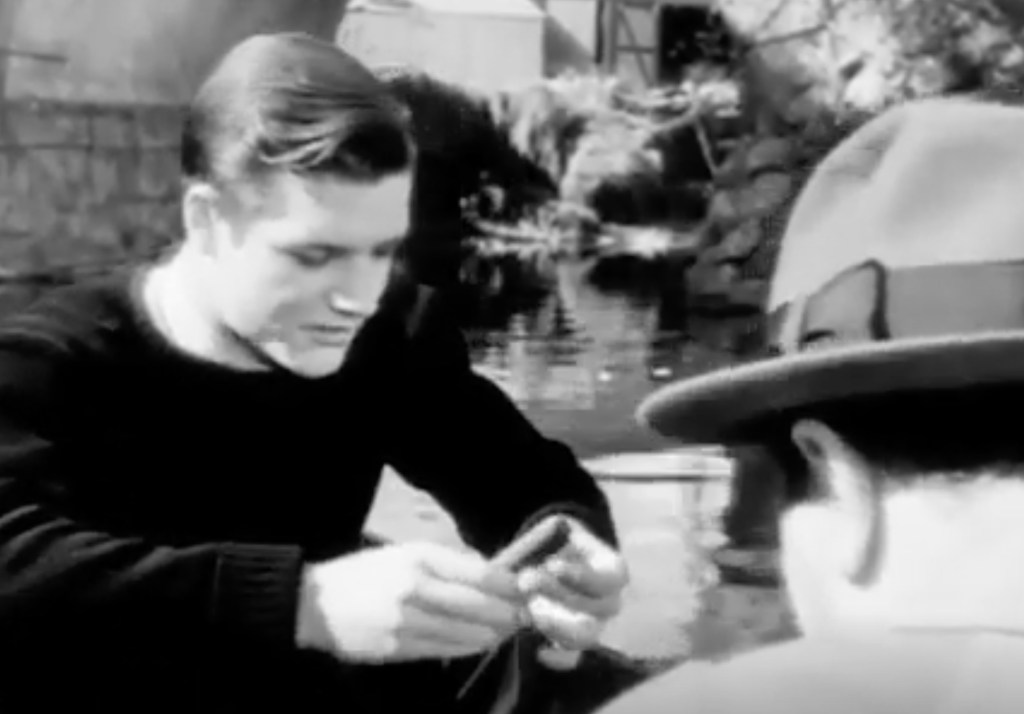
Cunning Rankin has deduced that Wilson was sent to flush him out and quickly strangles his former associate to death. He has just buried the body when he notices some of his young students playing a game of Paperchase. He masterfully alters the track of paper clippings to divert the group away from the burial site.
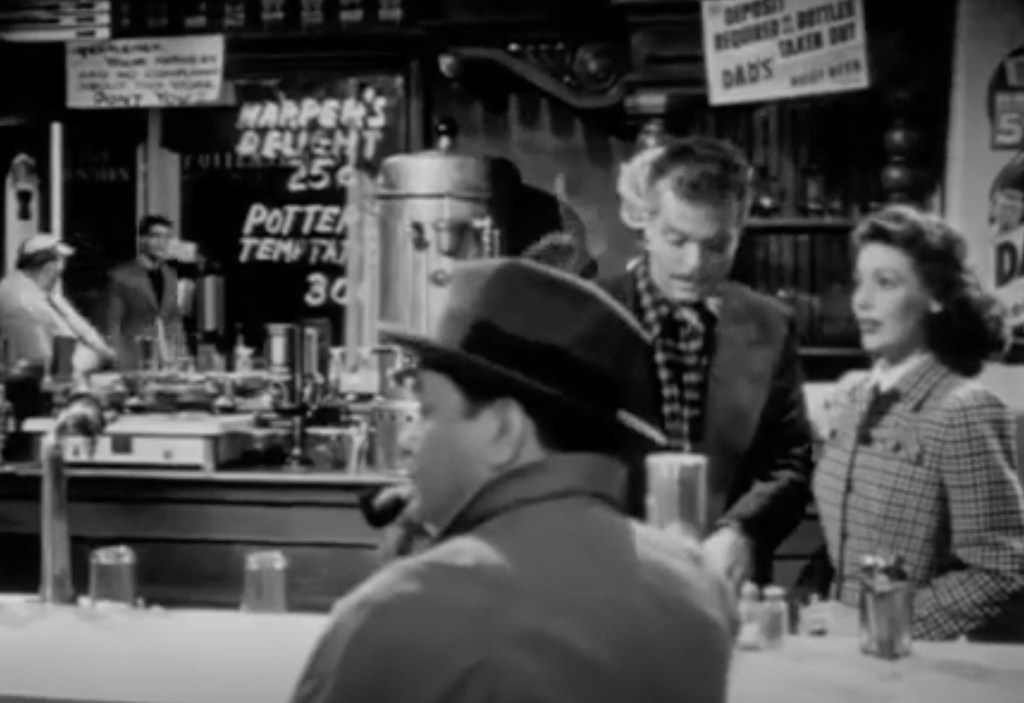
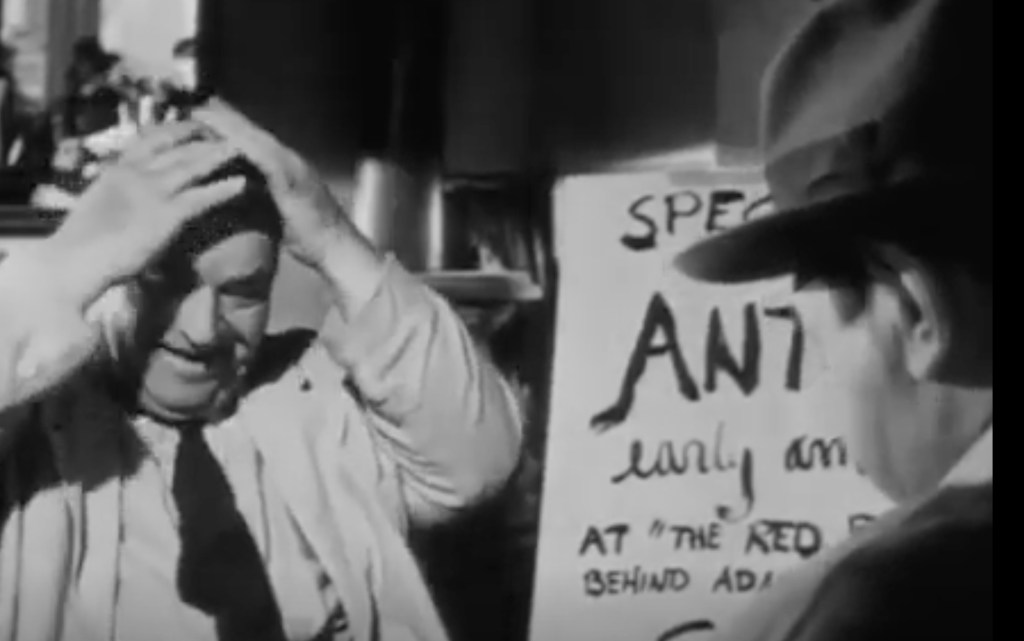
Wilson, who has survived the attack and regained consciousness, goes to a coffee shop where he befriends the owner, who knows everyone in town. He learns that Rankin is new to town and initially rules out the latter when he is told that Rankin is engaged to Mary.
He meets Rankin and Mary and is invited to a get-together. As he indulges in conversation, Welles, as Rankin, eloquently articulates the German mindset with references to Wagner’s Siegfried and Teutonic Knights. He further elaborates about the German dreamworld where they wait for a messiah who is a warlord like the Fuhrer. This is one of the standout scenes of the movie.
Even a scheming Nazi like Rankin cannot hide his true colors when he suggests that Marx was a Jew and not German. This statement arouses the suspicion of Wilson, but is not adequate to implicate Rankin.
Later, the owner of the coffee shop discusses the disappearance of a man who bears a resemblance to Meineke to Wilson when Mary accidentally lets it slip that she has seen Meineke on the day. Instantly, Rankin, who is next to her, squeezes her hand as a signal to her to stop talking.
It is revealed that Rankin has been passionately working to restore the town’s broken antique clock in his spare time. The clock is located in a tower of a church at the town’s square. Through his research, Wilson finds out that Franz Kindler had a penchant for clocks.
Wilson notices this and realizes that the only way he can implicate Rankin is through Mary. Sensing that Mary’s young brother Noah (Richard Long) bears a dislike for his sister’s husband, Rankin befriends Noah and recruits him to find Rankin’s whereabouts on the day of their wedding.
At this stage, Mary’s beloved dog Red locates Meineke’s body, causing more stress to Rankin. To hide this, Rankin poisons the dog. Wilson deduces together that Rankin killed the dog to hide the location of the corpse and realizes that he has to act immediately.
Through Mary’s father, Wilson manages to reach out to Mary and tell her that she is married to an evil war criminal and that her life is in danger. He even shows a film about Nazi concentration camps that Kindler ran, carrying out the atrocities.
Unfortunately, Mary is in love and totally in denial, strongly believing that the man she loves is simply incapable of such crimes. Can Wilson convince Mary in time and save her life from Kindler?
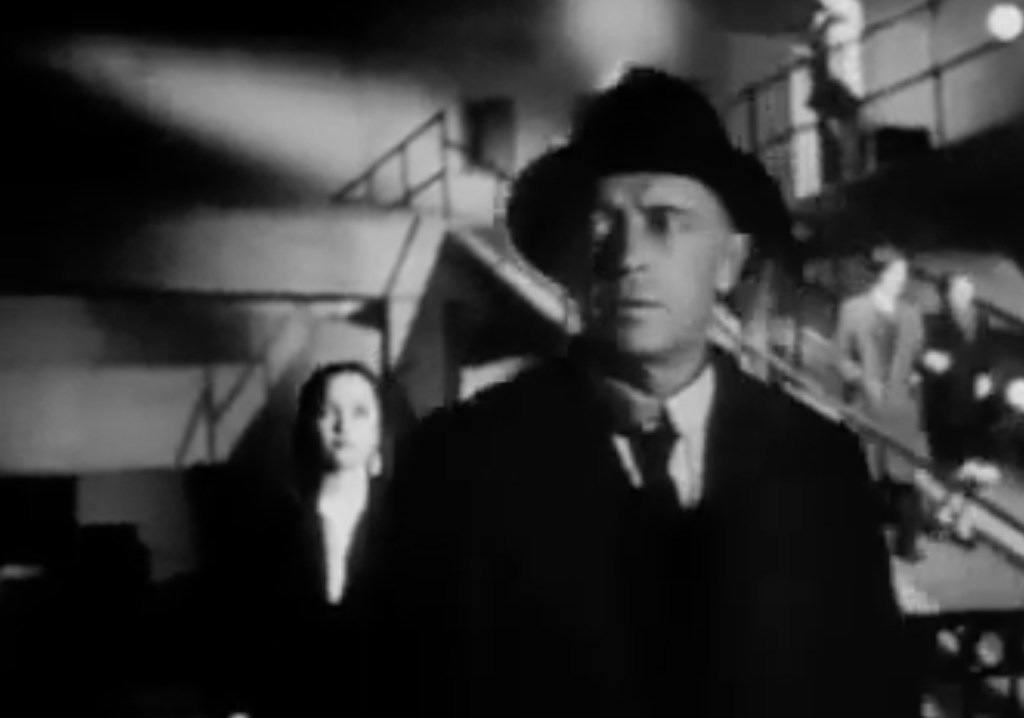
All of this leads to an explosive climax at the clock tower. Edward G. Robinson and Loretta Young turn in fine performances. Welles, while not as menacing as his character in “A Touch of Evil,” puts in a strong performance as Kindler. The story is fast-paced, and the camera work is remarkable, especially in the last action scenes at the clock tower.
“The Stranger” was released about three years after Hitchcock’s “Shadow of a Doubt.” Though the plot is different, there are some similarities, especially that each of them deals with a suspected murderer hiding in a small town with an assumed identity.
As a result, most critics consider this movie to be inferior to its predecessor. One of the reasons mentioned is that as the authorities are on the killer’s trail, it is an indication that the killer is going to be caught.
In this case, I have to disagree with the critics. When one looks back at the film noir era, it was required by the censors that all films adhere to the code of Victorian morality. This meant that evildoers should never go unpunished. So one could just as easily predict how “Shadow of a Doubt” would end.
Furthermore, Orson Welles is a lot more intimidating than Joseph Cotton as the fiendish villain. It is hard for me to choose between the two, but I feel that “The Stranger” was marginally better. It is worth a watch.





 Bay Area Bloke