

“To raise Cain” means to cause a commotion, create a disturbance, or make trouble. The “Cain” in the phrase refers to a character in the Old Testament of the Bible.
In this post, we will visit another psychological thriller from director Brian De Palma. With a runtime of just 1 hour and 31 minutes and starring John Lithgow, Lolita Davidovich, and Stephen Bauer, “Raising Cain” is a thrilling ride and a forgotten gem from the early ’90s. Another aspect of the movie that appeals to me is that it is set in the Bay Area.
From the outside, Jenny Nix (Davidovich) seems to have it all: a doting child psychiatrist husband, a beautiful young daughter, and a stable home. When she meets her former boyfriend, Jack Dante (Bauer), the flames of romance and lust reignite in her. She then confides in a friend on a playground, not only about her attraction to Jack but also about the odd behavior of her husband, Carter Nix. Carter has been behaving erratically and has been looking at his daughter with more of a sense of academic curiosity than with the affection of a father, according to Jenny.
How Jenny’s adultery results in the breakdown of Carter’s personality, which in turn leads to horrific crimes, forms the rest of the story. The entire plot blurs the lines between dreams, hallucinations, fantasy, and reality for both the audience and the characters in the movie. In addition, there is also a shocking flashback that tells the tale of how Jenny met Jack. The screenplay provides some “logical clues” to the viewer as to which of these scenes are real and which are imagined. In some scenes, Lolita wakes up from sleep in a state of shock, realizing that it was all a dream. In another scene, she enters Jack’s room with his keys after a previous scene where she is seen returning those same keys. An attentive viewer would realize that this scene is also in her imagination.
In yet another sequence, Jenny wakes up from a nightmare only to be smothered to death by her husband, Carter. In the following scene, Carter is getting a ride from one of Jenny’s friends when he suddenly renders her unconscious. All of a sudden, his evil twin, Cain, appears, seemingly from his imagination, to help Carter commit the crime and get away with it.
Later, the evil twin meets an elderly version of Carter who speaks with a European accent in a motel. As the plot unfolds, a series of events lead to Carter’s arrest when it is revealed that he has multiple personalities. In addition to Cain and his father, there is also a young kid and a woman inside Carter. The plot then sheds light on what caused him this mental disorder.
Towards the end of the movie, Carter escapes from jail and has yet another final confrontation with Jenny. Then, there is one final surprise a few seconds before the ending.
De Palma is known for his attempts at recreating Hitchcock’s magic in many of his movies. I have covered “Dressed to Kill” in my previous post. There are a few more of his movies that will be reviewed in future posts. This movie is De Palma’s own original plot that pays homage not only to Hitchcock but also to his own earlier movies.
It is interesting that Brian DePalma moved away from the psychological thriller genre after making “Body Double” in 1984. However, suddenly inspired by the idea of making a mystery that happens in a playground, he decided to revisit the genre with “Raising Cain” in 1992.
“Raising Cain” revisits many of De Palma’s obsessions (common themes) in his earlier works, including psychotherapy, multiple personalities, twins, adultery, fantasy, and even takes a shot at a subject that caused controversy in one of his previous movies, transgenderism. De Palma leaves numerous “Easter Eggs” in several places within the plot. He brings back the killer in a wig, an elevator scene, and a moving stroller. The moving stroller is a reference to an iconic action sequence in one of his best movies, “The Untouchables.” All of these are macabre mischievous winks to his most ardent fans. The cinematography in this movie is great with soothing colors on screen. The sets, especially the home of the Carters and the hotel, are beautifully constructed, adding to the visual aesthetics. “Raising Cain” does not have as many scenes of explicit sex or graphic gore as many of De Palma’s other movies but still has an R rating.
Of course, the movie has its own share of faults. For instance, how the police would allow a psychiatrist alone with a disturbed person with no security, supervision, or cameras is beyond me. Besides this, the police station itself appears like a haunted house, empty of cops and devoid of any activity when Carter makes his escape, after knocking down the shrink, easily and effortlessly. There is no one there, even when the poor shrink regains consciousness. Also, the climax, which involves a “toss the toddler” scene, was way over the top, a cheap shot at dramatization and totally unnecessary.
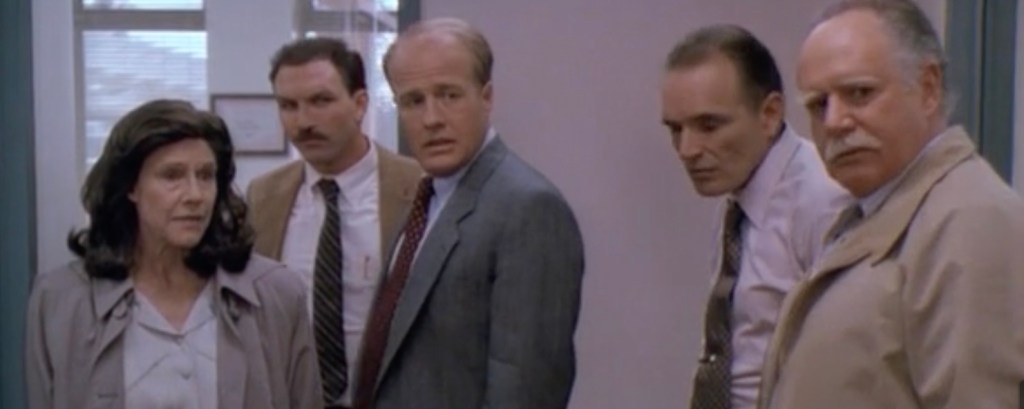
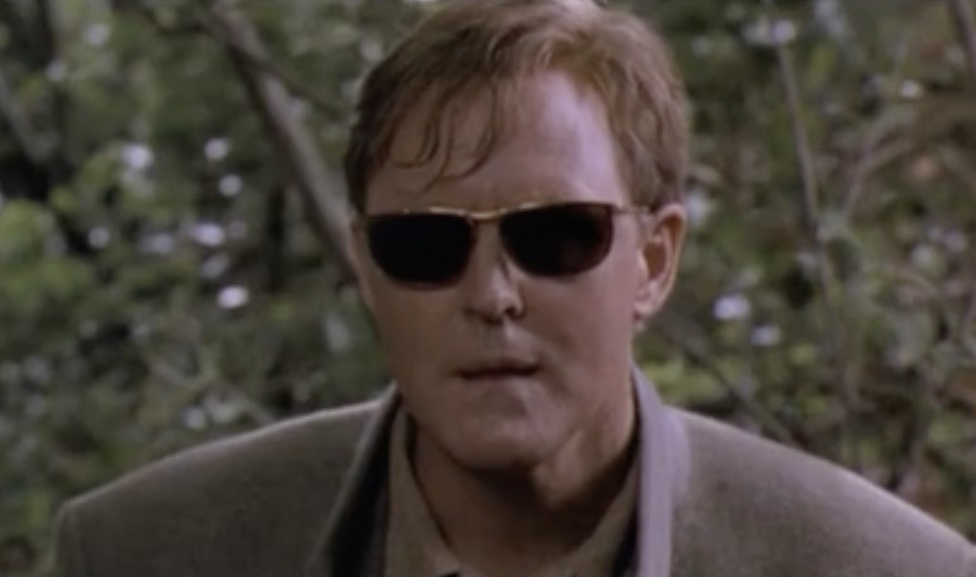
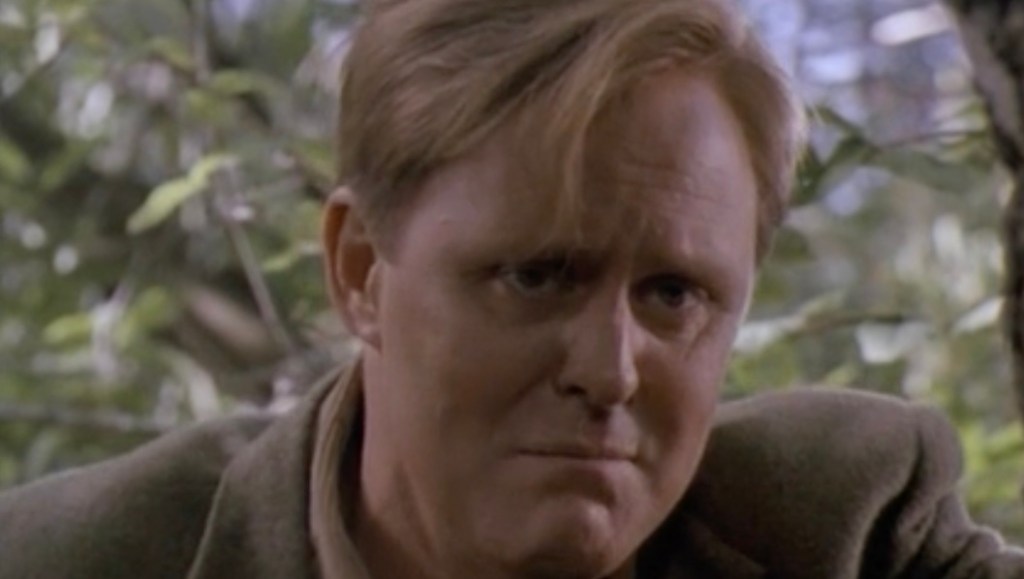
Despite these shortcomings, “Raising Cain” is a wild ride with twists and thrills thrown in every few minutes. While the movie had mixed reviews, I stand by my view that this is a hidden gem. John Lithgow delivers a tour-de-force performance as Carter and all his alter egos, and received well-deserved praise from many critics. Lolita Davidovich is also convincing as Jenny. Frances Sternhagen is also part of the cast as psychologist Dr. Lyn Waldheim.
Another interesting piece of trivia about the movie is that a fan of De Palma reedited the movie, and when De Palma watched this edited version, he was impressed and had it re-released on Blu-ray as his “Director’s cut.”
Given his recent inability to create successful ventures at the box office, many feel that De Palma has lost his touch. I can only hope that he can prove them wrong in the near future.




References
https://en.wikipedia.org/wiki/Raising_Cain

 Bay Area Bloke