

Today, we will look at the male protagonists who occupy the Film Noir Universe.
Let’s examine Encyclopedia Britannica’s view of the Film Noir man.
“The heroes of noir generally share certain qualities, such as moral ambiguity, a fatalistic outlook, and alienation from society. They also exhibit an existential acceptance of random, arbitrary occurrences as being the determining factors in life.”
Andrew Spicer, in his book “Film Noir,” has this to say about Film Noir characters.
“Film noir’s construction of gender is one of its most distinctive features. Instead of the strong, heroic males and supportive females that populate classical Hollywood’s films, film noir is littered with weak, confused, and powerless males, the victims of duplicitous femmes fatales. In addition to these central archetypes, film noir depicts several other male types, including psychopaths and damaged men, aspects of what Frank Krutnik in his study of masculinity in film noir calls its ‘pervasive problematising of masculine identity’ (Krutnik, 1991, p.99). As would be expected in a patriarchal culture and in such a male-dominated form as film noir, there is a greater range of male types than female ones, but even within a more restricted compass, female roles are not exhausted by the femme fatale and her opposite, the supportive homebuilder, as Elizabeth Cowie has shown (Cowie, 1993, pp. 121–66). This chapter will analyze the variety of the principal male and female character types in film noir, which are complex constructions of gender that condense a range of social meanings. These character types are both embodied and extended by the stars who play them; consequently, their performances become central to the meaning of the types. Building on the very limited discussion of stardom and performance in relation to film noir, the second part of the chapter will analyze the roles of the most important actors.”
Many of the male leads in these movies were antiheroes, morally ambiguous, obsessive toward becoming richer or winning the Femme Fatale, or prone to corruption. They are often seen as heavy smokers and heavy drinkers. Many times they carry heavy emotional baggage and are often loners. They often exhibited an air of cynicism, which was understandable as it was a time right during and after World War I, with the Cold War in effect and a pervasive feeling of hopelessness.
Gumshoe Detective/Private Eye
According to vocabulary.com:
The “detective” meaning of this word comes from the “galoshes” definition. In fact, during the late 19th century, gumshoes or gums were any type of rubber-soled shoes. Around the turn of the 20th century, to gumshoe meant “to sneak around,” and by 1906, gumshoe became a common nickname for plainclothes detectives (or “private eyes”), famous for moving stealthily in their quiet rubber-soled shoes.
Film Noir movies were inspired and often adapted from pulp fiction books from the 40s and 50s. The Gumshoe Detective or Private Eye is a common theme in many pulp fiction novels. Little wonder that he is a recurring theme in many film noir movies. He is hard as nails, sports a trench coat when he prowls the streets, and is willing to override the moral compass and even bend the law on occasion. Typically, he has a secretary who has a weak spot for him. The detective usually ignores her, but when he has no other woman around, he uses her.
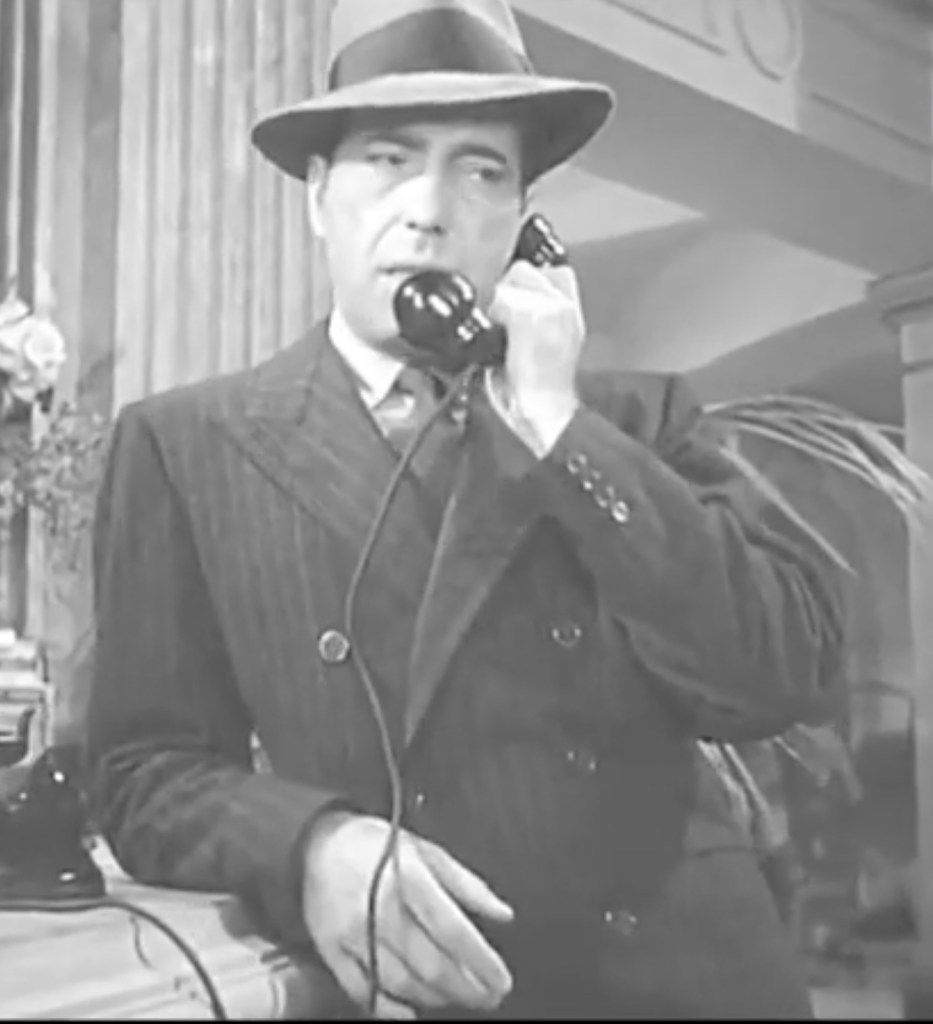
The most prolific among these would be Sam Spade, the protagonist in “The Maltese Falcon,” brought to life by the one and only Bogart. Sam Spade is the quintessential hard-boiled detective who is cocky, rude, smart, and unstoppable.
Raymond Chandler’s Philip Marlowe is another recognizable sleuth in Film Noir movies. He’s a wisecracking, heavy drinker and is unafraid of trouble. Marlowe has been portrayed by many actors in film noir, including Dick Powell in “Murder, My Sweet,” Bogart in “The Big Sleep,” and Robert Montgomery in “Lady in the Lake.” Marlowe has also appeared in more recent movies and portrayed by more actors, a subject that may be covered at a later time.
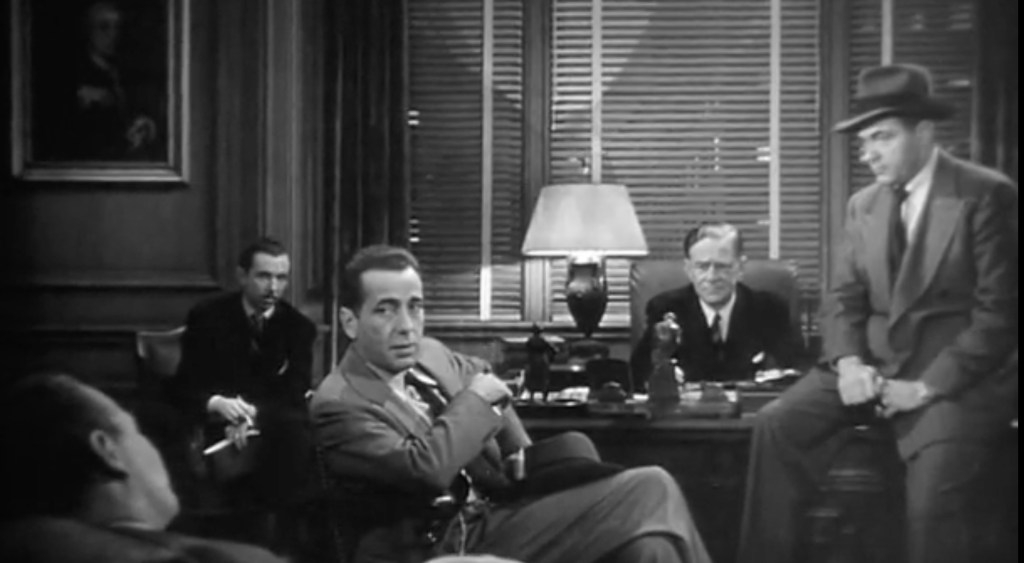
Bogart in ‘The Big Sleep’
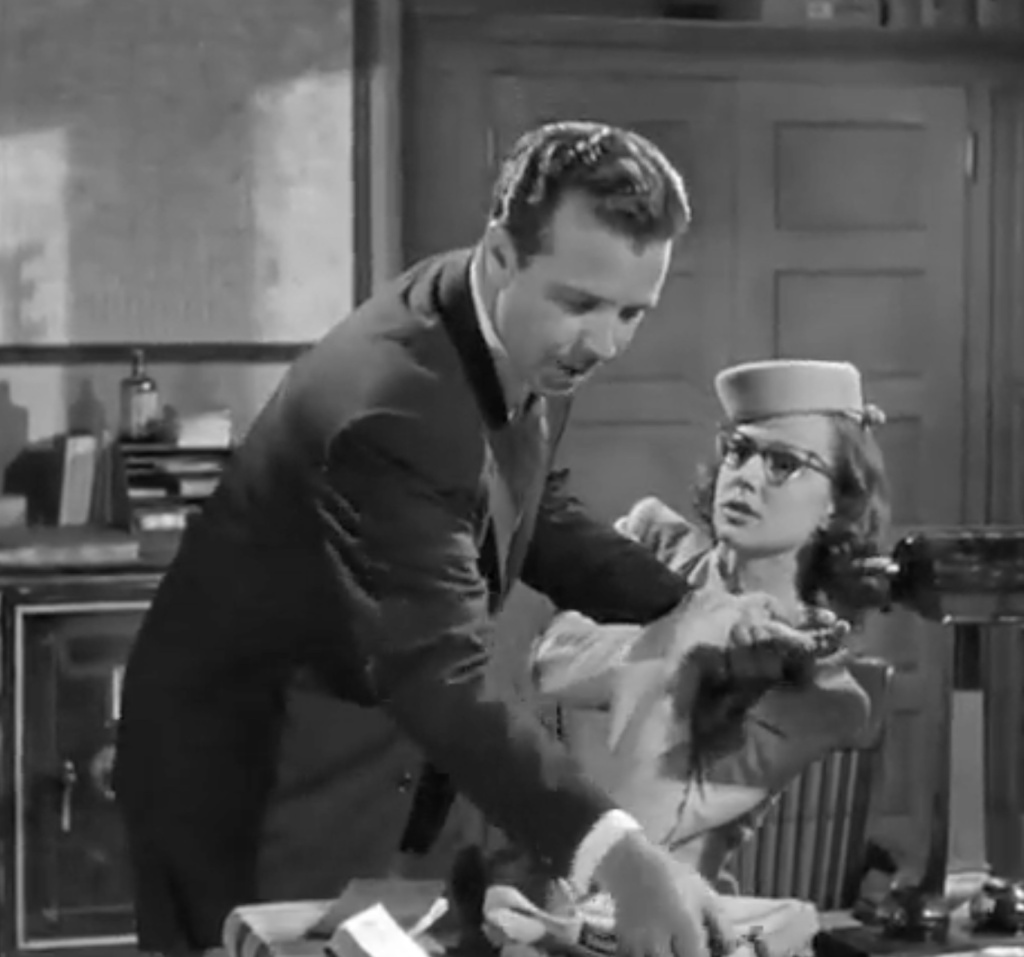
Dick Powell ‘Murder My Sweet”

Robert Montgomery in “Lady in the Lake”. The screenplay in this movie is unlike most noir movies. It will be reviewed at a later time.
Another popular investigator in Film Noir is Mickey Spillane’s Mike Hammer.

Spillane himself played Hammer in ‘The Girl Hunters’
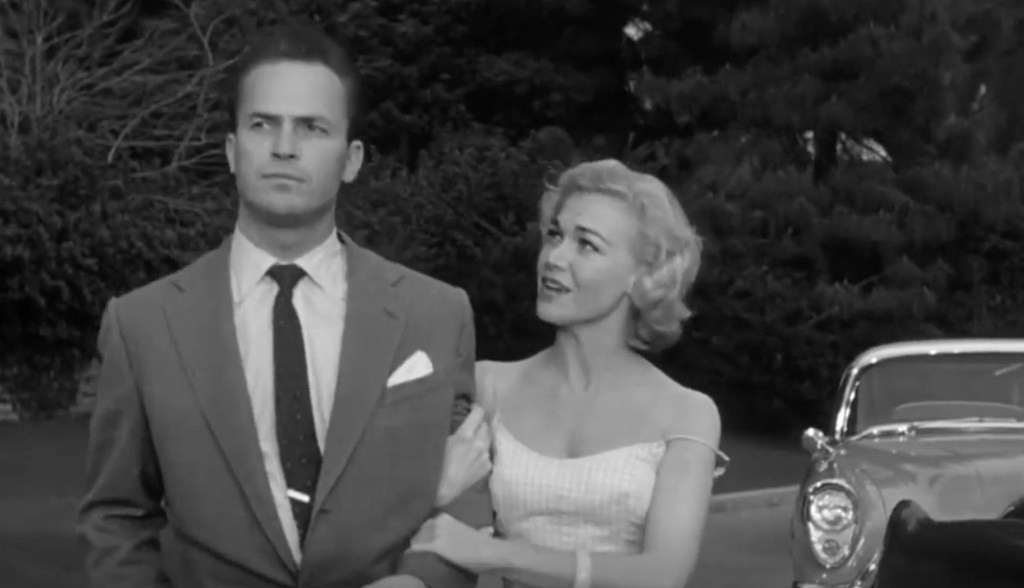
Ralph Meeker played Hammer in “Kiss me Deadly”
Bill Eliott played Hammer in ‘I, Jury’.
Honest Cops
The film noir universe is inhabited by several types of cops: those with an obsessive sense of duty and some worse than the most vicious criminals.
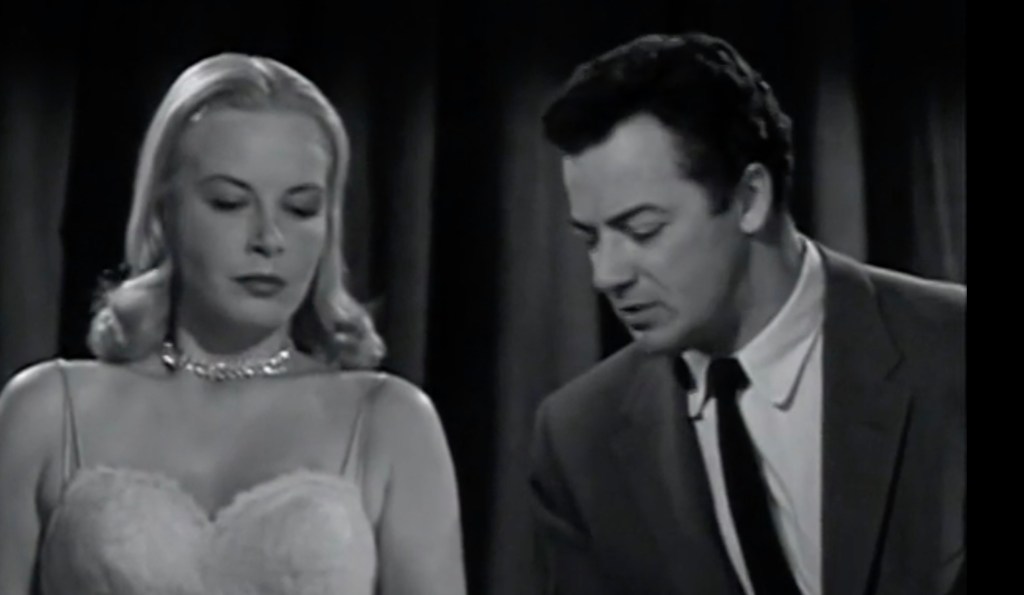
In ‘The Big Combo’, Conrad Wilde plays the unrelenting Lt. Diamond, chasing dreaded mob boss, Mr Brown

In ‘The Big Heat’, Glen Ford is tough cop ‘Branigan’ taking on the mob.
Dirty Cops
Here are some memorable crooked cops of Noir.
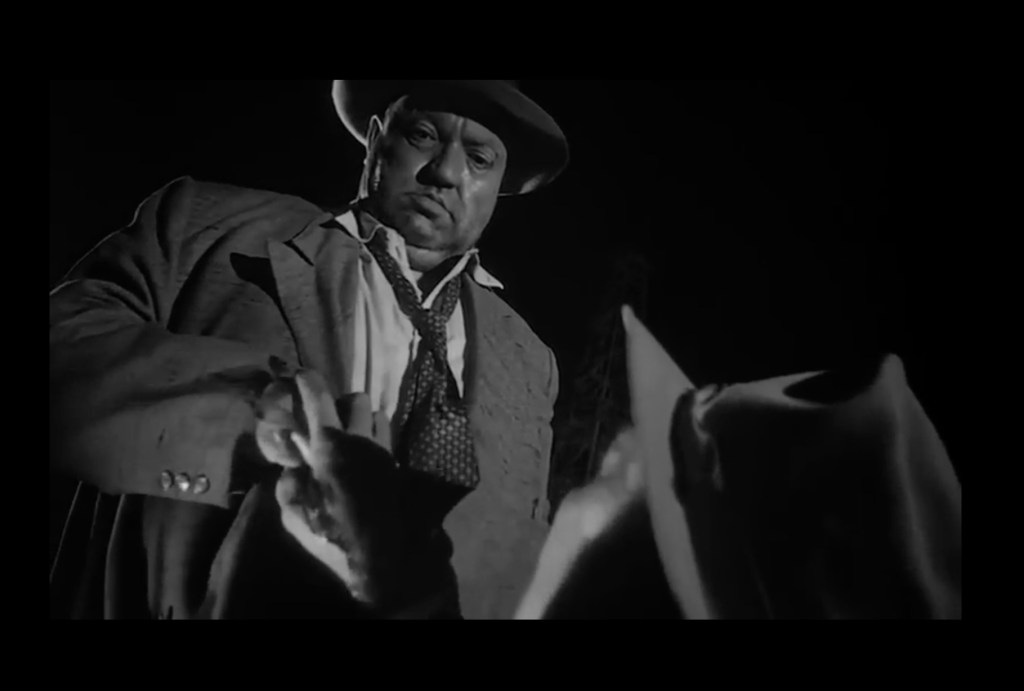
One of the first images that comes to mind when I think of Film Noir Dirty Cops is that of Orson Welles playing Hank Quinlan. Orson Welles is at his menacing best as a vengeful, crooked murdering cop.

In ‘The Prowler,’ Van Heflin is Webb Garwood, an evil cop who stalks and seduces a suburban housewife (Evelyn Keyes) and kills her husband.
Hiding a Secret
Another trait of a Film Noir Male Protagonist is that he is hiding a secret, whether it be his psychopathy, time served in prison, or a life of crime.
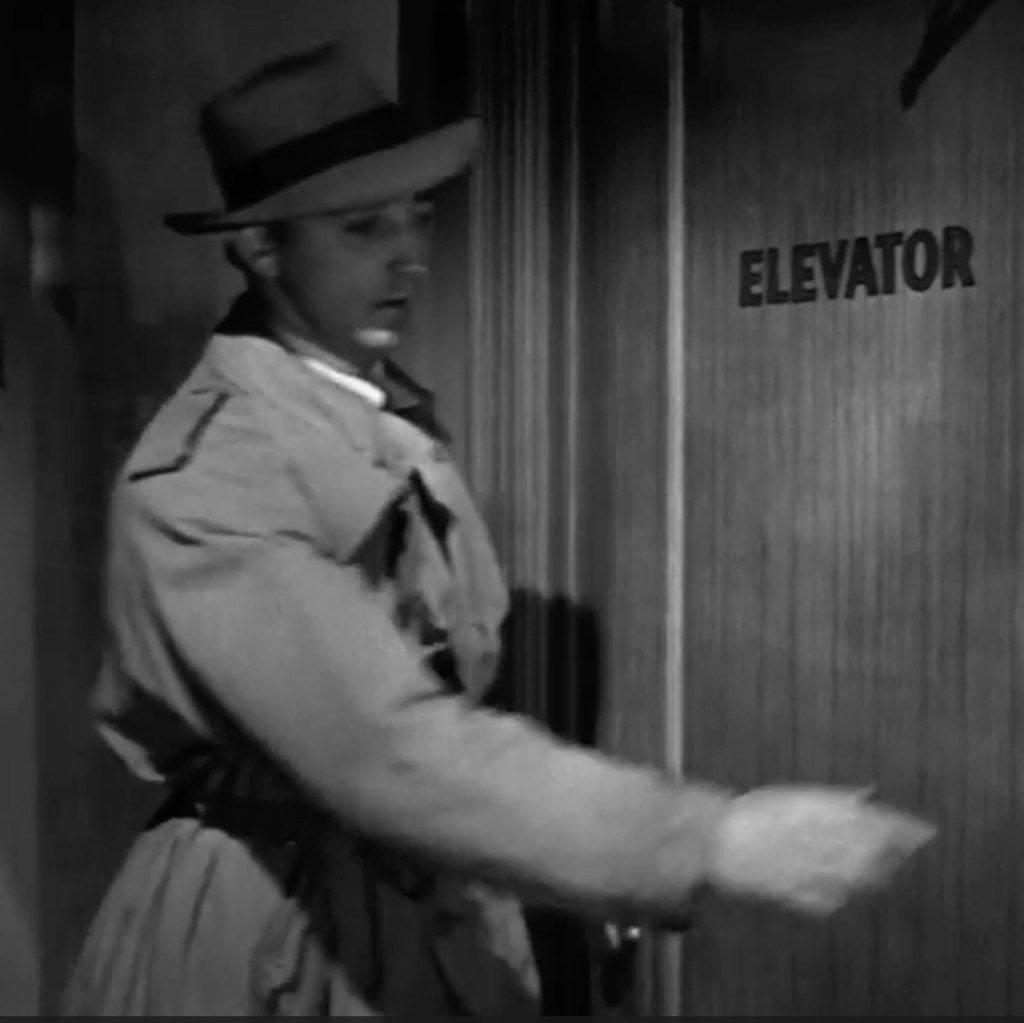
Robert Mitchum in “Out of the Past” is Jeff Bailey, who owns a gas station in a small town. He is trying to hide his past as a shady detective.

Joseph Cotten, in ‘Shadow of a Doubt,’ is the friendly and supportive “Uncle Charlie.” Could he be the “Merry Widow Murderer”?
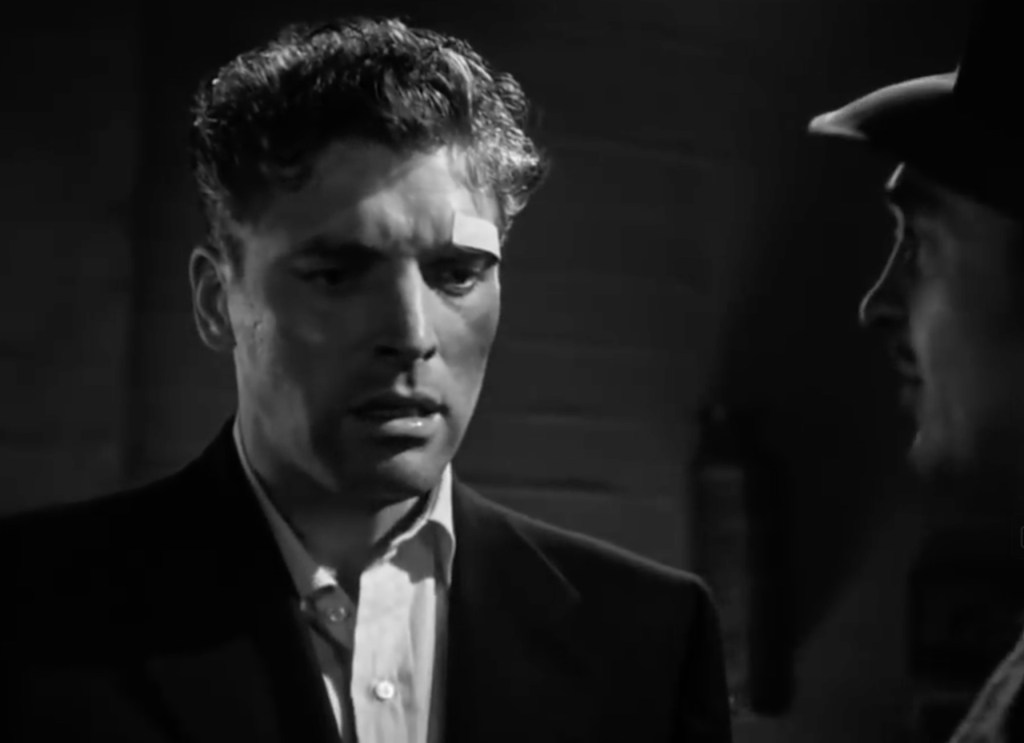
In ‘The Killers’, Burt Lancaster is the “Swede,” a former boxer who is hiding a criminal past.
Returning Army Vet
As Film Noir movies were made in the 1940s and 1950s, many of them featured returning veterans, sometimes suffering from PTSD or coming back to an unimaginable predicament.

In “The Blue Dahlia,” Alan Ladd plays Johnny Morrison (right), a returning vet who comes home to Hollywood, CA with his peers Buzz and George. Will his wife be happy to see him?
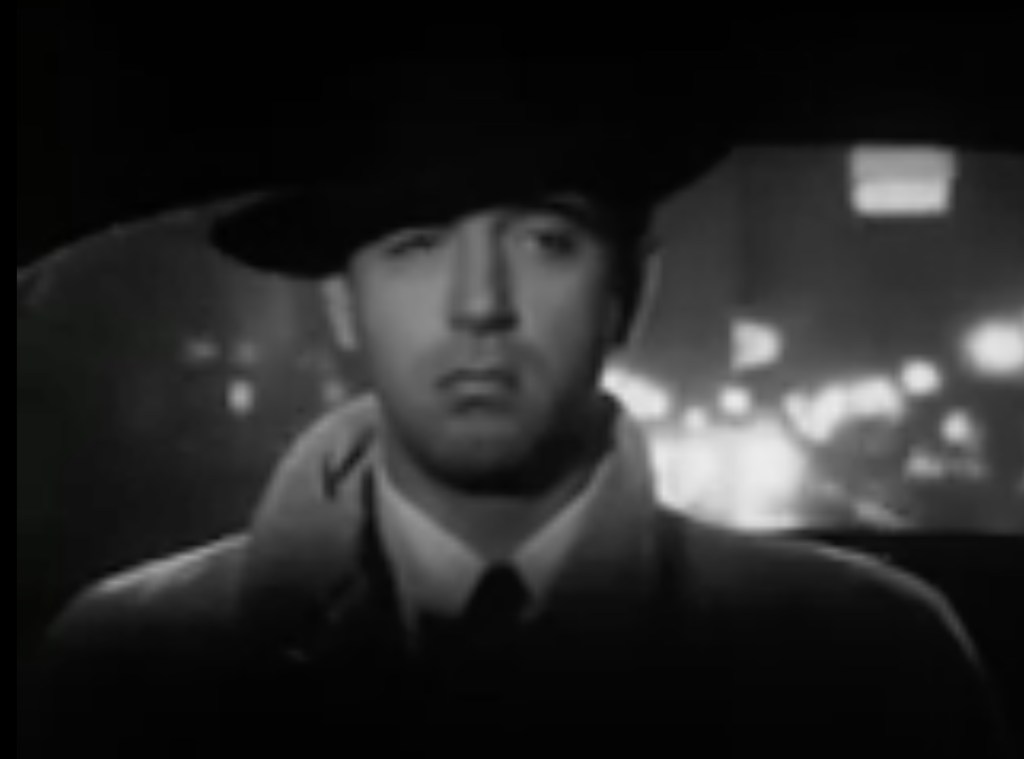
In “The Crooked Way,” John Payne is an amnesiac who suffered a head injury in war. Payne also plays a vet in “Kansas Confidential.”

In “Suddenly,” both the protagonist Sheriff Shaw (Sterling Hayden) and the antagonist John Baron (Frank Sinatra) are both veterans.
Psychopaths
Film Noir had memorable psychopaths, whether they were the male protagonists, villains, or the villain’s henchmen.
Earlier, we took a look at Joseph Cotten’s role in “Shadow of a Doubt.” Let’s explore a few others.

In one of his most memorable roles, James Cagney in “White Heat” plays Cody Jarrett, a psychopathic bandit with a mother complex.
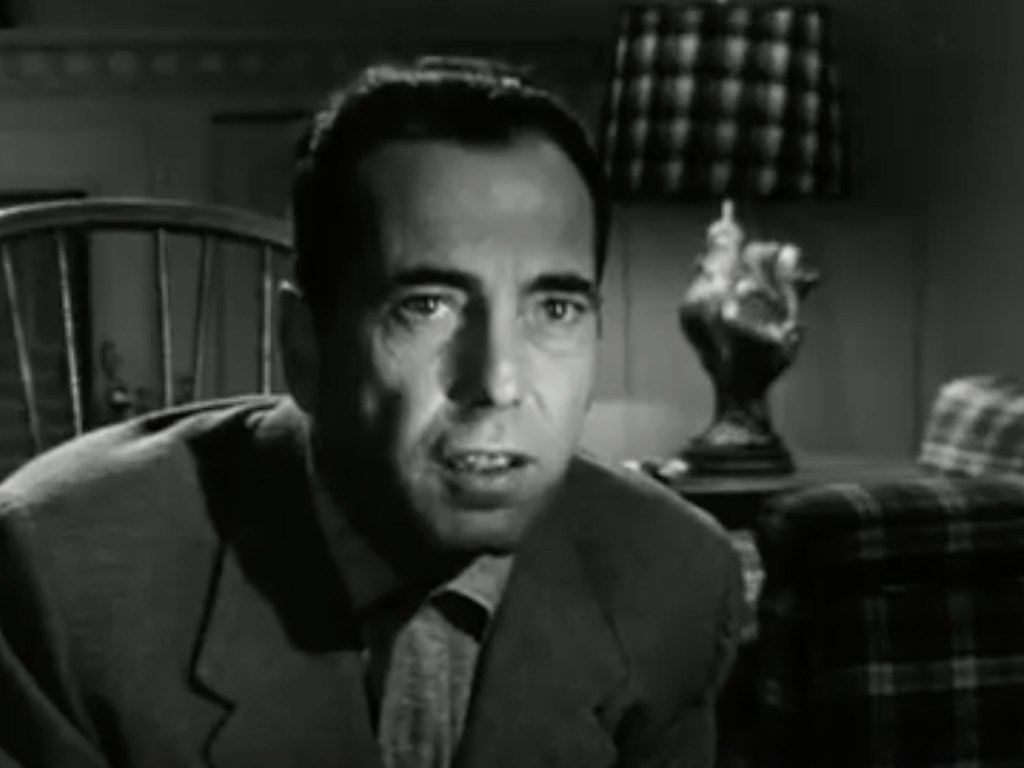
In the movie “In a Lonely Place,” Bogart plays a psychopathic Hollywood scriptwriter. Is he also a cold-blooded killer?

Richard Widmark’s role as Tommy Udo in ‘The Kiss of Death’ is one of the most terrifying psychopathic killers in Film Noir.
The Patsy
Dictionary.com defines the patsy as:
- a person who is easily swindled, deceived, coerced, persuaded, etc.; sucker.
- a person upon whom the blame for something falls; scapegoat; fall guy.
In Film Noir, the male protagonist is usually the patsy for the alluring Femme Fatale. Even the toughest men are putty in the hands of the seductive, vicious, yet ravishing woman who can get the patsy to do anything she wants him to do. The consequences, as mentioned earlier, spell doom for both.

In ‘Double Indemnity,’ Fred MacMurray plays Walter Neff, an insurance salesman and ultimate patsy who falls for femme fatale Phyllis (Barbara Stanwyck) and is sucked into killing the latter’s husband.
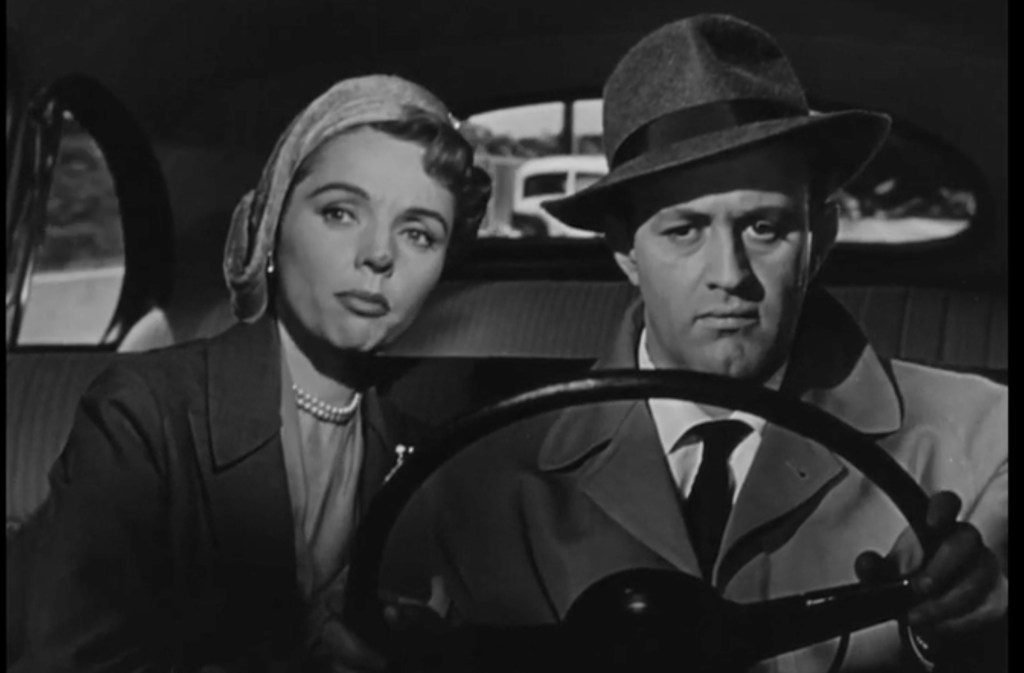
In ‘The Man Who Cheated Himself,’ detective Cullen (Lee J. Cobb) falls for the vile charms of Lois Frazer and does all he can to ensure that she is not implicated in a crime she is guilty of: the murder of her husband.
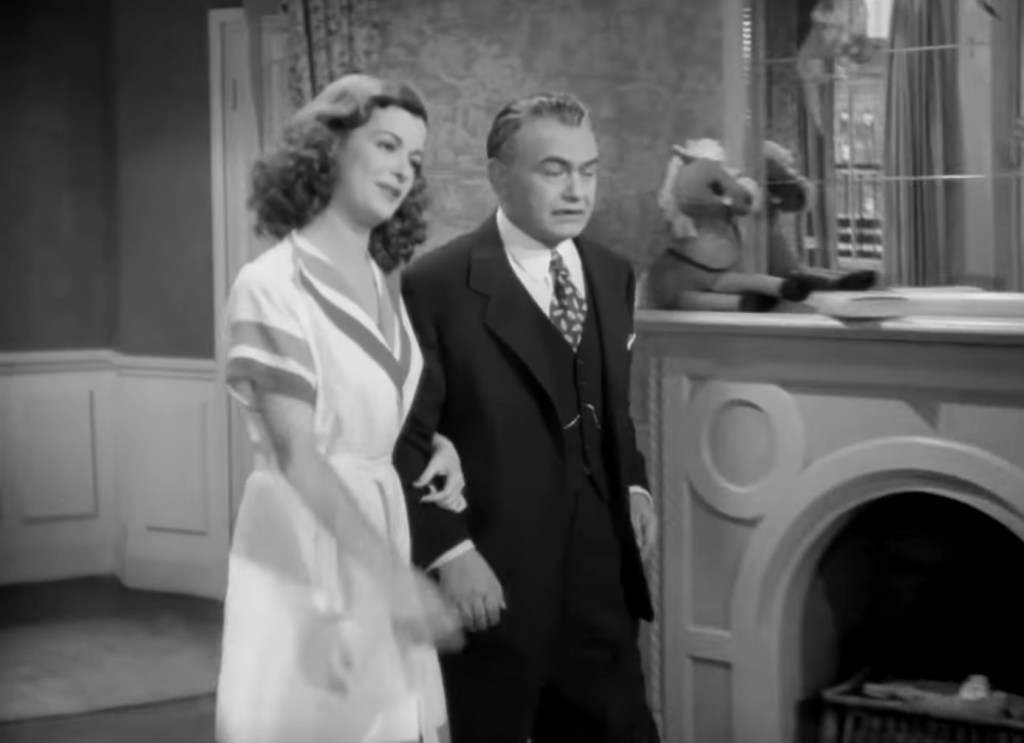
In ‘Scarlet Street,’ a scheming young gold digger named ‘Kitty’ extorts middle-aged painter Chris Cross (Edward G. Robinson) for all his money.
We have looked at several male archetypes in Film Noir. By no means is it an exhaustive list, but it is meant to serve as a starting point for understanding the men in the Film Noir universe.
Here are other posts in this series.
References
https://www.britannica.com/art/film-noir/The-noir-hero
Click to access Returning-Veterans-in-Film-Noir.pdf
https://www.taylorfrancis.com/chapters/mono/10.4324/9781315837826-6/gender-film-noir-andrew-spicer
https://www.purposestudios.in/post/the-art-of-film-noir
https://13medsfilmnoir.weebly.com/noir-characters.html

 Bay Area Bloke