
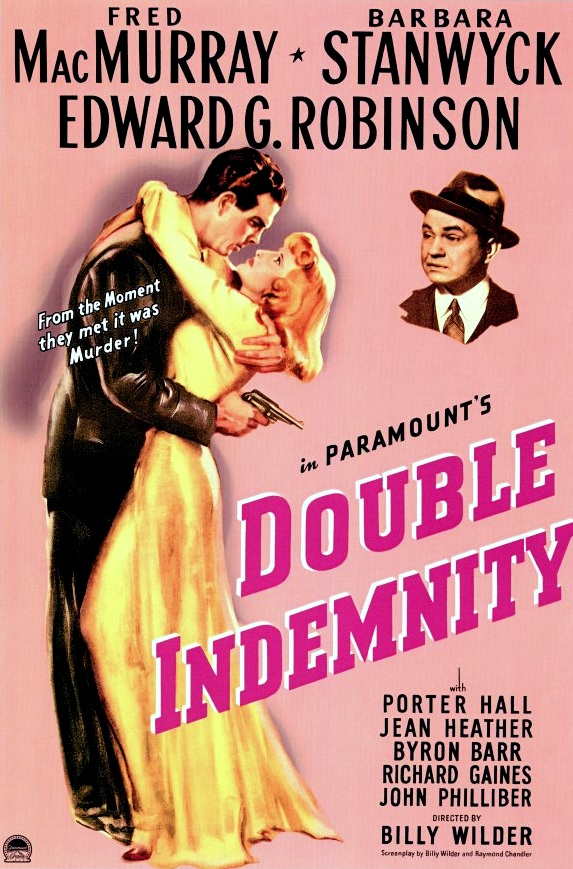
“Double Indemnity” is considered one of the landmark movies of the film noir era. It inspired numerous movies in several languages, including “The Postman Always Rings Twice” and “Body Heat.” The movie, based on a novel of the same name by James M. Cain, has its screenplay written by Raymond Chandler and Billy Wilder.
And yet again, Barbara Stanwyck does what she does best in a femme fatale role and would get yet another Academy Award nomination. The film would be nominated in seven categories for Academy Awards. One would expect nothing less from a screenplay from Chandler and Wilder.
The plot begins when a distraught man, stooping low, is seen entering a large insurance office. He then opens the door to an office and narrates his story, which is meant for his friend, Barton Keys. The distraught man is revealed to be Walter Neff, an insurance agent. His story is then mostly told via flashbacks.
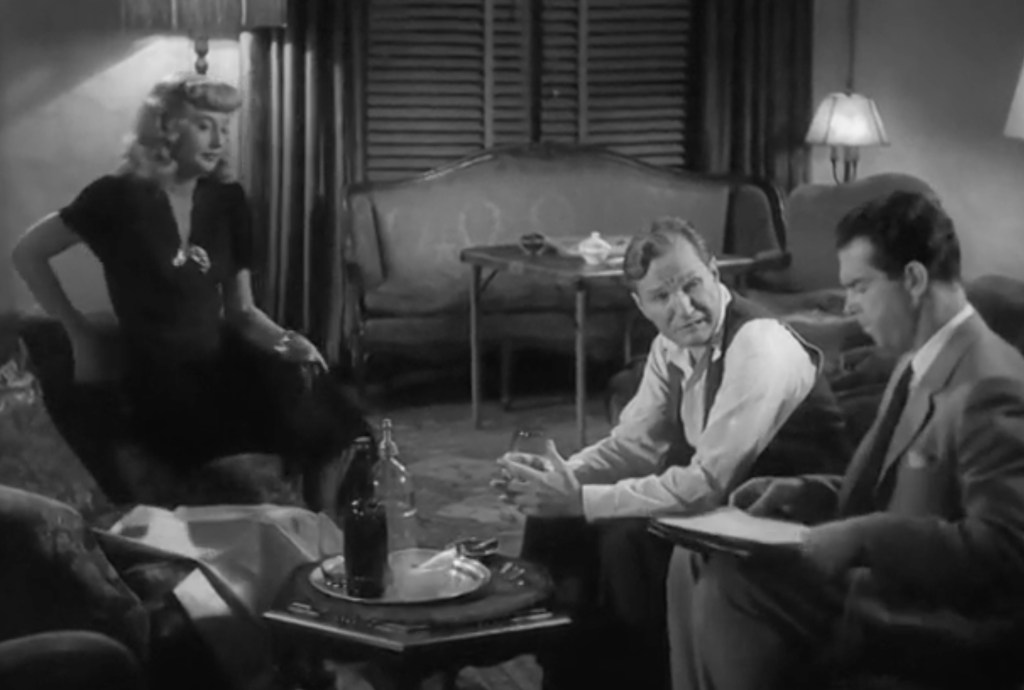
Walter is seen making a house call on a Spanish-modeled house in a Los Angeles suburb. He is let in by a beautiful woman, who identifies herself as Phyllis Dietrichson. Phyllis says that her husband is not at home. As Walter enters the house, he sees a photo of the husband and his daughter.
Walter tells Phyllis that he is there to tell her husband that his automobile policy is expiring. The woman offers Walter a drink, and the two of them start flirting. Phyllis slowly brings up the possibility of getting her husband an accident insurance policy without his knowledge. Instinctively, Walter leaves, knowing that she nurses vicious intentions.
His instinct tells him that this is not the last time he would see her. He is right. That evening, he hears a knock on his door and knows who it is. As he lets Phyllis in, she tells him that she is there to return his hat. She does not seem to have any hat with her. She tells Walter that she found his apartment through the phone book.
She charms Walter, and soon Walter, the patsy, is putty in her hands. He tells Phyllis that he would help her go through with her plan of killing her husband. He then visits the Dietrichson home and tricks Mr. Dietrichson into signing an accident insurance policy without his knowledge. Mr. Dietrichson seems to have an injured leg and is wearing a cast. As he leaves the residence, Walter also meets Mr. Dietrichson’s daughter, who asks him for a ride. She is going to meet her boyfriend surreptitiously.
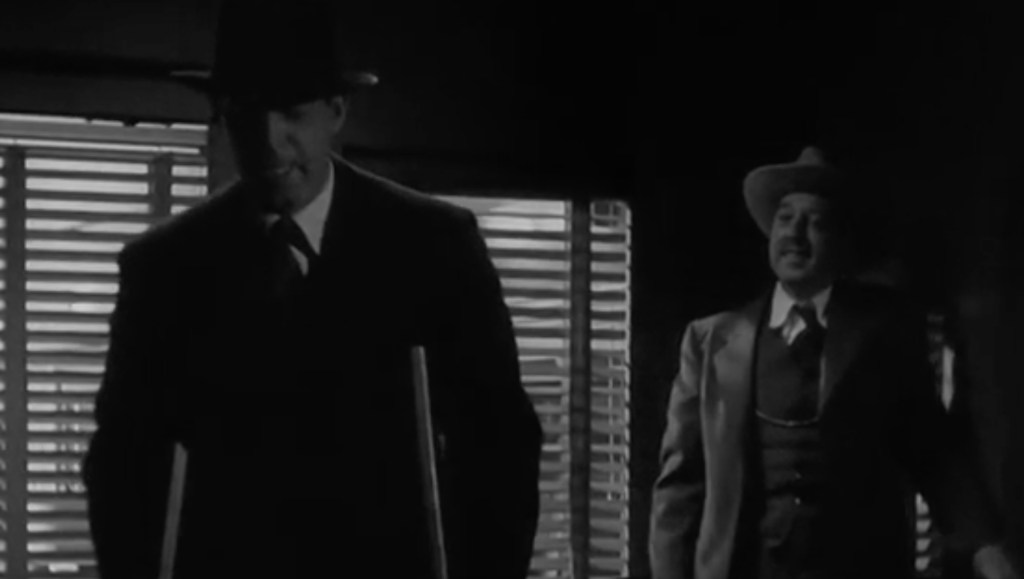
As expected, Phyllis and Walter begin to carry out their murderous plan. Phyllis is driving Mr. Dietrichson, who is on his way to his college reunion, to a station. Walter hides in the backseat of the car. On the way to the station, Walter kills Mr. Dietrichson. Walter has prepared for the deed by dressing up with an identical suit as Mr. Dietrichson. Like Mr. Dietrichson, Walter also has a cast and crutches to boot.
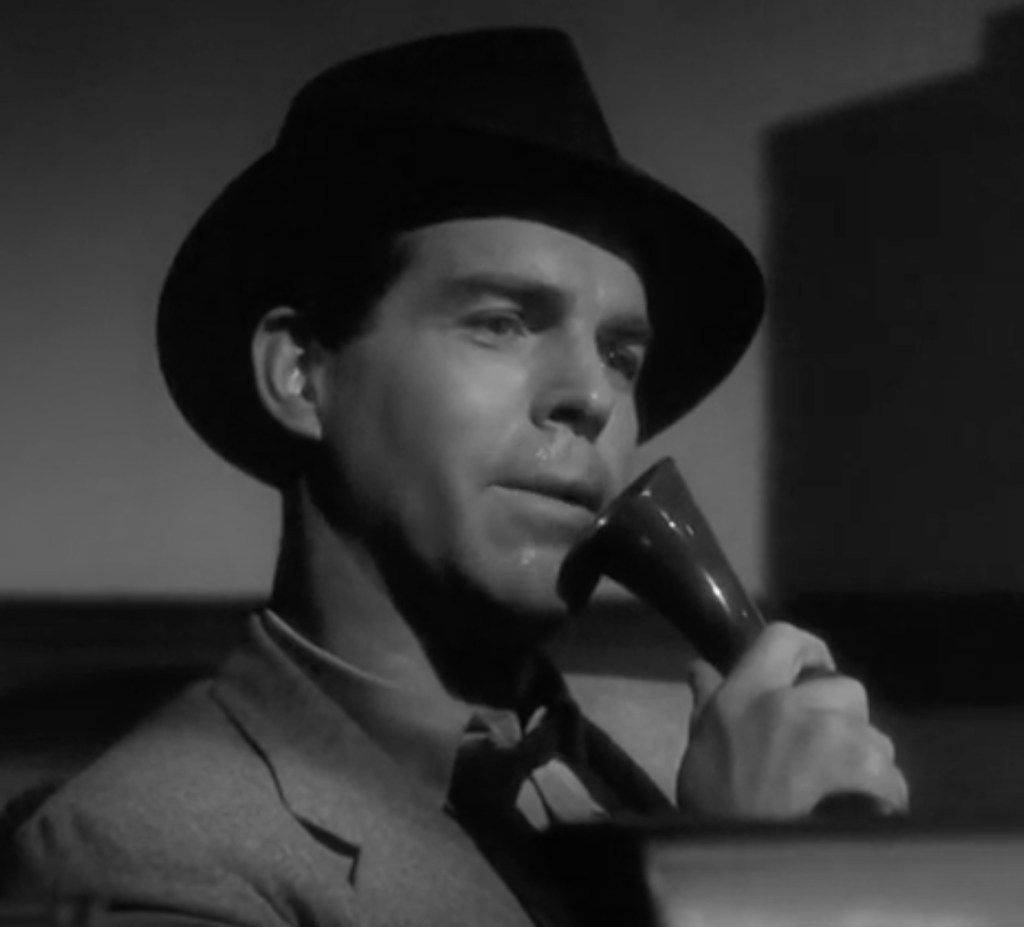
Walter gets off at the station and impersonates Mr. Dietrichson. He boards the train and avoids eye contact with anyone else. As he tries to leave the train at a predetermined spot, another man tries to talk to him and offers to bring him a cigar. Walter does all he can to avoid looking at the man and makes a quick exit from the train.
Phyllis soon meets Walter, and the two of them place Mr. Dietrichson’s body on the tracks. This is when the fun begins!
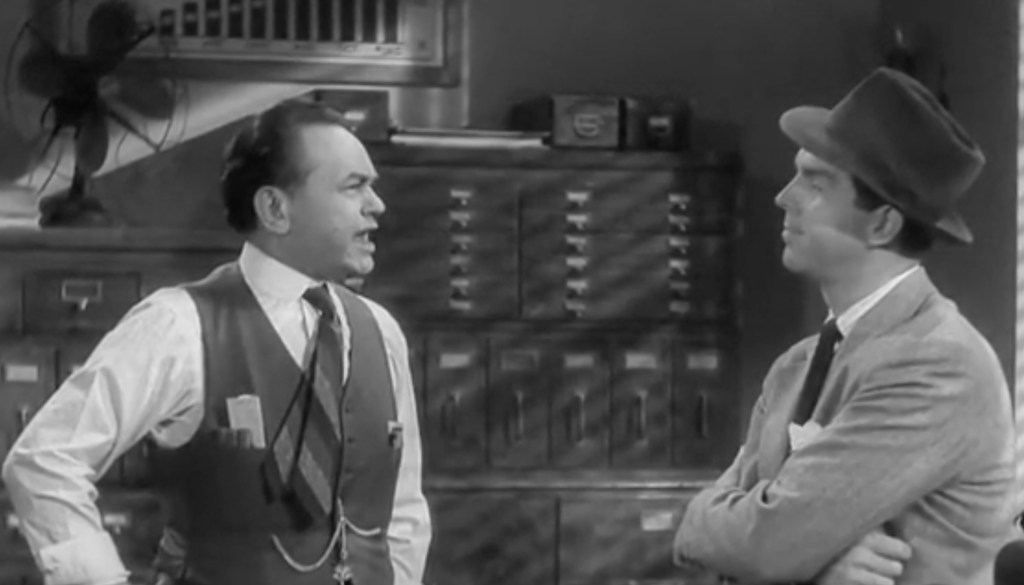
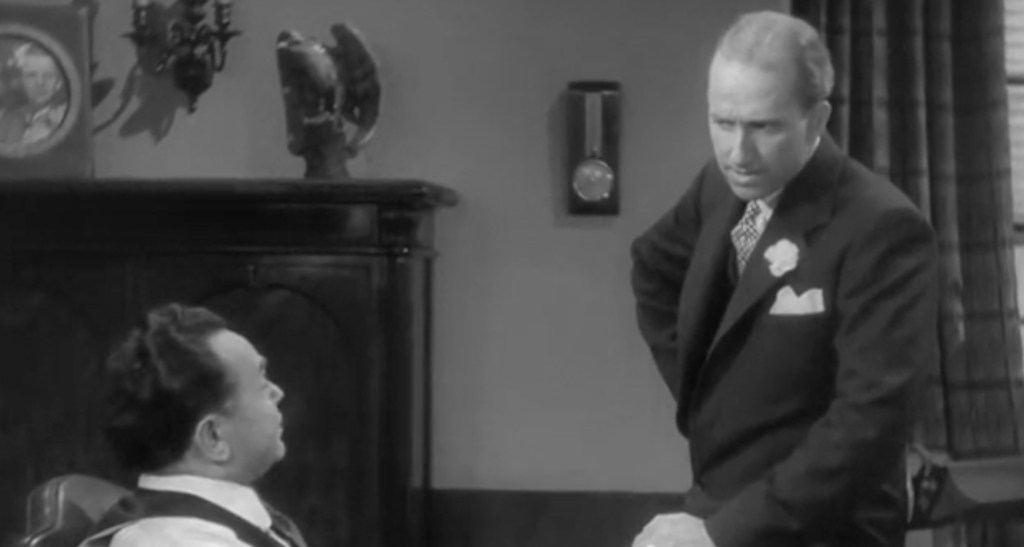
Walter and his friend and colleague, adjuster Barton Keys, meet with their boss to discuss the death of Dietrichson. The boss seems convinced that Dietrichson committed suicide. The boss wants to go to court to prove it is suicide, so that Mrs. Dietrichson cannot collect most of the money she would otherwise be entitled to receive from the accident insurance policy.
As Walter returns home, he is elated. He calls Phyllis over and is about to celebrate when he hears a knock on the door. Keys is at his doorstep, and he is going to rain on his parade. Keys suddenly has had a brainwave. Is it not too much of a coincidence, Keys wonders, that Mr. Dietrichson gets accidental insurance just two months earlier and is gone now? Keys ponders aloud.
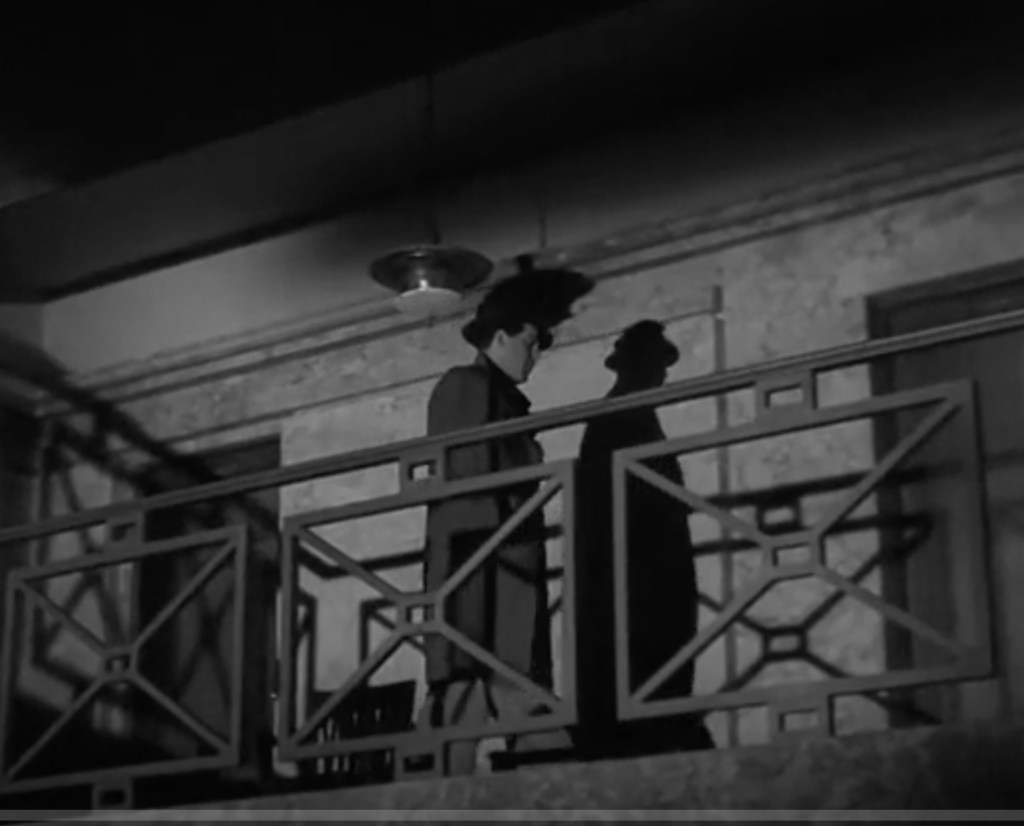
He decides to leave abruptly to meditate on this. As Walter opens the door, he notices that Phyllis is at the door, eavesdropping on this conversation. Walter hides her behind the door as he watches Keys leave on the other side. This is one of the most tingling scenes in the movie.
Now Walter wants to bail out, but Phyllis will have none of it. Later, Walter meets Dietrichson’s daughter, who thinks Phyllis is involved in her father’s death. She tells Walter that her mother, Walter’s former wife, died under mysterious circumstances while under the care of a nurse. The nurse is none other than Phyllis herself. Walter knows now that whether or not the girl’s suspicions are true, her testimony can be devastating in a court of law.
To add to this, Keys has now deduced that Mr. Dietrichson probably was not on the train and that Phyllis may have had ‘assistance.’ Keys also traces the gentleman on the train who tried to talk to Walter and has him come to their office. The thrills keep mounting until the devastating end.
“Double Indemnity” is another landmark in the history of noir movies. In my opinion, this movie has established Stanwyck as the queen of noir. “Body Heat,” an excellent neo-noir movie starring William Hurt and Kathleen Turner, would borrow a lot from the plot and scenes from this movie. “Double Indemnity” is essential watching for any noir fan.







Quotes
Walter: “I had killed a man, for money and a woman. I didn’t have the money and I didn’t have the woman.”
Walter “I loved her like a rabbit loves a rattlesnake”
Phillis: “Yes, I’m afraid. But not of Keyes. I’m afraid of us. We’re not the same anymore. We did it so we could be together but instead of that, it’s pulling us apart.”
Keys: They’ve committed a murder. And it’s not like taking a trolley ride together where they can get off at different stops. They’re stuck with each other and they’ve got to ride all the way to the end of the line and it’s a one-way trip and the last stop is the cemetery.
Cast: Fred MacMurray, Barbara Stanwyck, Edward D. Robinson
Direction: Billy Wilder
Screenplay Raymond Chandler and Billy Wilder
Double Indemnity was nominated for seven Academy award nominations, including best picture, best director(Wilder), best actress(Stanwyck), best cinematography, best screenplay, best music and best score.

 Bay Area Bloke